Key Takeaways
- Gallatin County families face a stretched behavioral health system, limited residential beds, and long frontier drives, with the county ranking fourth in Montana for overdose deaths in 2022 1.
- ASAM 3.5 means 24-hour clinically managed residential care with bundled therapy under Montana’s HEART waiver, while ASAM 3.1 offers only five clinical hours weekly and peer-run sober living is not licensed treatment.
- Initial HEART prior authorization for ASAM 3.5 runs up to 21 days and is extendable, so continuing care through PHP, IOP, recovery housing, and MOUD handoffs should be planned in week one 9.
- Before accepting a bed, verify the program’s ASAM license and Medicaid enrollment through DPHHS and FindTreatment.gov, confirm detox requirements, and get MOUD continuation and transport plans in writing 13, 6.
What Gallatin Valley families are actually up against
If you are reading this from a kitchen in Belgrade, a ranch outside Three Forks, or a hospital waiting room in Bozeman, you already know the shape of what you are facing. Someone you love is in trouble, and the phone tree of who to call, what insurance covers, and how far you might have to drive is longer than it should be. That weight is real. Naming it is the first honest step.
The local numbers back up what you are feeling. In 2022, Gallatin County ranked fourth in Montana for overdose deaths, and county-level data puts the opioid overdose death rate at roughly 13.1 per 100,000 residents over a recent multi-year period, with 86 lives lost 1, 12. Bozeman’s growth has not insulated the valley from the same fentanyl, methamphetamine, and alcohol harms hitting the rest of the state. It has, if anything, stretched the local behavioral health system thinner.
Here is what you are actually up against: a small number of residential beds within a reasonable drive, a Medicaid system that has expanded coverage but still runs on prior authorizations, and the plain math of rural distance. You are not overreacting. You are not late. You are doing the work of mapping a system that was not built to be easy to navigate from a county with more square miles than some states have people. The rest of this guide walks that map with you, one decision at a time.
What residential treatment actually means here
ASAM 3.5: 24-hour clinically managed care
When Montana Medicaid and clinicians say “residential treatment,” they usually mean ASAM Level 3.5. That is the technical name for a clinically managed, high-intensity residential program that provides 24-hour structured treatment for someone with a moderate or severe substance use disorder who needs a supported environment to make progress 14. The person lives at the facility. Staff are on site around the clock. Medical and emergency services are accessible 24 hours a day, even though this is not a hospital 7.
Under Montana’s HEART waiver, ASAM 3.5 is covered as a bundled service package. That bundle includes individual therapy, group therapy, family therapy, and psychosocial rehabilitation, all built into the daily rate 9. In plain terms: your loved one is not paying separately for each counseling session or care plan meeting. The program is responsible for delivering a full clinical day, every day, while they are admitted.
What that day looks like matters. Mornings often start with a check-in and medication pass. Group therapy fills much of the middle of the day. Individual sessions, family calls, and skills work fit around it. Evenings tend to be quieter, with peer support and reflection. This is not a lockdown, and it is not a resort. It is a structured week designed to interrupt the pattern that brought someone in and to teach a different one before they go home to the same driveway, the same phone, and the same triggers.
ASAM 3.1 and why sober living is not the same thing
ASAM 3.1 is a different animal, and mixing the two up costs families time. It is a licensed, community-based residential home that functions as a supportive, structured living environment with a minimum of five hours per week of professionally directed SUD treatment 15. Five hours. Not five hours a day — five hours a week. The rest of the schedule is meant for work, outpatient appointments, meetings, and rebuilding a routine.
That makes 3.1 a good fit for someone who is stable enough to hold a job or attend an intensive outpatient program but who cannot yet return to an unsafe home. It is not the right fit for someone actively in crisis, cycling through withdrawal, or unable to keep themselves safe without constant clinical presence. That person needs 3.5.
Peer-run “sober living” homes exist in a third category entirely. They are housing with recovery expectations, not licensed clinical treatment. They can be a real asset after residential care ends. They are not a substitute for it. When you are on the phone comparing programs, ask directly which ASAM level the facility is licensed to deliver 13. The answer changes what your loved one will actually receive that first week.
Detox before residential: Levels III.2-D and III.7-D
Residential programs at Level 3.5 are not detox units. Most will not accept someone who is still actively withdrawing from alcohol, benzodiazepines, or opioids. That is where detox levels come in, and there are two you should know by name.
- Level III.2-D is clinically managed residential detoxification. It emphasizes peer and social support and is intended for people whose intoxication or withdrawal is serious enough to warrant 24-hour support, but who do not need constant medical supervision 4. Think structured, staffed, safe — without a hospital bed.
- Level III.7-D is medically monitored inpatient detoxification. It provides 24-hour medically supervised withdrawal management for people whose symptoms are severe enough to need nurses, physician oversight, and quick access to intervention if things escalate 4. Complicated alcohol withdrawal, high-dose benzodiazepine dependence, or medically fragile patients usually belong here.
Ask any residential admissions coordinator what they require before intake. Some accept direct admits and coordinate a short detox stretch on site. Others require a completed detox episode elsewhere first. Knowing which one you are calling saves a heartbreaking round trip.
How Medicaid and the HEART waiver pay for a bed
What HEART covers and who qualifies
The HEART waiver — short for Healing and Ending Addiction through Recovery and Treatment — is the reason a Bozeman-area family can talk seriously about Medicaid-covered residential care in 2025 in a way that was not possible a decade ago. Under the amended waiver, Montana Medicaid covers all levels of care recommended by the American Society of Addiction Medicine, and ASAM 3.5 residential is now a bundled, prior-authorized benefit for adults who meet medical necessity criteria 9, 10.
Qualification hinges on two things:
- Active Montana Medicaid enrollment, including the expansion population.
- An ASAM assessment showing a moderate or severe substance use disorder that requires a 24-hour supported treatment environment 14.
That assessment is usually done by the admitting facility or a referring clinician, and it drives the prior authorization request that goes to the state or its utilization management contractor.
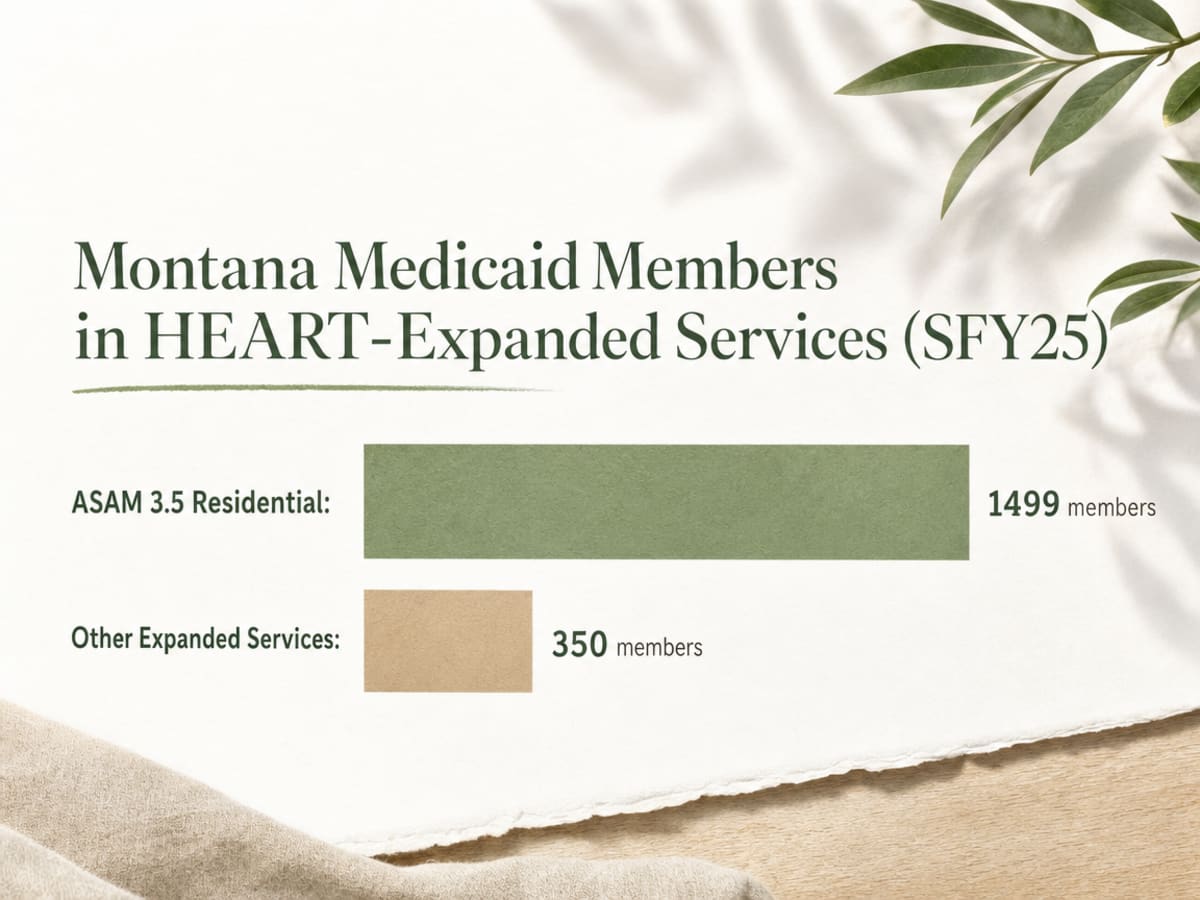
The scale of this benefit is not theoretical. In State Fiscal Year 2025, 1,499 of the 1,849 Montana Medicaid members who received HEART-expanded services received ASAM 3.5 residential care — the overwhelming majority of expanded-service utilization 10. Residential is not a niche within HEART. It is the load-bearing wall. For your family, that means the funding path is well-worn: admissions coordinators submit these requests every week, and the state processes them as routine.
The 21-day authorization and what happens after
Here is a piece of policy worth understanding clearly before intake day: the initial prior authorization for ASAM 3.5 may be issued for as many days as deemed medically necessary, up to 21 days 9. Twenty-one days is a ceiling on the first approval, not a discharge date. Facilities can and do request extensions when clinical progress supports a longer stay.
That distinction matters, because SAMHSA’s own guidance places typical residential care in a range of weeks to months, with stays of a year or more for the most serious cases 3. Three weeks is a start. It is often not the whole arc. If your loved one is doing the work but is not ready for a step-down, the clinical team should be documenting that and asking for more time.
Two practical things to do early: ask the program how often they request continued-stay authorizations and what their approval rate looks like, and ask what the discharge plan will be if an extension is denied. A good program has an answer to both. They will also start planning the step-down to PHP or IOP during week one, not week three, so the handoff is ready when the authorization ends.
Coverage-and-cost reference: ASAM 3.1 vs. 3.5
Two residential levels, two very different price points and clinical intensities. Keeping them straight when you are on the phone with an admissions coordinator or a Medicaid case manager will save you hours.
| Feature | ASAM 3.1 (Low-Intensity Residential) | ASAM 3.5 (High-Intensity Residential) |
|---|---|---|
| Setting | Licensed community-based residential home 15 | 24-hour clinically managed facility 14 |
| Clinical hours | Minimum 5 hours/week of professionally directed SUD treatment 15 | 24-hour structured treatment; bundled individual, group, family therapy, and psychosocial rehab 9 |
| Medicaid per diem (H0018) | Separate rate; not H0018 | $256.95 per day 8 |
| Initial prior authorization | Required; length varies by medical necessity | Up to 21 days initially, extendable 9 |
| Best fit | Stable enough for work or outpatient; unsafe home environment | Moderate to severe SUD needing constant clinical presence 14 |
Getting there from a frontier zip code
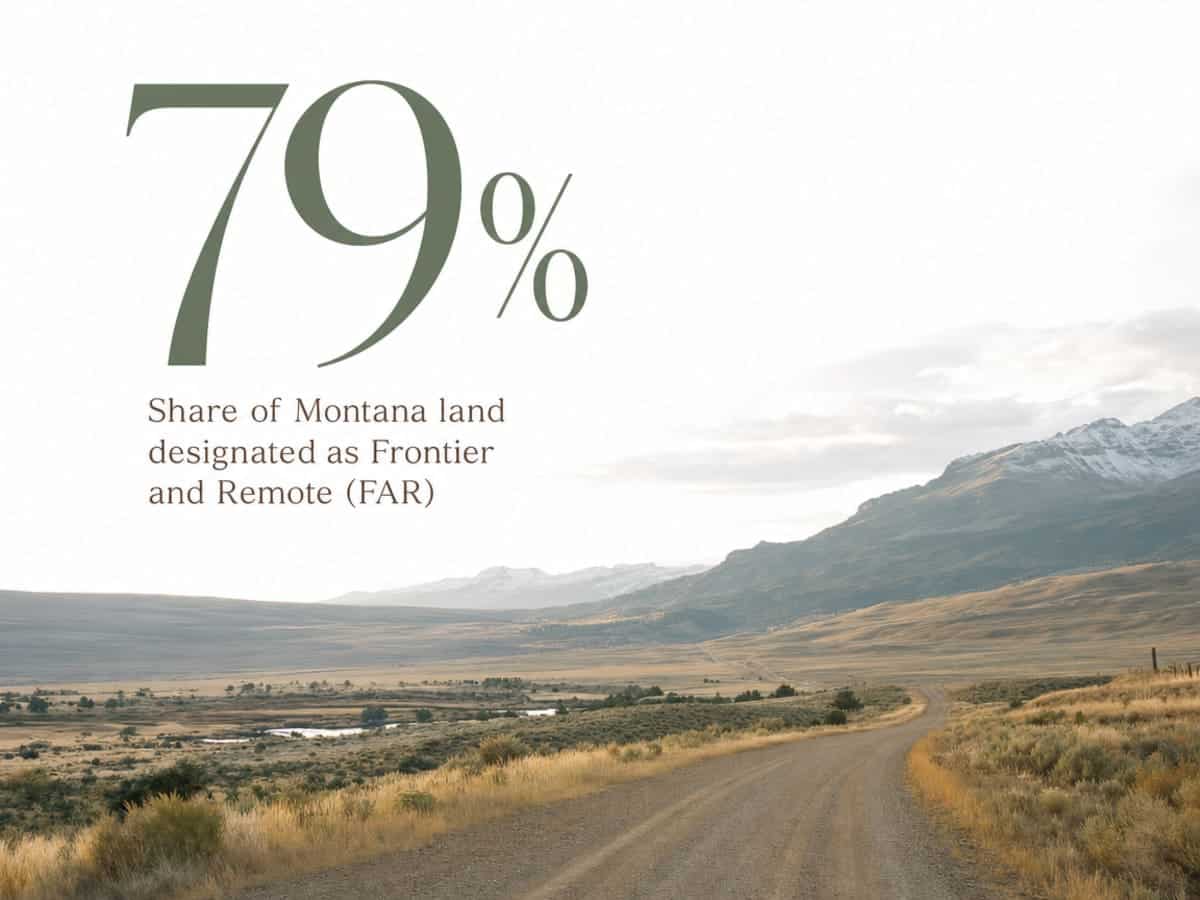
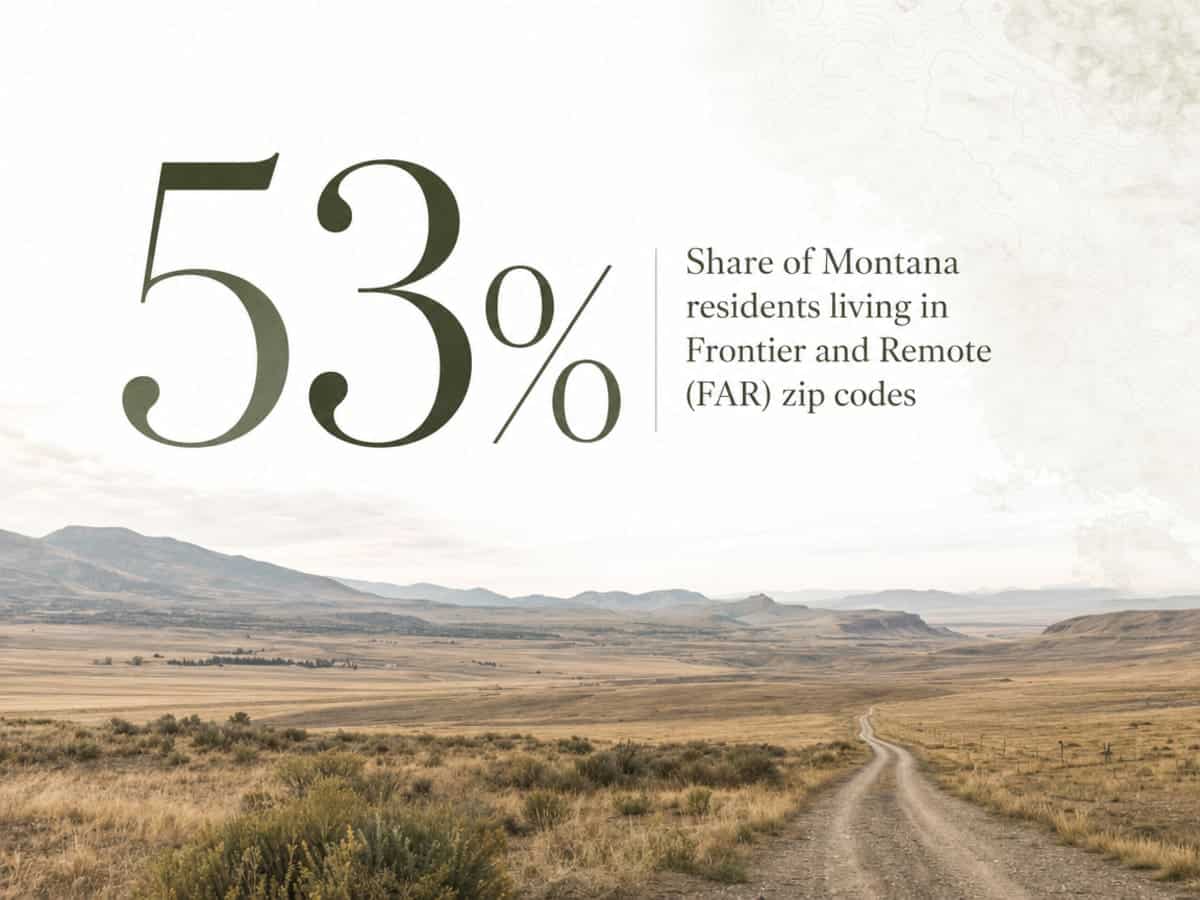
The map does not lie about what it is asking of you. Montana ranks second in the country for the share of its land classified as Frontier and Remote, with 79% of the state carrying that designation, and 53% of Montanans live in FAR-designated zip codes 2. If your loved one is calling from Ennis, White Sulphur Springs, or a two-track outside Big Timber, the drive to a Bozeman-area bed is not a rounding error. It is part of the treatment plan.
Plan the ride before you plan the intake. Winter closes passes. A relapse-adjacent passenger in a personal vehicle for three hours is a risk, not a logistics problem. Ask the admitting program what sober transport options they coordinate, whether a peer support specialist or case manager can ride along, and what the handoff looks like at the door. Some programs will meet a family halfway. Some will send someone to pick up. Some expect you to arrive on your own. Knowing which one before admission day changes what you pack, who drives, and what time you leave.
Weather windows matter too. If you are coming down from Choteau or in from the Hi-Line, a two-day forecast can decide whether admission happens Tuesday or Thursday. Build a small buffer. Have a backup driver. Keep the admissions coordinator’s cell number, not just the main line.
Then think about the reverse trip: family visitation. Frontier distance does not stop being a factor once someone is admitted. Ask whether the program supports scheduled video family sessions, whether in-person visits are weekend-only, and whether family therapy can happen by phone when a four-hour round trip is not possible that week. The families who plan this in week one show up more consistently in week three. That consistency is part of what your loved one is trying to hold onto.
The decision sequence before you accept a bed
Matching level of care to what is actually happening
Before you say yes to any bed, be honest with yourself about what the last two weeks have actually looked like. Not the best day. Not the crisis day. The average day. That picture is what an ASAM assessment is trying to capture, and it is what should drive the level-of-care recommendation.
If your person is using daily, cannot stay safe for a night without support, has a co-occurring mental health condition flaring, or has already tried outpatient without traction, 24-hour clinically managed care at ASAM 3.5 is the honest match 14. If they are stabilized, working a program, and mostly need a safe roof and a schedule, ASAM 3.1’s five-plus clinical hours a week is closer to right 15. Placing someone at 3.1 when they need 3.5 sets them up to fail quietly. Placing them at 3.5 when 3.1 would hold sets them up to feel over-managed and leave early.
Ask the assessing clinician to walk you through which of the six ASAM dimensions drove the recommendation. If the answer is vague, get a second assessment. This one decision shapes the next 21 days 9.
Verifying a program is state-approved
Two lists do most of the verification work for you. The Montana DPHHS State Approved Substance Use Treatment Provider List identifies programs licensed in Gallatin County and across the state, along with the levels of care they are approved to deliver, telehealth capacity, and which insurances they accept 13. SAMHSA’s national locator at FindTreatment.gov cross-checks the same programs against federal records of state-licensed providers 6.
Before you commit, confirm three things in writing:
- The specific ASAM level the program is licensed for.
- Current Montana Medicaid enrollment as an SUD provider.
- Compliance with the residential provider standards CMS requires under the HEART waiver 19.
A program that hedges on any of those three is not ready to hold your loved one.
Also ask when the last state licensure survey was completed and whether any corrective action is open. That is a fair question. Good programs answer it without flinching.
MOUD inside residential: what to ask
Medications for opioid use disorder — buprenorphine, methadone, and extended-release naltrexone — save lives, and the residential setting is often where a stable start becomes possible. But not every Montana residential program offers every medication on site, and DPHHS does not currently require them to 19. That means the question is on you to ask.
Start with three direct questions:
- Can the program continue an existing buprenorphine or methadone prescription without a gap?
- Can they initiate XR-naltrexone during the residential stay, and how quickly — some programs use rapid protocols now being studied in community residential settings 5?
- If methadone is the right medication, how do they coordinate with an opioid treatment program for dosing?
If your loved one is already stable on a medication, a gap at admission is a relapse risk. Get the medication plan in writing before the admission date, including who prescribes, who administers, and what happens on discharge day so the prescription follows them home instead of ending at the door.
Continuing care starts before admission
PHP, IOP, and outpatient handoffs
The best week to plan discharge is week one. That sounds counterintuitive when your loved one has just unpacked a duffel bag, but the arithmetic is unforgiving: an initial ASAM 3.5 authorization runs up to 21 days, and SAMHSA’s own guidance describes residential care as a stretch of weeks to months, sometimes a year for the most serious cases 3, 9. The gap between what is authorized and what recovery actually takes is filled by continuing care. If nobody is building that bridge on day three, day twenty-one arrives as a cliff.
Ask the residential team who owns the step-down plan and when it starts.
- A partial hospitalization program (PHP) typically runs five to six hours a day, five days a week, and works well for someone who still needs heavy clinical structure but can sleep somewhere safe at night.
- Intensive outpatient (IOP) usually meets three days a week for three hours and fits someone returning to work or school.
- Standard outpatient is the long tail — weekly individual sessions, group, medication management.
For a family in Livingston or Ennis, the geography question repeats itself here. Ask whether PHP and IOP are available in person near home, by telehealth, or as a hybrid. The state’s task force explicitly names telehealth expansion as a rural priority for exactly this reason 17. Get the first outpatient appointment on the calendar before discharge day, not after.
Recovery housing and peer support
Where your loved one sleeps after discharge shapes what happens next as much as any therapy hour. If home is safe and supportive, home works. If home is where the using happened, or where the using partner still lives, a recovery residence is often the difference between week four and week forty.
Montana’s SUD Task Force has made expanding certified recovery residences and peer support a named priority, alongside MOUD continuation, particularly for frontier and rural communities where step-down housing is thin 16, 17. In 2023, statewide baselines showed 490 traditional Medicaid participants and 1,906 Medicaid expansion participants receiving residential SUD services, but recovery housing capacity has not kept pace with that flow 17.
Ask the residential team three questions early: which recovery residences they refer to, whether a peer support specialist can be assigned before discharge, and how MOUD prescriptions transfer to the community prescriber. Peer support is not a nice extra — a peer who has done this walk is often the person your loved one will actually call at 9 p.m. on a hard Tuesday.
If you are a referring clinician or case manager
A quick audience shift: this section is for the primary care physician in Belgrade, the ED social worker at Bozeman Health, the tribal health case manager, or the probation officer who ends up as the de facto navigator. The family-facing guidance above still applies, but your leverage points are different.
Three things move a Bozeman-area referral faster:
- Send a completed ASAM assessment with the referral, not a diagnosis alone — the receiving program still has to document medical necessity for the 3.5 prior authorization, and pre-work shortens the intake window 14.
- Name the withdrawal picture explicitly. If your patient needs Level III.7-D medically monitored detox before residential, the residential program cannot be the first stop 4.
- If your patient is on buprenorphine or methadone, put the current dose, prescriber, and last dose date in the referral packet so MOUD continues without a gap 5.
On the back end, own the step-down handoff. Confirm the receiving PHP or IOP slot, the community MOUD prescriber, and — where warranted — a certified recovery residence before your patient’s 21-day authorization runs out 9, 17. The families you serve will remember whether that bridge was built.
Talk With Bozeman’s Residential Recovery Experts Now
Connect directly for guidance on local residential treatment and next steps for you or your client.
Frequently Asked Questions
Does Montana Medicaid cover residential addiction treatment in the Bozeman area?
Yes. Under the HEART 1115 waiver, Montana Medicaid covers ASAM 3.5 clinically managed high-intensity residential treatment as a bundled benefit for adults who meet medical necessity criteria 9. The per diem for H0018 is currently $256.95 per day, which covers the clinical service package but not stand-alone room and board 8, 19.
What is the difference between ASAM 3.1 and ASAM 3.5 residential care?
ASAM 3.1 is a licensed community-based residential home with a minimum of five hours per week of professionally directed treatment — closer to structured sober living with clinical hours built in 15. ASAM 3.5 is 24-hour clinically managed residential care for moderate or severe substance use disorders, with bundled individual, group, family therapy, and psychosocial rehab delivered daily 14, 9.
How long can someone stay in residential treatment under the HEART waiver?
The initial prior authorization for ASAM 3.5 may be issued for up to 21 days of medically necessary care, and programs can request continued-stay extensions when clinical progress supports them 9. SAMHSA describes typical residential care as weeks to months, with the most serious cases needing a year or more, so treat 21 days as a starting window, not a discharge date 3.
Do I need to complete detox before entering residential treatment?
Often, yes. Most ASAM 3.5 residential programs are not detox units. Level III.2-D is clinically managed residential detox for moderate withdrawal, and Level III.7-D is medically monitored inpatient detox for severe or medically complex withdrawal from alcohol, benzodiazepines, or opioids 4. Ask the admissions coordinator what withdrawal picture they accept directly and where they refer for detox first.
Can someone continue medications for opioid use disorder (MOUD) inside a residential program?
Sometimes, but not every Montana residential facility offers every medication on site — DPHHS does not currently require it 19. Ask specifically whether the program can continue an existing buprenorphine or methadone prescription without a gap, initiate extended-release naltrexone during the stay 5, and coordinate with an opioid treatment program if methadone is the right medication. Get the plan in writing before admission.
How do I verify that a Bozeman-area residential program is state-approved?
Cross-check two lists. The Montana DPHHS State Approved Substance Use Treatment Provider List identifies licensed programs by county and the levels of care they can deliver 13. SAMHSA’s FindTreatment.gov locator confirms state-licensed providers and their modalities 6. Before admission, get written confirmation of the specific ASAM license, active Medicaid enrollment, and compliance with HEART residential provider standards 19.
References
- Opioid overdoses have become more common in Gallatin County, Montana. https://familymedicine.uw.edu/wp-content/uploads/2025/04/UP-Scholarly-Project-Naloxone.pdf
- Barriers for Implementing the Hub and Spoke Model to Expand Medication for Opioid Use Disorder in Rural Areas. https://pmc.ncbi.nlm.nih.gov/articles/PMC8411614/
- Treatment Types for Mental Health, Drugs and Alcohol. https://www.samhsa.gov/find-support/learn-about-treatment/types-of-treatment
- Quick Guide: Detoxification and Substance Abuse Treatment (Based on SAMHSA TIP 45). https://nida.nih.gov/sites/default/files/samhsa_detoxification_and_substance_abuse_treatment.pdf
- NIDA-CTN-0097: Rapid vs Standard Initiation of Extended-Release Naltrexone in Inpatient/Residential Programs. https://datashare.nida.nih.gov/study/nida-ctn-0097
- Find Substance Use Disorder Treatment. https://www.samhsa.gov/substance-use/treatment/find-treatment
- Montana State Plan Amendment (SPA) #: 22-0030. https://www.medicaid.gov/medicaid/spa/downloads/MT-22-0030.pdf
- Substance Use Disorder Medicaid Provider Fee Schedule Effective July 1, 2024. https://medicaidprovider.mt.gov/docs/feeschedules/2024/July2024SUDMedicaidFeeSchedule.pdf
- Montana HEART CMS Amendment Approval (2024-02-26). https://www.medicaid.gov/sites/default/files/2024-02/mt-heart-cms-amendment-approval-20240226.pdf
- Healing and Ending Addiction Through Recovery and Treatment (HEART) 2025 Report. https://dphhs.mt.gov/assets/StatutorilyRequiredReports/MCA16-12-122HEARTReport9-1-25.pdf
- Proposed Addictive and Mental Disorders Division Medicaid Manual (Effective 07/01/2019). https://dphhs.mt.gov/assets/BHDD/MedicaidManual/AMDDMedicaidManualeff07012019.pdf
- Summary of Opioid Use in Montana. https://dphhs.mt.gov/assets/publichealth/EMSTS/Data/Opioid_Drug_Use_Summary.pdf
- Montana State Approved Substance Use Treatment Provider List (May 26). https://dphhs.mt.gov/assets/BHDD/SubstanceAbuse/SUDProviderlist5-26.pdf
- Medicaid Services Provider Manual: SUD Clinically Managed High-Intensity Residential (ASAM 3.5) Adult. https://dphhs.mt.gov/assets/BHDD/MedicaidManual/540SUDASAM3-5.pdf
- Addictive and Mental Disorders Division Medicaid Services Provider Manual (selected sections). https://dphhs.mt.gov/assets/BHDD/MedicaidManual/AMDDMedicaidPolicyManual7.1.2020.pdf
- Montana Substance Use Disorders Task Force Strategic Plan. https://dphhs.mt.gov/assets/publichealth/EMSTS/opioids/MontanaSubstanceUseDisordersTaskForceStrategicPlan.pdf
- Montana Substance Use Disorder Task Force Strategic Plan (2024 Update). https://dphhs.mt.gov/assets/publichealth/EMSTS/opioids/SUDsStrategicPlan2024.pdf
- Addressing Substance Use Disorders in Montana Strategic Plan. https://dphhs.mt.gov/assets/BHDD/SubstanceAbuse/SUDStrategicPlan.pdf
- CMS Approval Document for Montana HEART Waiver (October 10, 2025). https://www.medicaid.gov/medicaid/section-1115-demonstrations/downloads/montan-heart-monitor-renty-invte-imptn-pln-aprvl-athmntH.pdf