Key Takeaways
- Butte holds the closest stack of residential beds for most of southwest Montana, with MCDC offering 8 medically monitored 3.7 beds and 40 clinically managed 3.5 beds, plus Butte Spirit Center’s 3.1 low-intensity residential and outpatient tracks 13.
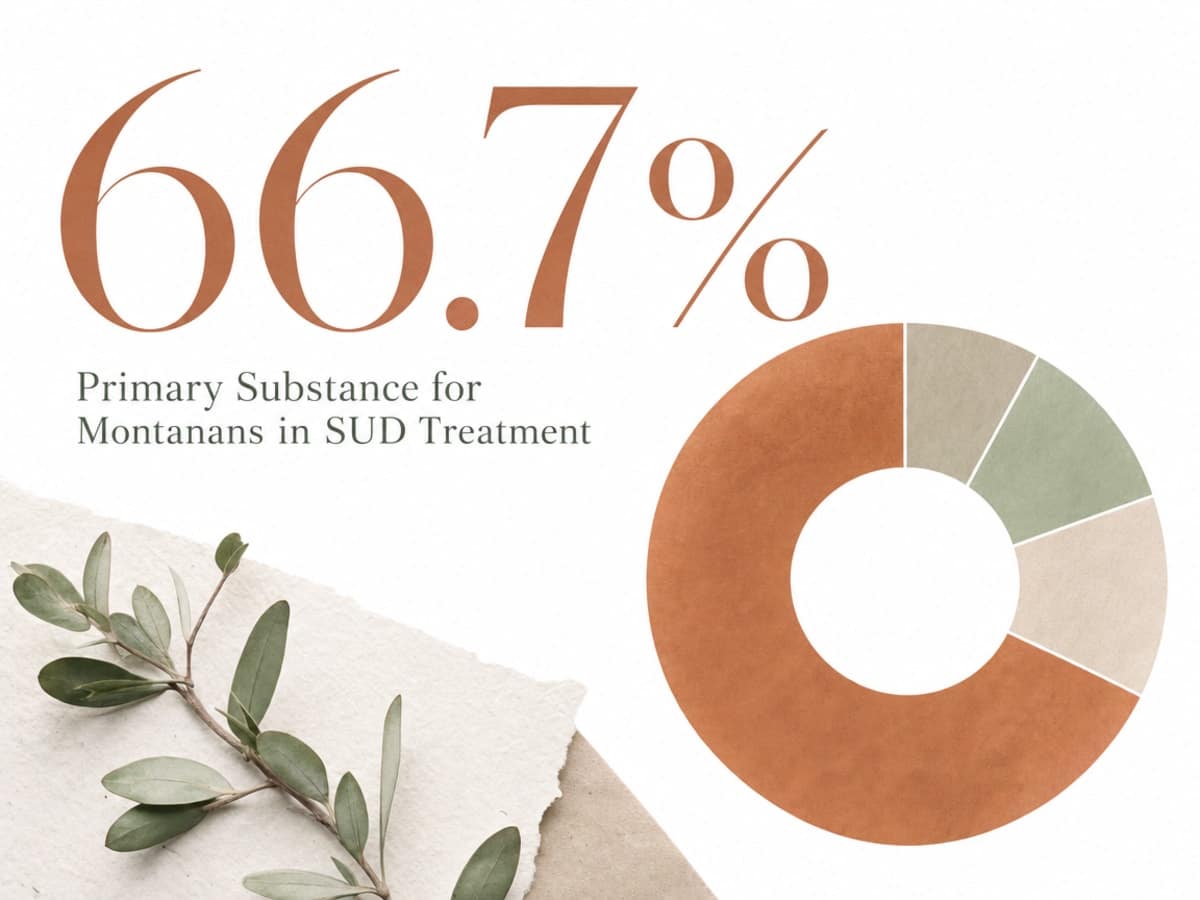
- Alcohol drives most admissions — 66.7% of Montanans in SUD treatment name it as primary 12— so be honest about drinking patterns, withdrawal history, and co-occurring mental health when calling intake.
- Montana’s HEART 1115 waiver expanded Medicaid to cover 3.1, 3.2-WM, and 3.3 residential care and addressed the IMD exclusion, but paper coverage does not guarantee an open bed 1.
- Before agreeing to admission, confirm 24/7 on-site nursing, a 24-hour physician evaluation, family involvement, written discharge planning starting week one, and matching ASAM designation on the state provider list 13, 14.
Why Butte is the bed most rural Montanans end up looking at
If you live in Dillon, Anaconda, Deer Lodge, or somewhere farther out — Wisdom, Wise River, Jackson — and you or someone at your kitchen table needs residential care, Butte is probably the closest real answer. Not because it is glamorous, but because the beds are actually there, they are state-approved, and I-15 and I-90 both feed into it. For a lot of southwest Montana, that is the geography of recovery.
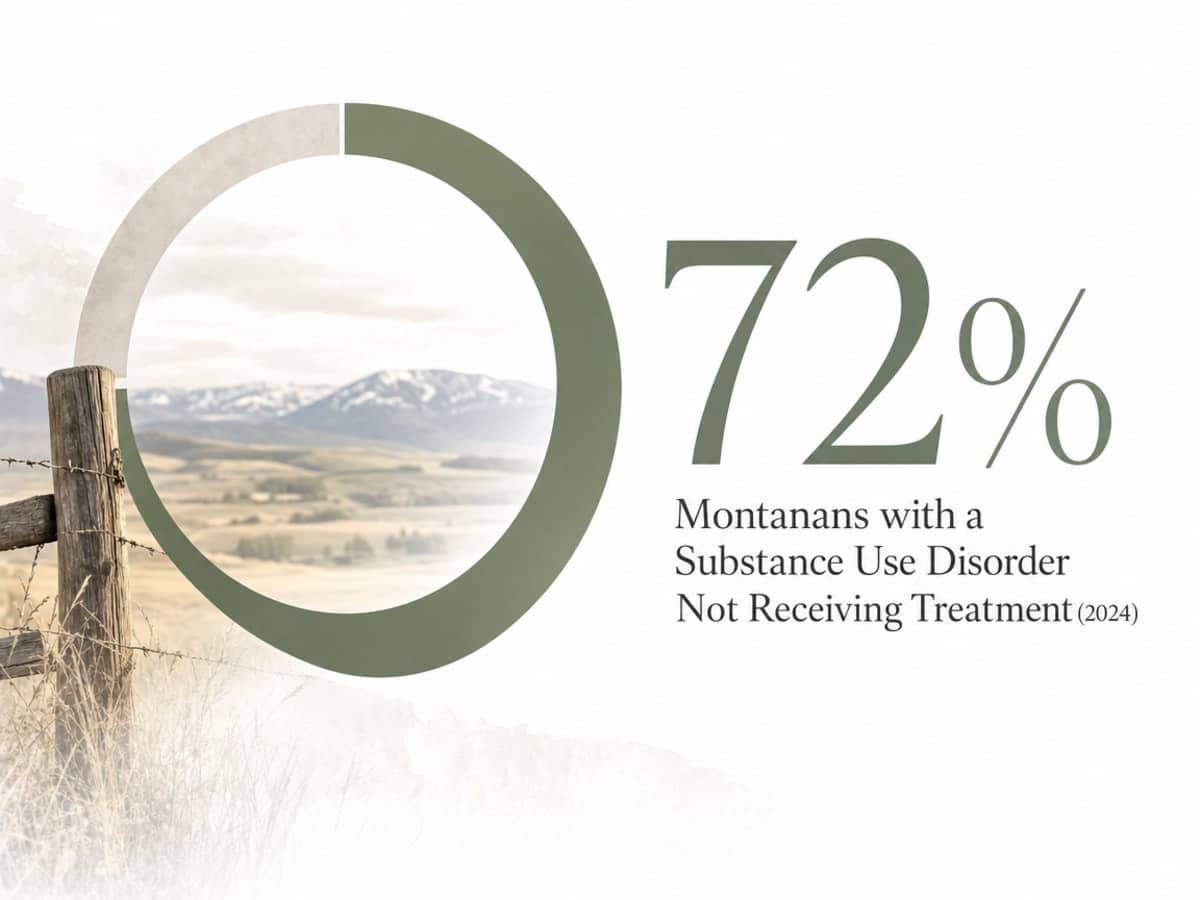
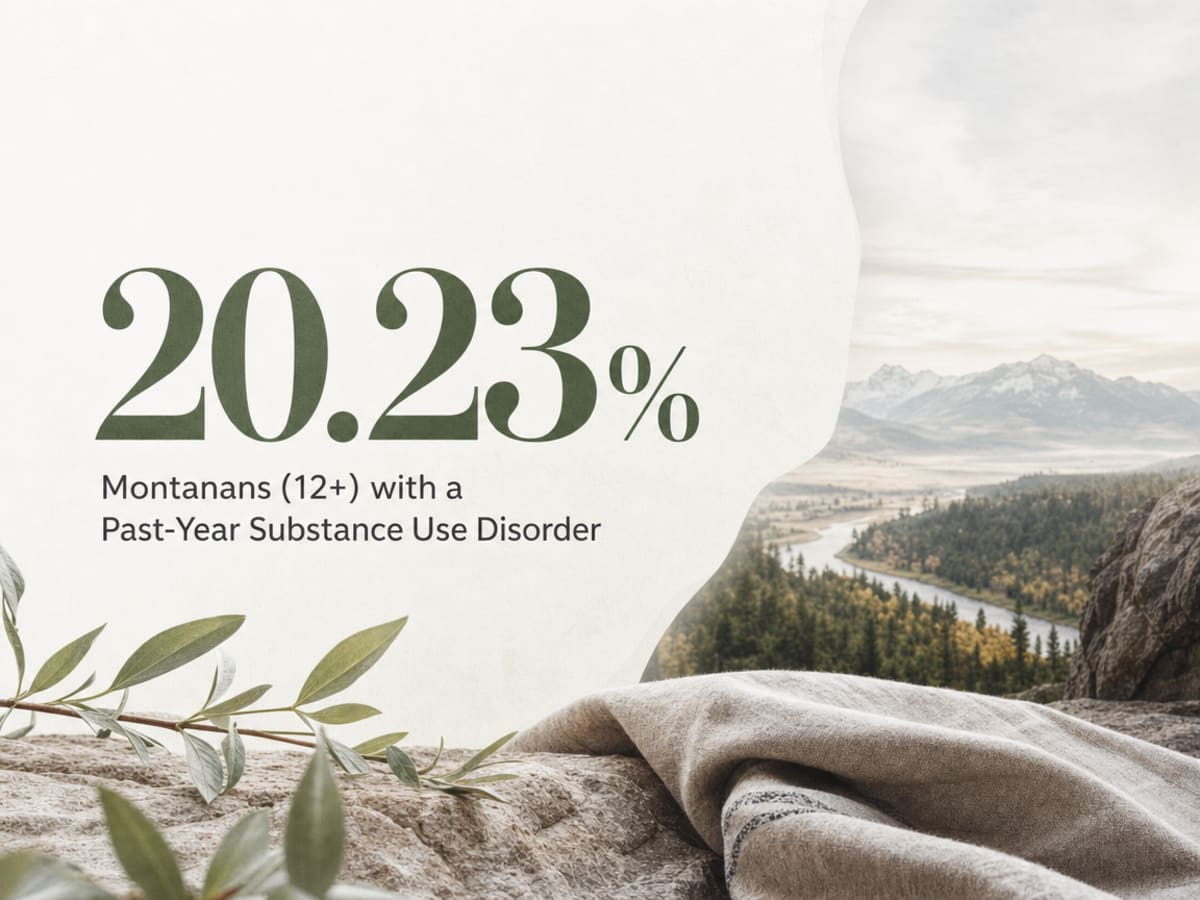
The pressure to find those beds is not abstract. Roughly 20.23% of Montanans age 12 and older — about 195,000 people — meet criteria for a past-year substance use disorder 2. The state’s own 2024 SUD Task Force plan states that about 72% of Montanans with a SUD are not receiving treatment 3. This highlights the significant gap in care.
You already know what that gap looks like on the ground: a cousin who detoxed in an ER hallway, a client who got a bed three counties away and never made it to intake, or a parent who called every number on a printed list and got voicemail. This is the reality of the system.
Butte matters because it holds a small but layered stack of options inside one drive: medically monitored inpatient care, high-intensity residential beds, lower-intensity recovery-oriented housing, outpatient step-downs, and, for justice-involved folks, corrections-linked programming. It is not a perfect map, but it is a real one, and for many rural residents, it is the map that actually gets someone through the door. The next sections lay it out bed by bed.
The Butte bed map: what actually exists inside city limits
Montana Chemical Dependency Center (MCDC): 3.7 and 3.5
MCDC sits at 525 E. Mercury in Butte, and for most of southwest Montana, it is the primary residential bed. The state’s approved provider list shows two ASAM levels running under the same roof: 8 beds of 3.7 Medically Monitored Intensive Inpatient and 40 beds of 3.5 Clinically Managed High Intensity Residential, staffed 24/7 13.
The 8 medically monitored beds are crucial for individuals with a real withdrawal risk, such as alcohol seizures, benzo taper, or mixed use where complications cannot be ruled out. These beds are scarce and fill quickly. If you are calling from Beaverhead or Powell County, expect a waitlist.
The 40 residential beds at 3.5 are the workhorse. This is where someone lands after medical stabilization to engage in clinical work—group, individual, relapse prevention, discharge planning—in a structured setting with nursing on-site. It is not detox and it is not a recovery house; it is the middle of the continuum, providing essential care for most rural clients.
One practical note: MCDC is state-operated, meaning the intake process and funding differ from private facilities. Have the Medicaid card, ID, and any recent ER or assessment paperwork ready before calling.
Butte Spirit Center: outpatient, IOP, and 3.1 low-intensity residential
Butte Spirit Center plays a different role than MCDC. On the state-approved provider list, Spirit Center holds three designations: 1.0 Outpatient, 2.1 Intensive Outpatient, and 3.1 Low Intensity residential 13. This combination is significant.
The 3.1 level is residential in the sense that the client sleeps there, but the clinical hours are lighter. It offers a structured living environment with professionally directed services. This level is suitable for someone who has already undergone medical stabilization or whose use pattern does not require 24-hour nursing but cannot safely return home due to triggering environments or lack of transportation. It provides crucial time and structure.
The outpatient and IOP tracks are vital for step-down care. A client can complete 3.5 at MCDC, transition to 3.1 housing, and continue treatment through Spirit Center’s IOP, maintaining continuity with their clinical team. For rural residents, this continuity within one town, rather than bouncing between Butte, Helena, and home, often determines whether care is completed or dropped out.
Connections Corrections in Butte (for justice-involved readers only)
Scope note: this section is only relevant if you are working with someone on probation, parole, or a DOC-ordered placement. If that is not your situation, skip to the next section.
The Montana Department of Corrections lists the Connections Corrections Program (CCP East) in Butte as a residential SUD treatment center for males 16. This is not a community bed you can call and refer into; placement runs through corrections, and eligibility is tied to the client’s legal status.
For probation officers and defense-side case managers, it is beneficial to know the program is in town, allowing the client to stay within their regional support network. For everyone else, CCP should be considered separate from the MCDC/Spirit Center pathway.
The ASAM continuum, translated for someone calling from Dillon
When you are on the phone from a rural area, and the intake person mentions numbers like 3.7, 3.5, or 3.1, understanding their meaning is crucial for securing a bed. Here is what those numbers signify, in the typical order of a phone call:
- 3.7 — Medically Monitored Intensive Inpatient.
- This level is for individuals whose withdrawal could be life-threatening, such as alcohol seizures, a benzo taper, or opioid withdrawal complicated by other medical issues. Nursing is on-site around the clock, and a physician evaluates within 24 hours of admission 14. In Butte, this is the 8-bed unit at MCDC 13, which fills quickly.
- 3.5 — Clinically Managed High Intensity Residential.
- Once the medical crisis has passed, this level focuses on clinical work: group therapy, individual sessions, relapse prevention, and learning to live sober. Staff is 24/7, but the nursing presence is lighter than 3.7. MCDC offers 40 of these beds 13. This level is appropriate for someone stable enough for group therapy but not yet ready to return home.
- 3.3 — Clinically Managed Population-Specific High Intensity.
- Similar to 3.5, this level is designed for individuals who require a slower cognitive pace, such as those with traumatic brain injury, older adults, or those with longer-standing impairment. Montana’s HEART 1115 waiver expanded Medicaid coverage to include 3.3 1. While not offered within Butte city limits, its availability statewide is important to note.
- 3.2-WM — Clinically Managed Residential Withdrawal Management.
- This provides social-model detox in a residential setting for individuals whose withdrawal does not necessitate hospital-level medical monitoring. This level was also added under the HEART waiver 1.
- 3.1 — Clinically Managed Low Intensity Residential.
- This offers a structured place to sleep with at least five hours a week of professionally directed services 1. Butte Spirit Center provides this designation locally 13. It serves as a step-down bed, preventing individuals from returning directly to a potentially triggering home environment.
When you call, describe the person’s situation—last drink, last use, current withdrawal signs, mental health history, and transportation needs—rather than focusing on the ASAM number. The clinician will determine the appropriate level of care; your role is to provide accurate facts.
What residential care in Butte is actually treating
If you have experience in intake, you know that alcohol is almost always the primary substance on paperwork. Among Montanans in SUD treatment in 2024, 66.7% reported alcohol as their primary substance, and another 8.4% named it as secondary 12. This means alcohol is a factor in roughly three out of four cases, before even considering opioids, stimulants, or the polysubstance use that more accurately reflects what most people are using.
This prevalence of alcohol use should inform your expectations for a Butte residential admission. Alcohol withdrawal is the primary reason 3.7 beds at MCDC are filled. It can lead to seizures, elevated blood pressure, and necessitate an ER visit instead of a group room. When calling from Anaconda or Dillon, be honest about the last two weeks of drinking, including the number of drinks per day, morning shakes, and any prior seizures. This information is critical for determining if medically monitored care is warranted or if 3.5 is safe.
Stimulants represent another significant issue in Montana. From 2020 to 2024, 381 people died from unintentional methamphetamine overdose in the state, with nearly half of those deaths also involving an opioid 11. While meth does not cause the same medical withdrawal crisis as alcohol, the psychiatric effects—sleep collapse, paranoia, and depressive crash—are very real. Residential care provides the structured environment and time needed to navigate these challenges without relapsing.
Additionally, most individuals seeking treatment have a co-occurring mental health condition, such as depression that intensifies when drinking stops, anxiety that predates substance use, or trauma that substances were used to manage. SAMHSA’s guidance emphasizes concurrent treatment for mental illness and SUD, not sequential 6, 8. Long-term residential facilities are key sites for integrated care. When inquiring about dual diagnosis services at a Butte program, listen for an integrated approach—same team, same treatment plan—rather than a referral out the door.
Paying for it: HEART waiver coverage by ASAM level
Montana Medicaid now covers significantly more residential care than it did three years ago. The HEART Section 1115 waiver, approved by CMS in 2022, expanded state plan reimbursement to include 3.1 low-intensity residential, 3.2-WM residential withdrawal management, and 3.3 population-specific high-intensity residential services 1. The waiver also addresses the federal IMD exclusion, which previously prevented Medicaid payment for stays in larger residential facilities meeting the Institution for Mental Diseases definition 1. This means funding is now available for the longer residential stays that rural clients often require.
Here is a breakdown of what this looks like with a Medicaid card:
| ASAM level | What it is | HEART/Medicaid coverage | Available in or near Butte |
|---|---|---|---|
| 3.7 Medically Monitored Intensive Inpatient | 24/7 nursing, physician-led withdrawal management | Covered under state plan | MCDC, 8 beds 13 |
| 3.5 Clinically Managed High Intensity Residential | Structured 24/7 residential clinical care | Covered under state plan | MCDC, 40 beds 13 |
| 3.3 Population-Specific High Intensity | Slower cognitive pace; TBI, older adults | Added under HEART 1 | Not in Butte; statewide search |
| 3.2-WM Residential Withdrawal Management | Social-model detox, non-hospital setting | Added under HEART 1 | Not in Butte; statewide search |
| 3.1 Low Intensity Residential | Structured housing, 5+ hrs/week clinical services 1 | Bundled rate under HEART 1 | Butte Spirit Center 13 |
For clients with commercial insurance, ASAM levels still apply, but the plan will use its own medical necessity criteria. Ask the intake coordinator to verify benefits before traveling; a ten-minute call can save a 90-mile drive.
The rural choreography: getting there and getting home
Sober transport from your county to E. Mercury
The bed is only half the problem; getting someone from a rural location, such as a trailer outside Wisdom or a ranch road east of Lima, to 525 E. Mercury without a relapse during transport is a significant clinical challenge. Rural SUD literature consistently highlights transportation as a major barrier, alongside funding, bureaucracy, and lack of interagency cooperation 10. This often leads to empty beds.
Consider the distances: Dillon to Butte is about 65 miles, while Ekalaka to Butte is closer to 500. Public transport options like Greyhound are often unavailable in remote areas. County vans, if they exist, typically operate only on weekdays and cannot accommodate same-day pickups, especially on weekends.
Here are the most effective transport options, in order of priority:
- Family or a sober friend: Ensure they have a full tank of gas and understand the importance of a direct route without stops that could trigger a relapse.
- Local outpatient provider or tribal health navigator: Many have small transport budgets or access to peer-support drivers. Ask directly about these resources.
- Butte program intake coordinator: Inquire about their transport partners. Some programs can arrange sober transport services or coordinate with Medicaid non-emergency medical transportation vendors.
- Law enforcement or crisis response: Use as a last resort for individuals in acute withdrawal. While not ideal, it is safer than impaired driving.
Regardless of the chosen transport, pack the bag the night before and keep the Medicaid card readily accessible. The window between a client agreeing to admission and getting into the car is often brief; protect this critical period.
Case management, family involvement, and the warm handoff back
Admission day is not an end, but the middle of a longer process. Individuals who successfully complete residential care and avoid ER visits six months later often had a case manager involved from the beginning. SAMHSA’s TIP 27 emphasizes applying placement, continued stay, and discharge criteria across the entire continuum of care, not just at admission 9. This means discharge planning should begin in week one, not week three.
If you are a family member, ask for the case manager’s name and contact information during intake. Montana’s licensure standards for residential facilities mandate family or legal representative involvement in treatment planning 14. Utilize this rule. If traveling from Dillon or Sheridan is difficult, request to participate in treatment plan meetings by phone.
The “warm handoff” back to community care is a critical point where continuity often fails. Ideally, a client completing 3.5 at MCDC would step down to 3.1 recovery housing at Butte Spirit Center, then to IOP, and finally to outpatient care in their home county 13. Each transition requires a scheduled appointment before the client leaves, not just a phone number on a discharge summary.
Before discharge, ask the case manager these three questions:
- Who is the outpatient provider in my home county, and is the first appointment already scheduled?
- What is the housing plan for the first 30 days after discharge?
- If the person is on medication-assisted treatment, who will prescribe the next refill, and where will it be filled?
While you may not receive perfect answers, you should expect realistic ones. This constitutes a proper handoff.
How to vet a residential program before you sign the intake
While you may not have unlimited time to research, the ten minutes spent on the phone before agreeing to admission are invaluable. Montana’s licensure rules for residential treatment facilities provide a clear checklist of questions to ask. A program’s inability to answer these cleanly is a red flag.
Here is the checklist, directly from the rule:
- 24-hour on-site nursing by a registered nurse: This means on-site, not on-call 14. Ask who is in the building at 3 a.m. on a Sunday.
- Physician evaluation within 24 hours of admission: Inquire about when the admitting physician sees new clients and how weekend admissions are handled 14.
- Family or legal representative involvement in treatment planning: This is a requirement, not an option 14. Ask how they include family members who live several hours away, such as through phone calls, video conferences, or scheduled calls.
- Written discharge planning: Ask when it begins and who is responsible for it. The correct answer is week one, with a named case manager 14.
- State approval and current ASAM designation: Cross-reference the program with the DPHHS approved provider list to ensure the stated level of care matches what is being offered 13.
If the program is a recovery house rather than a licensed 3.5 or 3.7 facility, different standards apply. SAMHSA’s recovery housing guidance explicitly prohibits patient brokering and requires that residents on medication-assisted treatment be able to continue their medication 7. If a house demands a client discontinue buprenorphine or methadone to move in, this is a red flag, and you should seek other options.
One crucial question often overlooked is: what happens if this placement does not work? A program that can articulate its limitations and referral partners demonstrates a client-centered approach, rather than just focusing on filling a bed.
If you are the clinician, discharge planner, or family member making the call
You are holding the phone, whether you are an outpatient counselor in Deer Lodge with a client ready for change, a discharge planner at St. James facing a Sunday afternoon bed board, or a sister in Anaconda whose brother needs immediate help.
Take these three immediate steps:
- Call the Butte program that matches the required level of care and inquire about bed availability this week, not next month.
- If Medicaid is not active, start the application process simultaneously with the bed search.
- Arrange transportation before confirming the admission date, as a bed without a driver means a missed intake.
Then, do the quieter thing: tell the person you are helping that making this call is already part of the recovery work. It is not the entire journey, but it is a significant step. The 72% treatment gap in Montana 3closes one phone call at a time, and this one is yours.
If you need a Montana team that can assist with insurance, sober transport, and step-down planning for rural admissions, Elk Ridge Recovery is a valuable contact to have.
Talk With a Local Expert About Next Steps
Connect directly to discuss Butte-area residential options and get guidance tailored to your situation.
Frequently Asked Questions
What residential treatment facilities are actually located in Butte, MT?
Two primary facilities are listed on the state-approved provider list within Butte city limits. Montana Chemical Dependency Center (MCDC) at 525 E. Mercury offers 8 medically monitored inpatient beds at ASAM 3.7 and 40 high-intensity residential beds at ASAM 3.5 13. Butte Spirit Center provides outpatient, intensive outpatient, and ASAM 3.1 low-intensity residential services 13. Additionally, Connections Corrections operates a residential SUD program in Butte specifically for justice-involved males 16.
Will Montana Medicaid pay for residential treatment at MCDC or a Butte program?
Yes, for the covered ASAM levels. Montana’s HEART Section 1115 waiver, approved by CMS in 2022, expanded Medicaid coverage to include ASAM 3.1, 3.2-WM, and 3.3 residential services. It also addressed the federal IMD exclusion, which previously restricted payment for larger residential stays 1. MCDC’s 3.7 and 3.5 beds are covered under the state plan 13. If the client is not already enrolled, begin the eligibility application concurrently with the bed search.
How does someone from a rural county actually get to Butte for admission?
Transportation is a significant barrier for rural residents seeking treatment. Rural counselors identify client transportation, funding, bureaucracy, and lack of interagency cooperation as key obstacles to successful outcomes 10. First, try arranging transport with a sober family member or friend. Next, contact your local outpatient provider or tribal health navigator, as they may have transport budgets or peer-support drivers. Finally, ask the Butte intake coordinator about sober transport partners or Medicaid non-emergency medical transportation. Always confirm the ride before confirming the admission date, and pack the bag the night before.
What is the difference between ASAM 3.7, 3.5, and 3.1 residential care?
ASAM 3.7 is medically monitored inpatient care with 24/7 nursing and physician evaluation within 24 hours, designed for individuals with significant withdrawal risks like alcohol seizures or complicated benzo tapers 14. ASAM 3.5 is clinically managed high-intensity residential care, providing 24/7 structured clinical work after medical stabilization. ASAM 3.1 is low-intensity residential care, offering a structured living environment with at least five hours per week of professionally directed services, typically used as a step-down option 1. All three levels are available in or near Butte 13.
How do I vet a residential program before agreeing to admission?
To vet a residential program, ask five key questions: Is there 24-hour on-site nursing by a registered nurse, not just on-call 14? Does a physician evaluate new admissions within 24 hours, including on weekends 14? How is family involved in treatment planning, especially for those living far away 14? When does written discharge planning begin, and who is responsible for it 14? Does the ASAM level listed on the state-approved provider list match the description provided by the intake team 13?
Is Connections Corrections in Butte an option for someone not involved with the justice system?
No. The Connections Corrections Program (CCP East) in Butte is a residential SUD treatment center for males, managed by the Montana Department of Corrections. Placement is determined through the corrections system based on the client’s legal status 16. It is not a community bed that can be accessed through direct referral. If the individual you are assisting is not on probation, parole, or a DOC-ordered placement, focus your search on MCDC or Butte Spirit Center 13.
References
- July 1, 2022 HEART Waiver Approval. https://dphhs.mt.gov/assets/MedicaidWaivers/MTHEARTApprovalDocument.pdf
- MONTANA – 2023 NSDUH State Tables. https://www.samhsa.gov/data/sites/default/files/reports/rpt56188/2023-nsduh-sae-state-tables_0/2023-nsduh-sae-state-tabs-montana.pdf
- Montana Substance Use Disorder Task Force Strategic Plan (2024). https://dphhs.mt.gov/assets/publichealth/EMSTS/opioids/SUDsStrategicPlan2024.pdf
- Drug Overdose Deaths in Montana 2014–2023. https://dphhs.mt.gov/assets/publichealth/EMSTS/Data/DrugOverdoseDeaths_2014-2023.pdf
- Montana Substance Use Disorders Task Force Strategic Plan (earlier version). https://dphhs.mt.gov/assets/publichealth/EMSTS/opioids/MontanaSubstanceUseDisordersTaskForceStrategicPlan.pdf
- Substance Use Disorder Treatment for People with Co‑Occurring Disorders. https://library.samhsa.gov/sites/default/files/pep20-06-04-006.pdf
- Best Practices for Recovery Housing. https://library.samhsa.gov/product/best-practices-recovery-housing/pep23-10-00-002
- Practice Principles of Integrated Treatment for Co‑Occurring Disorders. https://library.samhsa.gov/sites/default/files/SAMHSA_Digital_Download/PEP20-02-01_004.pdf
- TIP 27: Comprehensive Case Management for Substance Abuse Treatment. https://library.samhsa.gov/product/tip-27-comprehensive-case-management-substance-abuse-treatment/sma15-4215
- Barriers to Substance Abuse Treatment in Rural and Urban Communities. https://pmc.ncbi.nlm.nih.gov/articles/PMC3995852/
- Summary of Methamphetamine Use in Montana. https://dphhs.mt.gov/assets/publichealth/EMSTS/Data/Meth_Drug_Use_Summary.pdf
- Alcohol Use in Montana. https://dphhs.mt.gov/assets/BHDD/PreventionResources/AlcoholUse2024Final.pdf
- Montana State Approved Substance Use Treatment Providers. https://dphhs.mt.gov/assets/BHDD/SubstanceAbuse/StateApprovedSubstanceUseTreatmentProviders.pdf
- Mont. Admin. r. 37.106.2202 – RESIDENTIAL TREATMENT FACILITY: LICENSURE STANDARDS. https://www.law.cornell.edu/regulations/montana/Mont-Admin-r-37.106.2202
- Residential Treatment Facilities (PRTF) – Montana DPHHS. https://dphhs.mt.gov/qad/licensure/healthcarefacilitylicensure/lbfacilityapplications/residentialtreatmentfacilities
- Residential Substance Use Disorder Treatment Centers – Montana Department of Corrections. https://cor.mt.gov/Facilities/ResidentialSubstanceUseDisorderTreatmentCenters