Key Takeaways
- Depression and substance use form a self-reinforcing loop shaped by shared risk factors like genetics, trauma, and how the brain processes reward and pain 10.
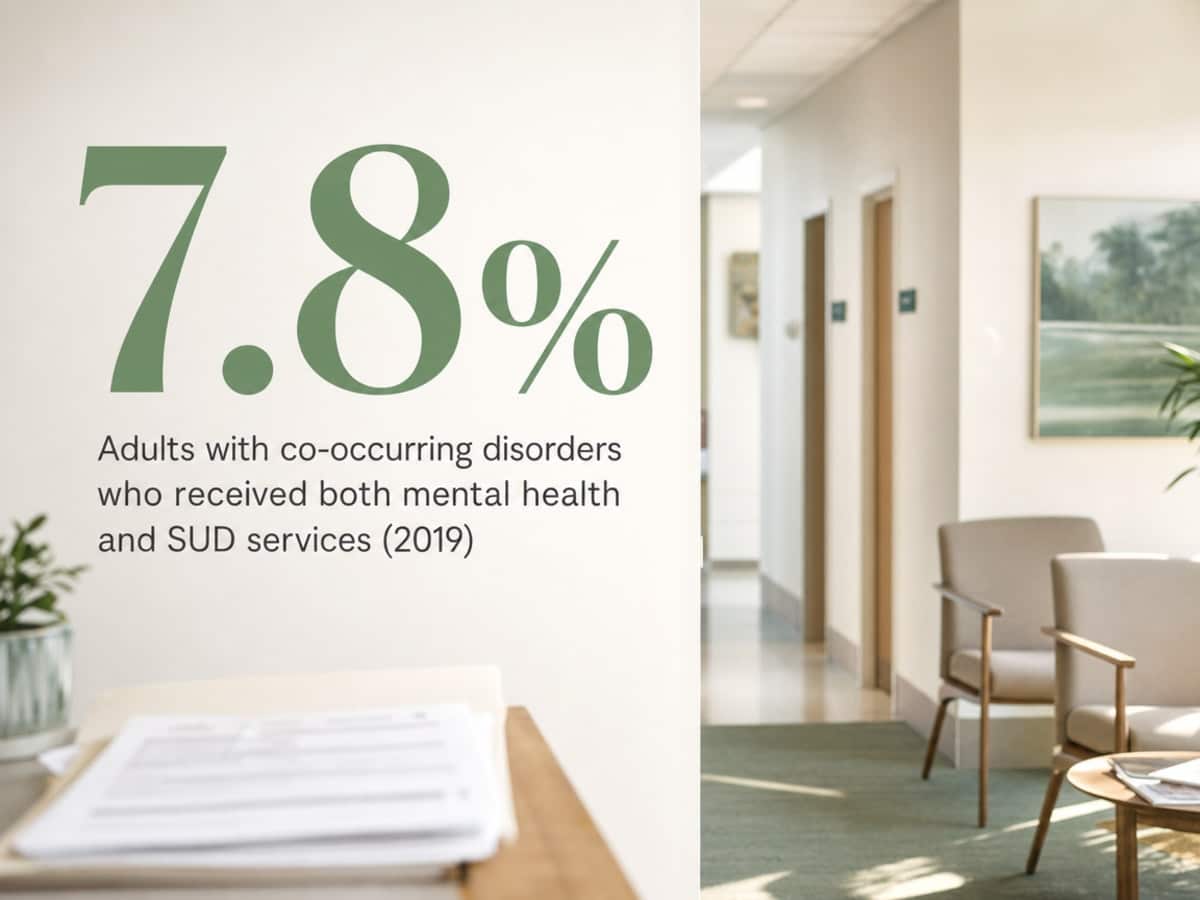
- Fragmented care fails most people with co-occurring conditions—SAMHSA data shows only about 7.8% of affected adults received both mental health and substance use services in 2019 2.
- Fully integrated care means one team, one treatment plan, and shared charts between psychiatric and addiction clinicians, with depression screening, suicide-safety planning, and coordinated medication management starting on day one 1, 4.
- Before committing to a program, ask specific questions about screening tools, reassessment frequency, team meetings, safety planning, medication coordination, and continuity across levels of care 7, 8.
The Intertwined Reality of Depression and Substance Use
It’s a Tuesday. The alarm goes off at 6:47 and you don’t move. Not because you’re lazy, but because the weight on your chest feels physical, and the first thought of the day is already about what you’ll use to make the next hour survivable.
You get up eventually. By 10 a.m. you’ve either used or you’re counting the hours until you can. By 2 p.m. the shame arrives—that quiet, corrosive voice that says you’re the problem. By evening, the depression and the craving are so tangled you can’t tell which one started the fight.
If this sounds familiar, you’re not broken and you’re not alone. This experience has a name: co-occurring depression and substance use disorder. It behaves like a loop: low mood pushes you toward a substance for relief, the substance changes your brain chemistry, sleep, and relationships, and the fallout deepens the depression that made you reach for it in the first place 9, 10.
You didn’t intentionally create this cycle. Shared risk factors—genetics, stress, trauma, and how certain brains process reward and pain—set the stage long before your first use 10.
Understanding this cycle is a crucial first step. This article will explain what’s happening, why treating one condition without the other often fails, and what integrated care for both looks like at a facility that prioritizes comprehensive treatment.
The Cycle’s Shape: Understanding How Depression and Addiction Interact
How Depression and Addiction Feed Each Other
The loop you’re experiencing isn’t random; it’s a recognized pattern. Understanding this pattern is the first step toward breaking free.
Depression diminishes motivation, pleasure, sleep, and the ability to envision a positive future. When a substance temporarily restores any of these, even for a brief period, your brain registers it as relief. This isn’t a sign of weakness; it’s how reward learning functions. The National Institute of Mental Health (NIMH) highlights how substance use and mental disorders influence each other: individuals may use substances to alleviate symptoms, but these substances can then alter brain chemistry, potentially worsening the underlying condition 9.
The cycle then intensifies. The substance disrupts sleep, dulls the brain’s natural reward system, strains relationships, and creates financial burdens. By morning, the depression feels heavier, and the quickest perceived solution is often the very substance that exacerbated the problem.
Research from the National Institute on Drug Abuse (NIDA) indicates that co-occurring conditions stem from more than just habit. Genetics, early life stress, trauma, and the way specific brain systems process reward and pain all contribute to shared vulnerabilities for both depression and addiction 10. This wiring is often inherited or developed through life experiences.
Identifying this cycle doesn’t solve it, but it shifts the problem from a moral failing to a medical condition, where it can be effectively treated.
Distinguishing Substance-Induced Symptoms from Independent Depression
Not all low moods in early recovery are the same. Some depressive symptoms are a direct result of substance use—withdrawal, disrupted sleep, or a brain adjusting to life without a chemical it depended on. These often subside as your body stabilizes. Other symptoms indicate an independent depressive disorder that existed before substance use became problematic and will persist after detox if left untreated.
Differentiating between these is crucial because it dictates the treatment plan. However, you don’t have to achieve full abstinence to make this distinction. The Substance Abuse and Mental Health Services Administration’s (SAMHSA) TIP 48 emphasizes that every person entering substance use treatment should be screened for depressive symptoms, and integrated treatment for both conditions is the standard of care 3.
Delaying depression assessment until a “clean” baseline is established can leave safety risks unaddressed and intensify suffering. An effective clinical team screens on day one, monitors your condition as your body clears substances, and adjusts the plan as the clinical picture becomes clearer. You receive treatment for your current symptoms, and the diagnosis becomes more precise with time and sobriety.
You are not expected to navigate this alone; that is the purpose of a thorough assessment.
The Flaws of Fragmented Treatment Approaches
If you’ve been told a psychiatrist won’t see you until you’re sober, or a rehab won’t admit you until your depression is “stable,” you’ve experienced the impact of a fragmented, two-system approach. It can feel like being passed between providers, leading to the belief that you are the reason treatment isn’t working.
This perception is incorrect. The system itself often creates these barriers. SAMHSA’s TIP 42 advisory reported that in 2019, approximately 9.5 million U.S. adults had both a past-year mental illness and a substance use disorder. Yet, only about 742,000 (around 7.8%) received both mental health and substance use services that year 2. These figures encompass adults surveyed nationally and include services received in any setting. Even with this broad scope, over 90% of adults with co-occurring conditions did not receive integrated care for both.
This isn’t a reflection of individuals refusing help; it’s a consequence of a healthcare system divided into separate silos.
When treatment is split, the mental health provider addresses mood disorders, hoping substance use will resolve independently. Conversely, the addiction specialist focuses on substance use, expecting depression to lift once sobriety is achieved. Each side operates within its training, but neither addresses the whole person. The Agency for Healthcare Research and Quality (AHRQ) states that treating one disorder before the other can hinder improvement in both, which is why concurrent, integrated care is the recommended approach 4.
If you’ve experienced multiple detoxes, therapists, and short-term programs, only to feel like you’ve failed, consider this: the treatment itself may have been inadequate. You were likely navigating two systems not designed to communicate effectively about your needs.
A program that treats depression and addiction under one roof, with a unified team and plan, is not an optional extra. It aligns with established guidelines for the standard of care 2.
The Critical Safety Window of Co-Occurring Conditions
If you’re reading this at 2 a.m., in a parked car, or on a bathroom floor, your presence here matters. Depression combined with active addiction creates a significant risk window. This isn’t about fault or destiny, but about two factors that elevate overdose risk coexisting within the same individual.
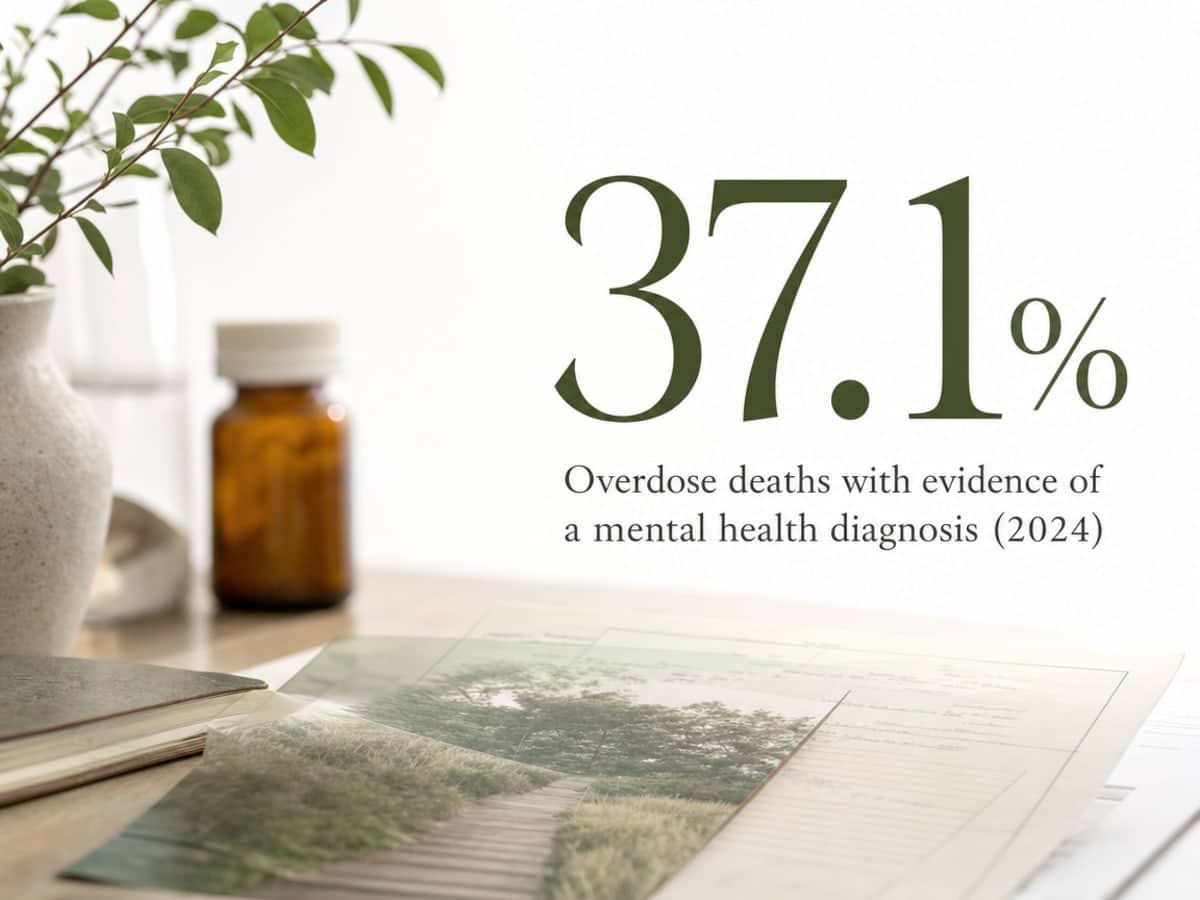
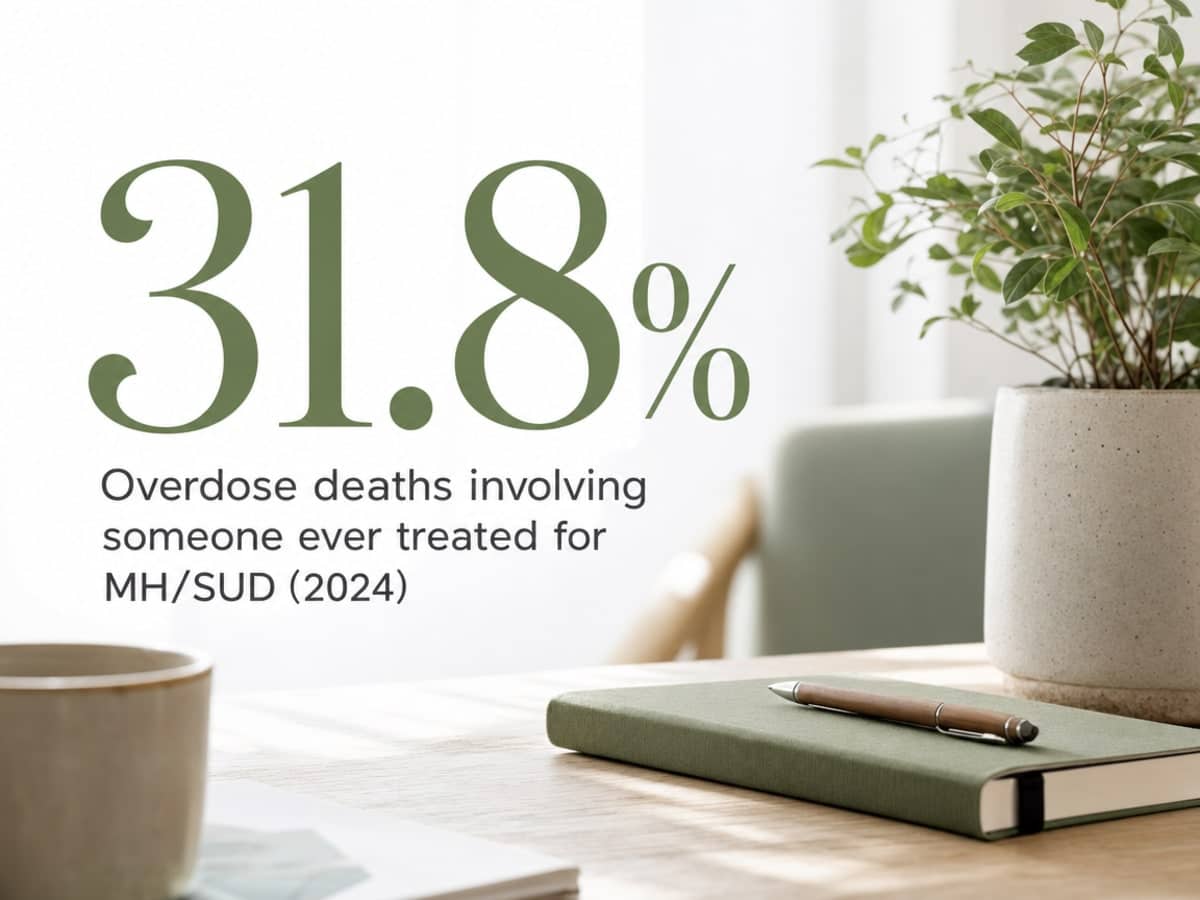
The Centers for Disease Control and Prevention’s (CDC) overdose data highlights this overlap. In 2024, 37.1% of overdose deaths showed evidence of a mental health diagnosis. Additionally, 31.8% involved individuals who had previously received treatment for a mental health or substance use disorder, and 20.2% involved individuals who were actively in treatment at the time of their death 5.
This last statistic is particularly sobering: one in five deaths occurred among individuals who were already seeking help, already in a program, and actively trying to recover.
This data should not discourage seeking treatment, but rather emphasize the importance of choosing the right kind of treatment. While the CDC data indicates association, not direct causation—depression didn’t cause the overdose, and it’s impossible to say a different program would have saved a specific life 5—the pattern is clear enough to influence how effective facilities should be structured.
You are currently in a critical window. The goal of finding the right program is to close this window gently, with support from professionals who understand and address both aspects of your struggle.
Defining Integrated Care: What It Is and Isn’t
Coordinated, Co-Located, and Fully Integrated: Key Distinctions
The term “integrated care” is frequently used but rarely defined. To effectively evaluate a treatment center’s approach to co-occurring depression and addiction, it’s important to understand the distinctions. SAMHSA outlines three distinct models of integration 1:
- Coordinated care involves separate providers—for example, a therapist at one clinic and an addiction counselor at another—who communicate about your case, often sharing notes when remembered. You still navigate between different locations, repeating your story, and hoping prescribed medications don’t conflict. While better than no communication, it’s a minimal form of integration.
- Co-located care means both types of providers work within the same building. This reduces travel, and charts may be shared. Clinicians might interact in common areas, but treatment plans can still be developed independently, without joint decision-making sessions.
- Fully integrated care aligns with recommended guidelines. It features one unified team, one comprehensive treatment plan, and shared communication. The psychiatrist, addiction physician, therapist, case manager, and nursing staff all work from the same chart and participate in weekly meetings to discuss your progress. Depression and addiction are treated as interconnected aspects of one individual, not as separate referrals.
SAMHSA also emphasizes the principle of “no wrong door.” This means whether you initially seek help at a mental health clinic or an addiction program, you should be screened for both conditions and offered integrated treatment, rather than being redirected elsewhere to start over 1.
When contacting a facility, inquire about their specific model. “We treat dual diagnosis” is a marketing statement. “Our psychiatric and addiction teams share one treatment plan and meet weekly about each client” provides concrete information about their operational approach.
Essential Components of the First 72 Hours
At a truly integrated dual diagnosis program, the initial three days are not a passive waiting period. They are crucial for establishing safety and initiating the treatment plan.
Upon admission, you should undergo a biopsychosocial assessment. This structured conversation covers your substance use history, mental health history, trauma, medical conditions, medications, family dynamics, housing, and recent weekly routines. This assessment is vital for the team to determine the appropriate level of care and identify critical areas for monitoring 2.
Depression screening should occur within this initial window. AHRQ recommends the PHQ-9, a validated nine-question tool, as a standard component of assessing depressive symptoms in individuals entering substance use treatment 4. If this screening isn’t conducted within the first day or two, it’s a significant indicator.
Suicide-risk assessment is a distinct and non-negotiable component. AHRQ identifies it as a core element of dual diagnosis care 4, and TIP 48 integrates suicide-safety considerations into early recovery guidance 3. A safety plan should be developed collaboratively with you, not simply provided.
Medical stabilization occurs concurrently. If you are experiencing withdrawal from alcohol, opioids, or benzodiazepines, physician-led detox provides a safe environment for this process. Vitals, medications, sleep, and mood are continuously monitored. Depression care is not postponed until “after detox”; it begins immediately, and the clinical picture clarifies as your body stabilizes.
By day three, you should be familiar with your treatment team members and have an initial, working treatment plan in place.
Integrated Medication Management and Psychiatric Oversight
Medication management is a critical area where siloed treatment often fails. When an antidepressant is prescribed by one provider and medication for opioid or alcohol use disorder by another, without shared records, drug interactions can be missed, and dosing can become inconsistent.
In an integrated program, medication-assisted treatment (MAT) for addiction and pharmacotherapy for depression are managed by clinicians who share a patient chart and participate in weekly meetings. The 2024 Federal Guidelines for Opioid Treatment Programs emphasize patient-centered care planning, ongoing monitoring, and coordination of medical and clinical services. This framework allows MAT and psychiatric care to be integrated into a single plan without conflicts 6.
Practically, this means your addiction physician may prescribe buprenorphine or naltrexone if appropriate, while your psychiatrist evaluates the suitability of an antidepressant. They collaborate, considering that some depressive symptoms may improve as your body stabilizes, and TIP 48 advises caution against over-medicating substance-induced symptoms 3. They compare notes and adjust treatment together.
You should not be responsible for relaying information between disconnected prescribers; that is the fundamental advantage of a unified treatment approach.
Daily Life in Residential Dual Diagnosis Care at Elk Ridge Recovery
A day in a residential dual diagnosis program is often calmer than anticipated. There’s no “boot camp” atmosphere, but rather a structured schedule, a supportive team, and a rhythm that fosters stability.
Mornings at Elk Ridge Recovery begin with medical check-ins, including vitals, medication administration, and a brief conversation with nursing staff about sleep and mood. For those in early withdrawal, the physician-led detox team continuously tracks symptoms and adjusts care as needed. For others, the check-in provides a daily assessment of depression: sleep quality, medication effectiveness, and mood on a 0-to-10 scale. This is not merely paperwork; it’s measurement-based care, a practice recognized by CMS as a quality indicator for behavioral health 7.
Group therapy occupies a significant portion of the day. Some groups focus on relapse prevention and coping skills for cravings. Others are trauma-informed process groups, providing a safe space to explore depression, shame, and the underlying narratives contributing to substance use. Individual therapy runs concurrently, fostering a consistent therapeutic relationship week after week.
Family therapy and education sessions involve loved ones when appropriate and safe. Case management addresses external factors such as insurance, legal matters, employment, childcare, and personal administrative tasks.
Beyond formal treatment, the Montana setting offers therapeutic benefits. Activities like hiking, fishing, kayaking, yoga, and outdoor therapy are structured opportunities for individuals who have experienced prolonged fight-or-flight responses to rediscover a sense of calm. Wellbriety, 12-step integration, and peer support connect clients with others further along in their recovery journey.
The program then transitions through a step-down process: from residential to partial hospitalization, then intensive outpatient, and finally standard outpatient and aftercare. The treatment team remains consistent, and the integrated plan for both depression and addiction progresses with you, ensuring continuity of care. SAMHSA’s guidance emphasizes this continuity across settings as a fundamental aspect of integrated care 2.
If this comprehensive approach resonates with your needs or those of a loved one, Elk Ridge Recovery’s admissions team can discuss co-occurring depression and outline a personalized treatment plan.
Key Questions to Ask Any Treatment Program
You have the right to thoroughly vet a treatment center and to end a conversation if the responses are evasive. The following questions, based on CMS quality indicators for behavioral health programs, can guide your inquiry 7, 8:
- 1. Do you screen for depression at admission, and what tool do you use? A credible answer will name a tool like the PHQ-9 and describe the frequency of reassessment 4. CMS considers depression screening and follow-up a baseline quality measure 8.
- 2. How often is my depression reassessed after admission? Look for weekly or at least quarterly reassessments with documented adjustments to the treatment plan 7. “We check in” is insufficient.
- 3. Do the psychiatric team and the addiction team share one treatment plan and meet about me together? This distinguishes a fully integrated model from co-located or coordinated care 1. Ask for a description of these meetings.
- 4. Who writes my suicide-safety plan, and when? It should be developed collaboratively with you on day one by a clinician trained in suicide risk assessment 4.
- 5. Can I receive medication for depression and medication for addiction simultaneously, managed by prescribers who share a chart? The answer should be affirmative, with clear coordination protocols 6.
- 6. What happens when I transition from residential to PHP to IOP—does my team change? Continuity across levels of care is a fundamental aspect of integrated care, not an optional feature 2.
- 7. How do you follow up after a substance-use emergency or a missed session? CMS identifies this as a distinct quality measure 8. A program that dismisses no-shows is revealing a critical flaw.
Taking the Next Step
You’ve reached the end of a detailed article about a challenging topic, and that in itself is significant.
Addressing depression and addiction is a process that unfolds over time, and no one expects you to transition from your current situation to a full treatment plan overnight. However, you can take one small step today, from wherever you are, to move closer to a team that treats both conditions.
Save this page. Share it with a concerned loved one. Write down the seven questions from the checklist and keep them accessible.
When you’re ready, Elk Ridge Recovery’s admissions team can discuss co-occurring depression and what integrated care would entail for your specific situation. One call, no commitment—just a genuine conversation with professionals who understand that you shouldn’t have to choose which condition to treat first.
You don’t need to be certain; you just need to take the next step.
Talk with Someone Who Gets What You’re Facing
Connect right now for honest answers and support for addiction and depression recovery options.
Frequently Asked Questions
Do I have to be sober before I can get treated for depression?
No. Federal guidance explicitly states that every person entering substance use treatment should be screened for depressive symptoms on day one, and integrated treatment for both conditions should begin concurrently 3. Delaying depression treatment until full abstinence is achieved can leave safety risks unaddressed and exacerbate suffering. While some symptoms may improve as your body stabilizes, others may not. The clinical team will assess and address these issues over time; you are not expected to resolve them independently first.
How do I know if my depression is caused by substance use or is its own condition?
It’s often difficult to distinguish this from an internal perspective, and you are not expected to. This is the purpose of a comprehensive assessment. Some depressive symptoms are a result of withdrawal, sleep disturbances, or your brain adjusting to life without a substance, and these typically subside with time. Other symptoms may indicate an independent depressive disorder that predates substance use 3. A competent clinical team will screen upon admission, continue monitoring as you stabilize, and refine the diagnosis as the clinical picture becomes clearer.
What is the difference between coordinated, co-located, and fully integrated dual diagnosis care?
SAMHSA identifies three models 1. Coordinated care involves separate providers in different locations who communicate when possible. Co-located care means both types of providers work in the same building but may still develop separate treatment plans. Fully integrated care signifies a single team, a unified treatment plan, and regular meetings to discuss your progress, with psychiatric and addiction clinicians sharing a chart and making joint decisions. Fully integrated care is the model recommended by current guidelines.
Can I take medication for depression while being treated for addiction?
Yes, and in an integrated program, prescribers share a patient chart. Medication-assisted treatment for addiction and pharmacotherapy for depression can be managed concurrently, coordinated by clinicians who collaborate on your case 6. Sometimes depression medication begins immediately. In other cases, the psychiatrist may wait a few weeks to observe if symptoms improve as your body stabilizes 3. Regardless, you should not be responsible for mediating communication between disconnected prescribers.
What should the first 72 hours at a dual diagnosis treatment center include?
The initial 72 hours should include a biopsychosocial assessment covering substance use, mental health, trauma, medical history, and living situation 2. A depression screening using a validated tool like the PHQ-9 is essential 4. A suicide-safety plan should be developed collaboratively with you 4. Medical stabilization and physician-led detox are provided if you are withdrawing from alcohol, opioids, or benzodiazepines. By the third day, you should know your team members and have an initial treatment plan.
What questions should I ask a treatment center before I commit?
Inquire if they screen for depression upon admission and what tool they utilize 8. Ask about the frequency of depression reassessments after admission and whether care plans are documented and adjusted accordingly 7. Determine if the psychiatric and addiction teams share a single treatment plan and meet to discuss your case 1. Ask who develops your suicide-safety plan and when 4. Finally, ask about team continuity when transitioning between levels of care (residential, PHP, IOP) 2.
References
- Screening and Treatment of Co-Occurring Disorders. https://www.samhsa.gov/mental-health/serious-mental-illness/co-occurring-disorders
- Substance Use Disorder Treatment for People with Co-Occurring Disorders. https://library.samhsa.gov/sites/default/files/pep20-06-04-006.pdf
- TIP 48: Managing Depressive Symptoms in Substance Abuse Clients During Early Recovery. https://library.samhsa.gov/sites/default/files/sma13-4353.pdf
- Polysubstance Use & Integrated Behavioral Health. https://integrationacademy.ahrq.gov/products/topic-briefs/polysubstance-use
- Substance Use & Mental Health. https://www.cdc.gov/mental-health/about-data/substance-use-mental-health.html
- Federal Guidelines for Opioid Treatment Programs (2024). https://library.samhsa.gov/product/federal-guidelines-opioid-treatment-programs-2024/pep24-02-011
- Measure Information Form and Instructions. https://www.cms.gov/files/document/measurement-based-care-processes-baseline-assessment-monitoring-and-treatment-adjustment-measure.pdf
- The Universal Foundation. https://www.cms.gov/medicare/quality/cms-national-quality-strategy/universal-foundation
- Substance Use and Co-Occurring Mental Disorders. https://www.nimh.nih.gov/health/topics/substance-use-and-mental-health
- Common Comorbidities with Substance Use Disorders Research Report. https://www.ncbi.nlm.nih.gov/books/NBK571451/pdf/Bookshelf_NBK571451.pdf