Key Takeaways
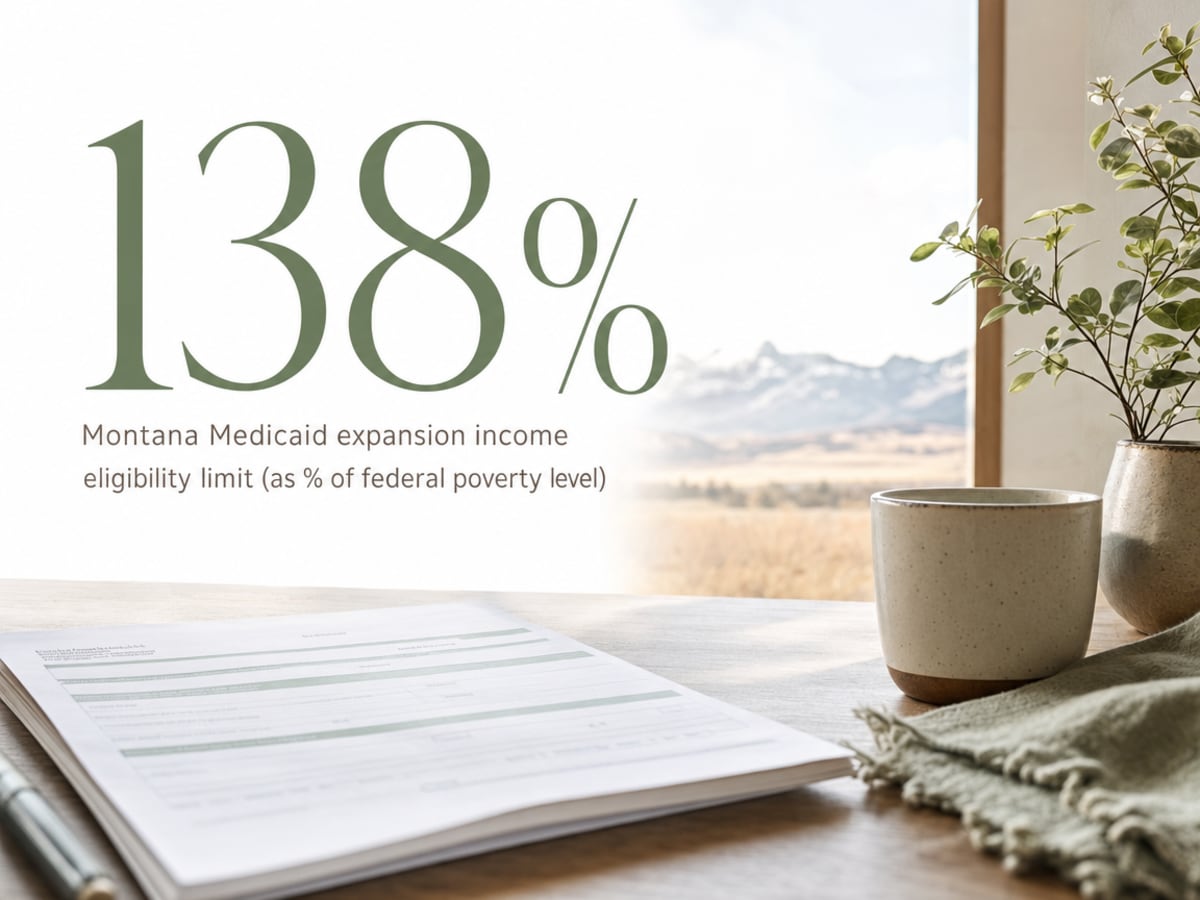
- Montana Medicaid expansion covers adults 19–64 up to 138% of the federal poverty level, including outpatient, residential, inpatient, and medication treatment when medically necessary 1.
- Since July 2022, the HEART Section 1115 waiver lets Medicaid pay for short-term residential and inpatient SUD care at larger Montana facilities once blocked by the IMD exclusion 2, 3.
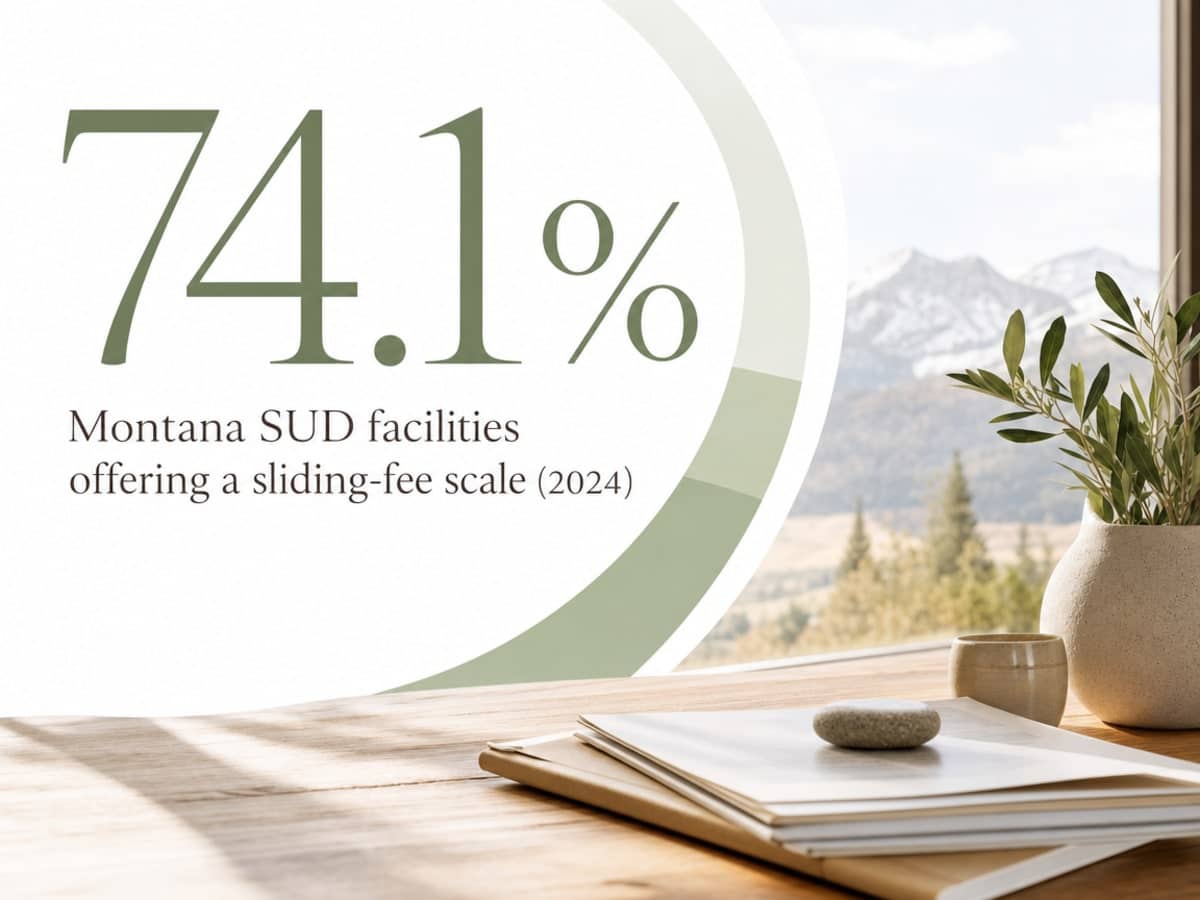
- Roughly 74.1% of surveyed Montana SUD facilities offer sliding-fee pricing and 46.3% offer no-charge or minimal-payment care, so ask for these programs by name 4.
- Rural Montanans should ask about HEART waiver acceptance, telehealth buprenorphine intake, FQHC-based SUD services, and mobile units when making that first call 11, 19, 24.
If You’ve Been Told You Can’t Afford Rehab in Montana, Read This First
You picked up your phone, searched for help, and now you’re bracing for the number. Maybe someone already told you rehab costs more than a used truck. Maybe you called one place, heard a figure, and hung up.
Read this before you give up.
Most Montanans who think they can’t afford treatment have never had their coverage actually checked. That’s not a personal failure. It’s a system that hides real options behind confusing paperwork. Montana Medicaid expansion covers adults ages 19–64 with household income up to 138% of the federal poverty level, and covered substance use disorder services include outpatient, intensive outpatient, partial hospitalization, residential, inpatient, medication treatment, and recovery support when medically necessary 1. Since July 2022, Montana’s Section 1115 HEART demonstration has allowed Medicaid to pay for short-term residential and inpatient SUD care in larger treatment facilities that used to be off-limits under old federal rules 2, 3.
That matters because roughly 191,000 Montanans are estimated to have a substance use disorder, and about 72% of them are not in treatment 20. A lot of those people assumed the door was closed. It usually isn’t.
Over the next few sections, you’ll see the five real ways people pay for care here, what Medicaid and the HEART waiver actually cover, how sliding-fee and no-charge programs work at Montana facilities, and what to say on your first phone call.
The Five Ways Montanans Actually Pay for Treatment
There isn’t one door into treatment here. There are five, and most people qualify for more than one without knowing it.
Think of them as pathways, not tiers. You don’t have to pick the right one on your own — a good admissions team runs the checks for you. But it helps to know the shape of each before you dial.
Montana Medicaid, including the HEART waiver. If you’re an adult ages 19–64 with household income up to 138% of the federal poverty level, you likely qualify for Medicaid expansion, which covers outpatient, intensive outpatient, partial hospitalization, residential, inpatient, medication treatment, and recovery support when medically necessary 1. The HEART Section 1115 demonstration extends that to short-term residential and inpatient care at larger treatment facilities 2. First step: apply through apply.mt.gov or ask a facility’s admissions team to help you enroll.
Marketplace plans through Healthcare.gov. If you earn too much for Medicaid, Marketplace plans must cover behavioral health treatment, inpatient mental and behavioral health, and substance use disorder services as essential health benefits 7. Premium subsidies often make the monthly cost far lower than people expect. First step: run a quote at healthcare.gov with your household income.
Sliding-fee and no-charge facility programs. In Montana, 74.1% of surveyed SUD facilities offer a sliding-fee scale based on income, and 46.3% offer treatment at no charge or minimal payment for people who can’t pay 4. First step: ask directly, “Do you have a sliding scale or scholarship funds available right now?”
Indian Health Service and tribal programs. If you’re American Indian or Alaska Native, IHS-funded and tribal health programs may cover SUD care with no out-of-pocket cost, often alongside Medicaid. First step: contact your tribal health department or the nearest IHS service unit.
Self-pay with a payment plan. If nothing else fits, many facilities structure monthly payments so residential care isn’t a lump sum. First step: ask what the plan looks like on your income, not the sticker price.
You don’t need to know which door is yours. You just need to knock on one.
Montana Medicaid and the HEART Waiver: What’s Actually Covered
Who Qualifies for Montana Medicaid Expansion
Here’s the number that matters most: if you’re an adult between 19 and 64, and your household income is at or below 138% of the federal poverty level, you likely qualify for Montana Medicaid expansion 1. That’s roughly $20,800 for a single person and $35,600 for a family of three, though the exact figure updates each year.
You don’t need perfect employment records. You don’t need to have paid into anything. You don’t need to prove you’ve tried treatment before. Income and household size are the main gates.
A few things people worry about that usually aren’t dealbreakers:
- You’re currently using. Active addiction is not a disqualification. In fact, it’s often the reason people apply.
- You’ve been denied before. Rules change. The 2024 approval refreshed how Montana runs the program, and eligibility is re-evaluated based on current circumstances 12.
- You’re worried about community-engagement requirements. Montana’s page specifically lists drug or alcohol rehabilitation and inpatient services among the situations that can qualify you for an exclusion while you’re in care 12.
What you’ll need to apply: an approximate income figure, household size, a Social Security number if you have one, and a mailing address. That’s most of it. You can apply through apply.mt.gov, at a county Office of Public Assistance, or with help from a treatment center’s admissions team, who often complete applications alongside families.
One phone call, one honest income number. That’s what qualifies you or points you to the next door.
The HEART Waiver: Residential Rehab Coverage Most Guides Miss
For decades, a federal rule called the IMD exclusion — Institution for Mental Diseases — blocked Medicaid from paying for care in most residential SUD facilities with more than 16 beds. That single rule kept a lot of Montanans out of real inpatient treatment. If you searched for “Medicaid rehab in Montana” five years ago, you ran into this wall constantly.
That wall came down for Montana in July 2022.
Montana’s HEART demonstration — Healing and Ending Addiction through Recovery and Treatment — is a Section 1115 waiver approved by CMS, effective July 1, 2022, and scheduled to run through June 30, 2027 2. Under HEART, otherwise eligible Medicaid members ages 18–64 with an SUD diagnosis can receive covered short-term residential and inpatient services in qualifying facilities that used to be off-limits 3. The 2025 Montana progress report confirms the waiver allows payment for SUD treatment in facilities with more than 16 beds and spans multiple ASAM levels of care 22.
In plain language: Medicaid can now pay for you to check into a real residential rehab in Montana.
This is not theoretical. In state fiscal year 2025, 1,499 Montanans received newly approved SUD treatment under HEART, and 1,849 members received treatment through expanded services during that same year 22. People are using this. Beds are being filled. Bills are being paid.
{{VISUAL_HEART_UTILIZATION}}
A few things to know before you assume it applies automatically:
- You still need a Medicaid enrollment. HEART expanded what Medicaid pays for. It did not change who qualifies for Medicaid 3. If you’re not enrolled, that’s step one.
- Care must be medically necessary. A licensed clinician has to assess you and recommend the level of care that matches your situation — outpatient, intensive outpatient, partial hospitalization, residential, or inpatient 1. You don’t diagnose yourself into a bed, but a good admissions clinician usually completes this assessment during intake.
- Facilities have to be enrolled Medicaid providers. Not every treatment center in Montana bills Medicaid. When you call, ask directly: “Are you a Medicaid-enrolled provider, and do you accept the HEART waiver for residential care?”
- Length of stay is short-term. The waiver covers short-term residential and inpatient stays, not open-ended placements. Your treatment team documents progress and transitions you to lower levels of care as you stabilize.
If you’ve been told before that Medicaid “doesn’t pay for real rehab in Montana,” that answer is out of date. Ask again. Ask a facility that specifically handles HEART admissions. The door that used to be locked has a working handle now.
Beyond Rehab: Housing Support, Stimulant Treatment, and Reentry Services
Rehab is not the only thing HEART covers, and this is where the waiver quietly does some of its best work for people who have been through a lot.
A February 2024 amendment expanded HEART to include three services that address real, common barriers to staying in recovery 21:
- Contingency management for stimulant use disorder. Methamphetamine addiction has been especially hard to treat because, unlike opioids, there’s no FDA-approved medication. Contingency management uses structured incentives for verified negative drug tests and treatment engagement. If meth is your primary struggle, this matters.
- Pre-tenancy and tenancy support services. These help you find housing, apply for it, negotiate with landlords, and keep it once you’re in. The 2025 progress report notes Montana launched Medicaid tenancy support services in June 2025 22. Housing instability is one of the most reliable predictors of relapse. Covering the help that keeps you housed is a coverage decision that treats recovery like the long project it is.
- Pre-release services for qualifying incarcerated members. If you’re leaving jail or prison, HEART now covers a period of care before release so treatment starts before the walk out the door, not weeks after 21.
You don’t have to be in a residential bed to use these. If you’re leaving detox, coming out of the county jail, or sleeping in your car and trying to get sober, ask specifically whether these HEART components are available in your county right now.
Sliding-Fee, No-Charge, and Scholarship Care at Montana Facilities
What if you don’t qualify for Medicaid, don’t have insurance, and can’t swing a Marketplace premium this month? You still have a real path. It’s just quieter than the others, because it lives inside each facility’s business office instead of a state program.
Here’s what the data actually shows about Montana.
In 2024, 74.1% of surveyed Montana substance use disorder facilities reported offering a sliding-fee scale that adjusts the price of care based on your income and household size, and 46.3% reported offering treatment at no charge or minimal payment for people who genuinely can’t pay 4. Montana is not an outlier on the no-charge side — the same 46.3% figure holds nationally for U.S. SUD treatment facilities in 2024 6. Roughly three out of four Montana facilities have a sliding scale. Almost half have a way to say yes when the answer would otherwise be no.
{{VISUAL_SLIDING_FEE_CHART}}
Those numbers are the reason SAMHSA’s own guidance opens with a direct line: don’t let money stop you from finding treatment. Some facilities offer free or low-cost care, sliding fees, payment assistance, grants, or scholarships funded through state dollars, foundations, or private donors 5.
A few things to know before you call:
- Ask for it by name. Sliding-fee and scholarship funds aren’t usually advertised on the homepage. When the intake person asks about payment, say, “I’d like to apply for your sliding-fee scale” or “Do you have scholarship or grant-funded beds available right now?” You are not being rude. You are using the program the way it was built.
- Bring an income number, not a perfect one. SAMHSA’s guidance is that approximate income and household size are enough to start the conversation 5. A recent pay stub, a benefits letter, or an honest estimate is a fine starting point.
- Availability shifts. Scholarship beds fill. Grant cycles end and restart. A “not right now” this month can be a “yes” next month. If one facility can’t help, ask them who in Montana currently can.
- These programs stack. Sliding-fee pricing can sit on top of partial insurance coverage. A scholarship can cover what a payment plan doesn’t. You don’t have to choose one lane.
One question, asked out loud, is often what turns a closed door into an open one.
Marketplace Plans, Employer Insurance, and Your Parity Rights
Maybe your income puts you just over the Medicaid line. Maybe you have a job with insurance and you’ve been quietly afraid to use it for something like this. Both situations have more room than you think.
Marketplace plans sold through Healthcare.gov must cover behavioral health treatment, inpatient mental and behavioral health services, and substance use disorder treatment as essential health benefits 7. Premium tax credits often bring the monthly cost down to something a working household can actually carry. Run a real quote before you assume a plan is out of reach.
Employer plans are where a lot of people get stuck. You call, they mention a deductible, and you hang up. Don’t. Ask specifically what the plan covers for residential SUD treatment, intensive outpatient, medication for opioid use disorder, and detox. Ask what your in-network and out-of-network benefits look like. Write the answers down.
Here’s the part most people don’t know: federal parity law is on your side. Under the Mental Health Parity and Addiction Equity Act, financial requirements and treatment limitations for mental health and SUD benefits generally cannot be more restrictive than what your plan applies to medical or surgical care 9. The 2024 final rules go further and target the quieter barriers — prior authorization patterns, step therapy, and narrow network standards that make SUD care harder to actually use than a comparable medical benefit 8, 18.
If your plan denies rehab or medication treatment, ask three things in writing: the specific reason for the denial, the medical-necessity criteria used, and the appeals process. Then appeal. Denials get overturned more often than people expect, especially when the underlying utilization-management rule can’t be justified against how the plan treats medical care.
A good admissions team does this verification work with you — reads the benefit language, calls the insurer, documents the answers, and flags where parity questions belong. You don’t have to decode the plan alone. You just have to hand over the card and let someone qualified make the call.
Rural Montana: How Distance and Workforce Shortages Change Your Options
If you live two hours from the nearest treatment center, coverage on paper is not the same thing as care you can reach. This is the honest part of the Montana story, and it deserves a straight answer.
A peer-reviewed study of Montana’s medication treatment network found that 79% of the state’s land area is classified as frontier and remote, and 53% of residents live in frontier-and-remote ZIP codes 15. That same study documented weather, distance, staffing shortages, and weak provider partnerships as the barriers people actually hit when they try to get to care. Nationally, HRSA’s 2025 workforce brief confirms rural counties are more likely than urban ones to lack psychiatrists, psychologists, social workers, and addiction counselors 13.
That’s the reality. Here’s what’s changing it.
Federal rules loosened for opioid treatment. The 2024 update to 42 CFR Part 8 removed the one-year opioid-history requirement for adults, allows take-home doses of methadone from the first week under certain conditions, permits telehealth screening for buprenorphine initiation, and lets interim treatment run as long as 180 days 11. If you live far from a methadone clinic, fewer forced trips into town is not a small change.
FQHCs and rural health clinics can bill Medicaid for SUD care. Montana’s provider manual, effective February 2025, lets federally qualified health centers and rural health clinics deliver and bill SUD services when the service is within their approved scope 19. That means your local community clinic may be a real starting point for medication treatment and counseling, not just primary care.
Mobile units and telehealth extend the reach. GAO’s 2025 review notes mobile treatment units can increase access for rural populations who face transportation barriers 24. Ask whether a facility offers virtual intake, telehealth follow-ups, or transportation help.
Workforce investment is landing here. HRSA’s FY 2025 Montana awards fund the National Health Service Corps and the SUD Treatment and Recovery Loan Repayment Program, both aimed at putting clinicians in shortage areas 14.
When you call, name your county and ask what’s actually available to you this week. Distance is a real obstacle. It is not, by itself, a closed door.
Your First Call: What to Have Ready and What to Say
The first call is the hardest one. It also takes the least preparation. You don’t need a folder, a plan, or the right words. You just need a few pieces of information and permission to sound like a person who is scared.
Here’s what to have within arm’s reach before you dial:
- An approximate income figure. A recent pay stub, a benefits letter, or an honest estimate of your monthly or yearly household income. SAMHSA’s guidance says approximate income and household size are enough to start 5.
- Household size. How many people your income supports, including you.
- Your insurance card, or the words “I’m uninsured.” Both are valid answers. Neither closes the door.
- The level of care you think you need, or a request for an assessment. Detox, residential, outpatient, or medication treatment — or simply, “I don’t know, can someone help me figure that out?”
- Any prior denials or authorizations. If an insurer has said no before, mention it. It changes what the admissions team asks next.
- A support person’s name and number. Someone the facility can talk to if you need help with paperwork or the drive in.
When the person picks up, you can say something close to this: “I’m calling about treatment for myself. I have [Medicaid / this insurance / no insurance], my household income is around [X], and I’d like to know what my options are, including any sliding-fee, scholarship, or HEART waiver coverage.”
That sentence does a lot of work. It tells them you’re the patient, gives them the numbers they need, and names the specific programs they should be checking 1, 4, 5.
A few questions worth asking before you hang up:
- Are you a Medicaid-enrolled provider, and do you accept the HEART waiver?
- Do you have sliding-fee or scholarship funds available right now?
- If my insurance denies coverage, will you help me appeal?
- What’s the soonest you could see me for an assessment?
You will not remember every answer. Write down whatever you can, or ask if a family member can be on the line with you. If the first place can’t help, ask, “Who in Montana can?” A good facility will hand you a real name and number.
Making the call does not commit you to anything. It just opens the door far enough to see what’s on the other side.
What to Expect When You Call Elk Ridge Recovery
When you call Elk Ridge Recovery, you talk to a real person, not a script. The admissions team asks for your approximate income, household size, and whatever insurance information you have — a card, a plan name, or just “I’m uninsured” 5. Then they do the verification work with you.
That means checking Medicaid and HEART waiver eligibility, running your benefits if you have private or Marketplace coverage, and looking at parity protections if a plan pushes back 1, 2, 9. If your first path doesn’t open, they look at the next one.
You can bring a family member on the call. You can ask questions twice. You can say you’re scared. None of that changes whether the team keeps working the coverage puzzle with you.
One call. One honest conversation. That’s what it takes to find out what’s actually possible.
Talk to Someone About Affordable Treatment Today
Get clear answers about affordable recovery options and insurance support in one confidential call.
Frequently Asked Questions
Can I get residential rehab in Montana if I’m on Medicaid?
Yes. Since July 2022, Montana’s HEART Section 1115 waiver has allowed Medicaid to pay for short-term residential and inpatient SUD care for eligible members ages 18–64, including at facilities with more than 16 beds that were previously off-limits 2, 3. Care must be medically necessary and delivered by a Medicaid-enrolled provider 1. When you call, ask directly whether the facility accepts the HEART waiver for residential admissions.
What if I make too much for Medicaid but can’t afford private insurance?
Run a real quote at healthcare.gov before you assume it’s out of reach. Marketplace plans must cover behavioral health treatment, inpatient mental health services, and SUD care as essential health benefits 7, and premium subsidies often lower monthly costs significantly. If Marketplace still doesn’t fit, ask facilities about sliding-fee pricing or scholarship funds — in 2024, 74.1% of surveyed Montana SUD facilities offered a sliding-fee scale based on income 4.
I’m uninsured. Can I still get into treatment in Montana?
Yes. SAMHSA’s guidance is direct: don’t let money stop you from seeking treatment, because many facilities offer free or low-cost care, sliding fees, grants, or scholarships 5. In Montana, 46.3% of surveyed SUD facilities reported offering treatment at no charge or minimal payment for people who can’t pay 4. A treatment center’s admissions team can also check whether you qualify for Medicaid enrollment during intake, opening additional coverage 1.
What documents and information should I have ready before I call a treatment center?
You need less than you think. SAMHSA advises that approximate income and household size are enough to start the conversation 5. Have a recent pay stub or honest income estimate, the number of people in your household, your insurance card or the words “I’m uninsured,” any prior denial letters, and a support person’s name and phone number. If someone helps you with paperwork, invite them onto the call.
What can I do if my insurance denies coverage for rehab or medication treatment?
Ask in writing for the specific denial reason, the medical-necessity criteria used, and the appeals process. Under federal parity law, financial requirements and treatment limitations for SUD benefits generally cannot be more restrictive than those applied to medical or surgical care 9. The 2024 final rules also target prior authorization patterns and network standards that quietly restrict access 8, 18. Then appeal. A facility’s admissions team can help you build the appeal.
I live hours from the nearest treatment center. What are my options?
Distance is real: 79% of Montana’s land area is classified frontier and remote 15. Federal rule changes now allow telehealth screening for buprenorphine initiation, take-home methadone doses earlier in treatment, and interim treatment up to 180 days 11. Local FQHCs and rural health clinics can also deliver Medicaid-billed SUD care when the service is within their approved scope 19. Mobile treatment units may extend reach further in rural counties 24.
References
- 2026 Montana Medicaid Member Guide. https://dphhs.mt.gov/assets/hrd/MedicaidMemberGuide.pdf
- Montana Healing and Ending Addiction through Recovery and Treatment (HEART). https://www.medicaid.gov/medicaid/section-1115-demo/demonstration-and-waiver-list/126901
- Montana HEART Demonstration Approval. https://www.medicaid.gov/medicaid/section-1115-demonstrations/downloads/mt-heart-demonstration-approval-20240104.pdf
- National Substance Use and Mental Health Services Survey (N-SUMHSS) State Profile 2024. https://www.samhsa.gov/data/system/files/media-quick-stats/nsumhss-id24.pdf
- What To Expect – Payment. https://findtreatment.gov/what-to-expect/payment
- Data on Substance Use and Mental Health Treatment Facilities, 2024. https://www.samhsa.gov/data/sites/default/files/reports/rpt56696/2024-nsumhss-annual-report.pdf
- Mental health & substance abuse coverage. https://www.healthcare.gov/coverage/mental-health-substance-abuse-coverage/
- Departments of Labor, Health and Human Services, and Treasury Issue Final Rules Strengthening Access to Mental Health and Substance Use Disorder Care. https://www.cms.gov/newsroom/press-releases/departments-labor-health-and-human-services-treasury-issue-final-rules-strengthening-access-mental
- 2024 MHPAEA Report to Congress. https://www.cms.gov/files/document/2024-mhpaea-report-congress.pdf
- 42 CFR Part 8 Final Rule. https://www.samhsa.gov/substance-use/treatment/opioid-treatment-program/42-cfr-part-8
- 42 CFR Part 8 Final Rule: Table of Changes. https://www.samhsa.gov/substance-use/treatment/opioid-treatment-program/42-cfr-part-8/changes
- Montana Medicaid Eligibility Changes. https://www.medicaid.gov/renew-info/mt/
- State of the Behavioral Health Workforce, 2025. https://bhw.hrsa.gov/sites/default/files/bureau-health-workforce/data-research/Behavioral-Health-Workforce-Brief-2025.pdf
- FY 2025 – Montana. https://data.hrsa.gov/api/factsheet/3/30/2025
- Barriers for Implementing the Hub and Spoke Model to Treat Opioid Use Disorder in Rural, Frontier, and Remote Communities: A Qualitative Study of Montana. https://pmc.ncbi.nlm.nih.gov/articles/PMC8411614/
- 2024 Montana Medical Examiner’s Report. https://dojmt.gov/wp-content/uploads/2025/07/2024-ME-Annual-Report.pdf
- Montana 2024 EMS Data Report: Suspected Opioid Overdose. https://dphhs.mt.gov/assets/publichealth/EMSTS/Data/2024EMSOpioidOverdose.pdf
- The Mental Health Parity and Addiction Equity Act (MHPAEA). https://www.cms.gov/marketplace/private-health-insurance/mental-health-parity-addiction-equity
- FQHC and RHC Provider Manual Effective 02042025. https://medicaidprovider.mt.gov/docs/manuals/RHCFQHC/FederallyQualifiedHealthCenterandRuralHealthClinicProviderManualEffective02042025.pdf
- Montana Substance Use Disorder Task Force Strategic Plan. https://dphhs.mt.gov/assets/publichealth/EMSTS/opioids/SUDsStrategicPlan2024.pdf
- February 26, 2024 HEART Waiver Approval, Part II. https://dphhs.mt.gov/assets/heartinitiative/MTHEARTAmendmentApproval02262024.pdf
- Healing and Ending Addiction through Recovery and Treatment (HEART). https://dphhs.mt.gov/assets/StatutorilyRequiredReports/MCA16-12-122HEARTReport9-1-25.pdf
- Summary of Opioid Use in Montana. https://dphhs.mt.gov/assets/publichealth/EMSTS/Data/Opioid_Drug_Use_Summary.pdf
- GAO-25-107640, Health Care Capsule: Drug Misuse Treatment. https://www.gao.gov/assets/gao-25-107640.pdf