
Key Takeaways
- Elk Ridge Recovery is out-of-network with Aetna and every commercial carrier, which is a common Montana pattern driven by a statewide clinical workforce shortage across 105 mental-health HPSAs 15.
- Aetna PPO and POS plans often pay a meaningful share of out-of-network detox, residential, PHP, IOP, and MAT when care is medically necessary and properly authorized under ASAM criteria.
- Montana Code § 33-22-703 and the 2024 MHPAEA final rules give behavioral health benefits parity protections, limiting how Aetna can apply prior authorization, medical-necessity criteria, and network standards 11, 2.
- A 15-minute verification of benefits call with Elk Ridge admissions captures six key numbers, including out-of-network deductible, coinsurance, allowed amount, and the Aetna call reference number.
Reading This Page Counts as a Step
If you’re reading this with an Aetna card in your hand and a knot in your stomach, you already know the hardest part isn’t the paperwork. It’s the moment before the paperwork, when you finally admit something has to change. That moment is what got you here. That counts.
Here’s what this page will do for you, in plain language. It will tell you the truth about Aetna and Elk Ridge Recovery, including the fact that Elk Ridge is out-of-network with every carrier, Aetna included. It will walk you through what Aetna typically covers across detox, residential, PHP, IOP, and MAT in Montana. It will show you exactly how a 15-minute verification of benefits call works, what to write down, and what to do if a claim gets denied.
No sales pitch. No toxic cheerleading. Just the shortest, most honest path from where you are now to a decision you can actually make.
The Honest Answer About Aetna and Elk Ridge Recovery
Here’s what you deserve to hear first: Elk Ridge Recovery is not in-network with Aetna. Not with any carrier, actually. That sentence is usually where rehab websites get vague. This one won’t.
Being out-of-network is not the same as being unaffordable or unreachable. Most Aetna PPO plans, and many Aetna plans through employers, include out-of-network benefits for behavioral health and substance-use care. That means Aetna can still pay a meaningful share of your treatment at Elk Ridge, as long as the care is medically necessary, properly authorized, and billed at a licensed level of care that matches Aetna’s own definitions 1.
What you’ll want to know, before you make any calls, is which category your plan falls into.
- HMO or EPO plans usually pay very little outside the network.
- PPO and POS plans typically pay a percentage of the allowed amount after you meet an out-of-network deductible.
- Self-funded employer plans can go either way and are governed largely by federal rules 1.
That’s the honest starting point. From here, the question stops being “will Aetna cover this?” and becomes “what does your specific plan actually pay for, and how do we confirm it in writing before you pack a bag?”
Why Out-of-Network Is So Common in Montana
If you’ve called around and heard “we’re out-of-network with Aetna” more than once, that isn’t your bad luck. It’s Montana.
The state runs on a small clinical workforce spread across a lot of geography. HRSA counted 105 designated mental-health Health Professional Shortage Areas in Montana as of September 30, 2025 15. That’s a lot of ground where psychiatrists, addiction physicians, licensed counselors, and residential beds are genuinely scarce. When a specialty like residential SUD care is thin on the ground, national insurers like Aetna often can’t build a full in-network roster the way they can in Denver or Minneapolis. So the residential programs that do exist here frequently operate outside the network by design, not as a snub to your plan.
That matters for two reasons you can use.
First, it explains why Elk Ridge Recovery being out-of-network with Aetna is a normal Montana pattern, not a red flag about the facility. Second, it gives you real leverage if you ever have to appeal a denial. When a plan’s in-network options for a specific level of care are limited or far from where you live, that shortage is directly relevant to network adequacy arguments under federal parity rules 1.
You aren’t fighting the system alone. You’re inside a state where the system already assumes you’ll need help finding care.
What Aetna Typically Covers Across the Levels of Care
Addiction care isn’t one service. It’s a chain of them, and Aetna reviews each link a little differently. Detox gets one kind of authorization. Residential gets another. PHP and IOP sit in an intermediate category that used to be treated as an afterthought by insurers and is now explicitly protected under federal parity rules 4. MAT and aftercare each carry their own approval patterns.
Here’s what usually happens at each level so you know what to ask about when you verify benefits.
Medical Detox
Detox is the level Aetna is most likely to authorize quickly, because the medical necessity is often clear. Withdrawal from alcohol, benzodiazepines, or opioids can be dangerous, and Aetna’s own utilization criteria generally follow ASAM guidelines that Montana licensing rules also use 6. That alignment matters. When the facility’s licensed level of care matches what Aetna is being asked to pay for, approvals move faster.
Expect Aetna to require prior authorization and to review your stay day by day, sometimes called concurrent review. Ask whether your plan needs a specific ASAM level (3.7 medically monitored, for example) documented in the admission notes. That one detail is where a lot of detox authorizations either sail through or stall.
Residential Treatment
Residential is where authorization gets more careful. Aetna will look for documented failure or insufficiency of a lower level of care, co-occurring conditions, safety concerns, or a home environment that makes outpatient treatment unsafe. None of that is meant to trip you up. It’s the paperwork side of a real clinical question: why here, why now, why not IOP from home?
For an out-of-network facility like Elk Ridge, Aetna will also apply its out-of-network methodology to figure out what it considers the “allowed amount” for a residential day. Your coinsurance and out-of-network deductible ride on top of that number. Ask the Aetna representative two things directly: what the allowed amount is for residential SUD treatment at a non-participating facility, and what documentation their utilization reviewer wants to see for initial authorization and continued stay. Those two answers shape almost everything about the bill.
PHP and IOP as Intermediate Levels of Care
For a long time, PHP and IOP lived in an insurance gray zone. Not inpatient, not quite outpatient, and often reviewed under whichever rules were less generous. The 2024 MHPAEA final rules closed a lot of that gap by explicitly applying parity requirements to intermediate levels of care for substance-use and mental-health benefits 4.
In practice, that means Aetna cannot apply stricter medical-necessity criteria, prior-authorization hoops, or session limits to PHP and IOP than it applies to comparable medical rehabilitation, like cardiac or physical rehab, in the same benefit classification 1. If your plan year began on or after January 1, 2025, most of these protections already apply to you 3.
When you verify benefits, ask about PHP and IOP specifically, not just “outpatient.” The billing codes and authorization pathways are different, and confusing them on the phone is one of the easiest ways to get a wrong quote.
Medication-Assisted Treatment and Aftercare
If you’re on buprenorphine, naltrexone, methadone, or acamprosate, or you might need to start, MAT belongs on your verification call. Aetna generally covers FDA-approved medications for opioid and alcohol use disorders, but the coverage lives in your pharmacy benefit, your medical benefit, or both, depending on how the medication is administered.
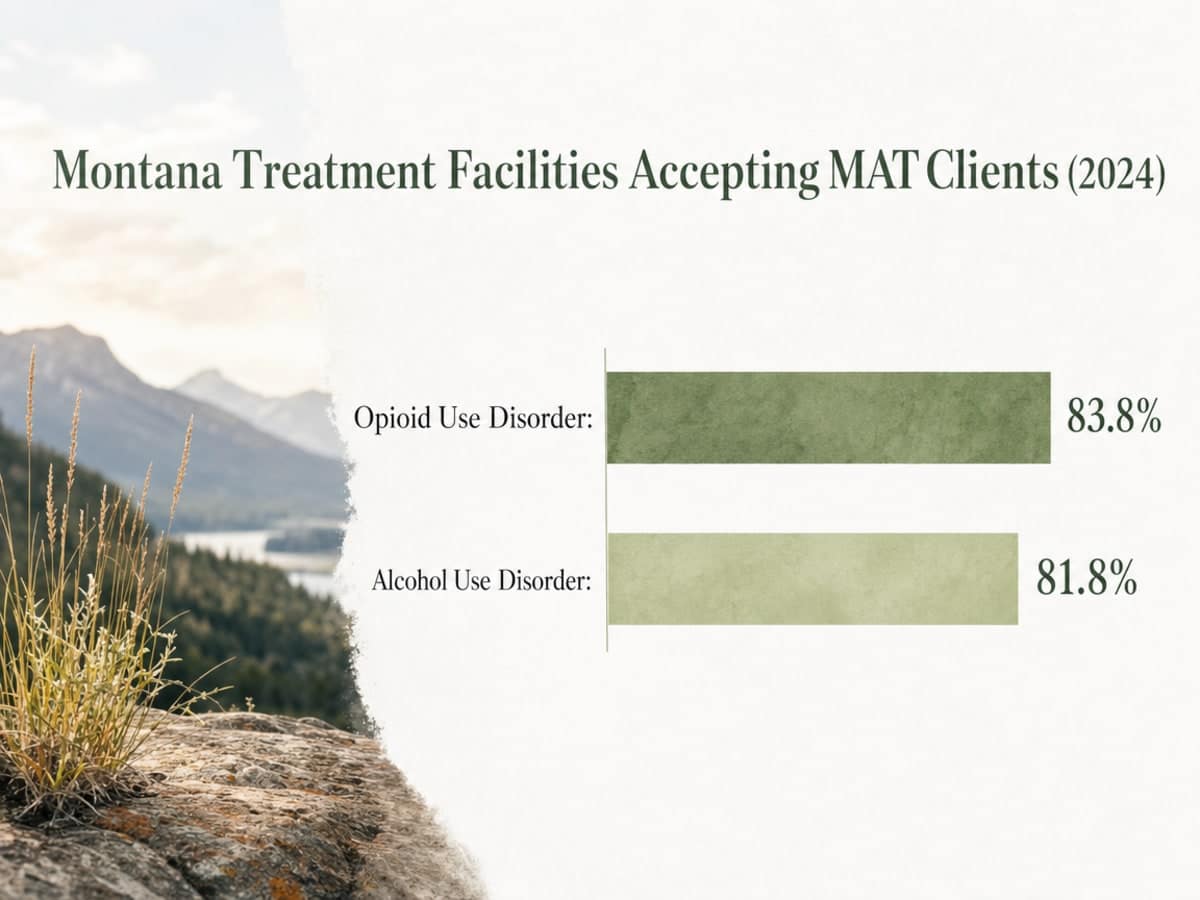
Montana’s treatment landscape is unusually MAT-friendly at the facility level, which is worth knowing when you’re comparing care options. In SAMHSA’s 2024 national facility survey, 83.8% of Montana substance-use treatment facilities accepted clients using medications for opioid use disorder and 81.8% accepted clients using medications for alcohol use disorder 7. That’s a much narrower gap than in many states, and it tells you MAT continuation is a routine expectation here, not an exception you have to negotiate.
Aftercare, meaning standard outpatient therapy, recovery coaching visits, alumni check-ins, and medication management, is usually the most straightforward piece of the continuum to keep in place. Ask about outpatient visit limits, telehealth parity, and whether your plan requires a specific provider tier for ongoing MAT prescribing.
Your Rights Under Montana Law and Federal Parity
You have more protection than you probably realize, and it’s worth naming before you make a single phone call.
Montana law is direct about this. Under Montana Code § 33-22-703, health insurance issuers and group health plans have to cover treatment for mental illness and substance-use disorders at a level of benefits that is no less favorable than what the plan provides for physical illness 11. That covers inpatient, outpatient, emergency, and prescription-drug categories. Translation: Aetna cannot quietly build a harsher review process for your residential SUD stay than it would apply to a comparable medical rehabilitation stay.
Federal law layers on top of that. The 2024 MHPAEA final rules explicitly restrict how plans can use prior authorization, step therapy, and network admission standards for behavioral health benefits 2. Those are the exact tools Aetna uses to say yes, no, or not yet. If your plan year began on or after January 1, 2025, most of these strengthened protections already apply to you; individual-market policies picked them up for policy years starting on or after January 1, 2026 3.
The 15-Minute Verification of Benefits Call
This is the part where most people freeze, and understandably so. Insurance calls are draining when you’re already carrying this much. Here’s the shortest, cleanest version of what to do, so you spend fifteen minutes on the phone instead of an afternoon.
What to Have in Front of You Before You Dial
Set yourself up once and the call runs itself. Pull out your Aetna member card, front and back, because the member services number you need is on the back, and the member ID and group number are on the front. Grab a pen and one piece of paper. Write your date of birth, the subscriber’s name if that isn’t you, and the effective date shown on the card.
Have your prescribing provider’s name and phone number handy, along with a rough list of current medications, especially anything MAT-related. If you know your plan year start date, note that too, because parity protections tie to plan years 3. That’s it. Coffee optional, though recommended.
The Five-Step VOB Flow With Elk Ridge Admissions
Here’s the flow, start to finish. Elk Ridge Recovery’s admissions team runs this with you, not at you, so you’re not doing the insurance interrogation alone.
- Gather. Card, prescriber info, medication list, plan-year date. You already did this above.
- Call Elk Ridge admissions. You’ll spend about five minutes on the intake side, sharing what’s going on clinically and confirming which level of care you’re asking about, most often detox followed by residential.
- The parallel call to Aetna member services. Admissions can conference in, or run the call while you listen. This is the part where an experienced intake coordinator earns their keep, because they know the exact questions Aetna’s representatives are trained to answer.
- Confirm the specifics. Out-of-network behavioral health benefits, prior authorization requirements for the level of care requested, and any medical-necessity criteria the utilization reviewer will apply. Aetna’s own parity obligations shape how prior authorization and network standards can be used, so these are fair, specific questions 1. Get a reference number for the call before you hang up. Always.
- Get it in writing. Ask admissions to send you a written summary of the verified benefits before you commit to an admission date. If a number changes later, that summary is your record of what you were told and when.
The Numbers to Write Down (And Why Each One Matters)
Six numbers do most of the work. Write each one on that same piece of paper.
- Out-of-network deductible
- This is what you pay before Aetna starts paying its share for out-of-network care. It usually resets each plan year.
- Out-of-network coinsurance percentage
- After the deductible, Aetna pays a percentage of the allowed amount, and you pay the rest.
- Out-of-pocket maximum, out-of-network
- The ceiling on what you owe in a plan year for covered out-of-network care. This is the number that keeps a long residential stay from becoming open-ended.
- Allowed amount for out-of-network residential SUD treatment
- This is what Aetna considers a reasonable per-day rate, and your coinsurance is calculated from it, not from the billed charge.
- Prior authorization requirement
- Yes or no, and the fax or portal path the facility uses to submit it.
- Call reference number
- Aetna assigns one to every benefits call. If anything gets disputed later, this is the receipt.
Six numbers, one page. That’s your verified benefits picture before you decide anything.

What You Might Actually Pay
Nobody can quote you a real dollar figure on a page like this without lying to you. What we can do is name the four levers that decide the number, so when the Aetna representative reads them to you, they mean something.
- Lever one is your out-of-network deductible. This is what you pay first, each plan year, before Aetna pays a share. On many PPO plans it’s a separate, higher number than your in-network deductible.
- Lever two is your coinsurance percentage. After the deductible, Aetna pays a set percentage of the allowed amount and you pay the rest. A common out-of-network split leaves more of the bill on you than an in-network split would.
- Lever three is the allowed amount itself. This is Aetna’s own internal figure for what it considers reasonable for a day of residential SUD care at a non-participating facility. The way plans set that number is one of the nonquantitative treatment limitations regulators specifically watch under parity rules 1. If Elk Ridge’s daily rate is higher than the allowed amount, the difference can fall to you unless a single-case agreement is negotiated.
- Lever four is your out-of-network out-of-pocket maximum. This is the ceiling. Once you hit it in a plan year, Aetna pays 100% of covered charges after that.
Write those four numbers next to each other. That’s your real cost picture, without a single invented dollar.
If Aetna Denies, Delays, or Underpays
A denial is not the end of the road. It’s paperwork that has a next step. Here’s how to read the letter, where to push back, and what to do if you decide to pay privately instead.
Reading the Denial Letter Without Panic
Open the envelope. Breathe. Then look for four things.
- The specific reason code. Aetna has to tell you why. Common wording includes “not medically necessary,” “lower level of care available,” or “lacks prior authorization.” Each of those has a different fix.
- The clinical criteria they applied. If the letter references ASAM criteria, compare them to your admission notes. Mismatches between what the facility documented and what the reviewer read are the single most common reason a denial gets overturned.
- The deadline to appeal. It’s usually 180 days from the date on the letter, but plans vary. Circle it.
- The phrase “peer-to-peer review.” That’s your treating clinician’s right to speak directly with Aetna’s medical reviewer, often within a few business days.
Internal Appeal, Montana CSI, and Federal Parity Escalation
You have three real escalation lanes, and they run in order.
Start with Aetna’s internal appeal. Your treating clinician submits a written appeal with the clinical record, ASAM justification, and any peer-to-peer notes. If the first level is denied, ask for a second-level review, and for an expedited appeal if you’re still in active treatment or waiting to admit. This is where most reversals actually happen.
If the internal appeal fails, or Aetna misses its own deadlines, the Montana Commissioner of Securities and Insurance is your next stop. CSI’s consumer advocates help residents review insurer responses, file complaints, and pursue appeals of denied health-insurance claims 14. One caveat worth knowing: certain self-funded employer plans are governed primarily by federal law, so CSI’s jurisdiction may be limited depending on how your coverage is structured 14.
The federal lane is parity. Under the 2024 MHPAEA final rules, Aetna must be prepared to produce a comparative analysis showing that its prior-authorization, medical-necessity, and network-standard practices for SUD care are no more restrictive than for comparable medical/surgical care 2. You can request that analysis. Appeals move the needle in real numbers here. A single corrective action documented by federal oversight removed an impermissible residential-treatment exclusion affecting 382 plans and more than 1.4 million participants 13. Your one appeal is not futile.
Self-Pay and Good-Faith-Estimate Protections
Sometimes, after weighing time, energy, and the appeal timeline, you decide to pay privately and pursue reimbursement later, or skip Aetna entirely. That’s a legitimate choice, not a defeat.
If you go the self-pay route, federal law is on your side about what you have to be told upfront. Since January 1, 2022, providers and facilities have been required to give uninsured and self-pay individuals a good faith estimate of expected charges before treatment 5. Ask Elk Ridge admissions for that estimate in writing. It should itemize the room and board, clinical services, medication management, and any ancillary fees you’re likely to see on the bill.
A good faith estimate is not an insurance determination and doesn’t lock in a final number 5, but it gives you a clear planning figure so nothing on the invoice arrives as a surprise.
A Calm Next Step
Here’s what a good next hour looks like. Not a life plan. Just the next hour.
Put your Aetna card, a pen, and one sheet of paper on the table. Call Elk Ridge Recovery’s admissions line. Tell them what’s happening in your own words, and ask them to run the verification of benefits call with you. Fifteen minutes, six numbers, one reference number written down. That’s the whole assignment.
Whatever the numbers say, you’ll know more than you did this morning. If your out-of-network benefits look workable, you have a real path. If they don’t, you have grounds for an appeal, a good-faith-estimate option, or a conversation with Montana CSI 14.
You already did the hardest part. The rest is a phone call.
Speak with Montana Admissions About Aetna Coverage
Connect directly to verify your Aetna rehab benefits and discuss tailored recovery options in Montana.
Frequently Asked Questions
Is Elk Ridge Recovery in-network with Aetna?
No. Elk Ridge Recovery is not in-network with Aetna, and it isn’t in-network with any commercial carrier. That’s the straight answer. What that means in practice is that your care would be billed under your plan’s out-of-network behavioral health benefits, which many Aetna PPO and POS plans include for substance-use treatment.
Can Aetna still pay for my care at Elk Ridge if it’s out-of-network?
Often, yes. If your plan has out-of-network behavioral health benefits, Aetna can pay a percentage of the allowed amount after you meet your out-of-network deductible, up to your out-of-pocket maximum. The exact split depends on your plan type and medical-necessity review. Aetna’s out-of-network reimbursement methodology is itself subject to federal parity rules 1, which is why the verification call matters so much.
How long does a verification of benefits call actually take?
About fifteen minutes when Elk Ridge admissions runs it with you. Five minutes on the intake side to describe what’s going on, then a parallel call to Aetna member services to confirm out-of-network benefits, prior authorization, and a reference number. Ask for the written summary before you commit to an admission date.
Does Aetna cover medical detox and MAT in Montana?
Generally, yes, when medically necessary. Detox is usually the fastest level of care to authorize because withdrawal risk is clinical and clear. MAT for opioid and alcohol use disorders is typically covered too, though it may sit in your pharmacy benefit, your medical benefit, or both. Montana’s facility landscape is notably MAT-friendly, which makes continuation smoother than in many states 7.
What happens if Aetna denies my residential treatment request?
A denial is a step, not an ending. Read the letter for the reason code, the clinical criteria applied, and the appeal deadline. Your treating clinician can request a peer-to-peer review and file an internal appeal. If that fails, Montana’s Commissioner of Securities and Insurance can help with complaints and appeals of denied health-insurance claims 14, and federal parity rules give you a second escalation lane 2.
What if I don’t want to use my Aetna plan at all?
That’s a valid choice. If you go self-pay, federal law requires Elk Ridge to give you a good faith estimate of expected charges before treatment 5. Ask for it in writing, itemized. Some families pay privately upfront and pursue Aetna reimbursement later; others skip the insurance route entirely to protect privacy or move faster.
References
- The Mental Health Parity and Addiction Equity Act (MHPAEA). https://www.cms.gov/marketplace/private-health-insurance/mental-health-parity-addiction-equity
- Departments of Labor, Health and Human Services, and Treasury Issue Final Rules Strengthening Access to Mental Health and Substance Use Disorder Benefits. https://www.cms.gov/newsroom/press-releases/departments-labor-health-and-human-services-treasury-issue-final-rules-strengthening-access-mental
- Statement of U.S. Departments of Labor, Health and Human Services, and Treasury Regarding Enforcement of the Final Rule Requirements Related to MHPAEA. https://www.cms.gov/files/document/statement-regarding-enforcement-final-rule-requirements-related-mhpaea.pdf
- Affordable Care Act Implementation FAQs – Set 17. https://www.cms.gov/CCIIO/Resources/Fact-Sheets-and-FAQs/aca_implementation_faqs17
- No Surprises Act Overview of Key Consumer Protections – CMS. https://www.cms.gov/files/document/nsa-keyprotections.pdf
- Rules for Substance use Disorder Facility. https://dphhs.mt.gov/assets/oig/Rules_for_Substance_use_Disorder_Facility.pdf
- Data on Substance Use and Mental Health Treatment Facilities. https://www.samhsa.gov/data/sites/default/files/reports/rpt56696/2024-nsumhss-annual-report.pdf
- 2023-2024 National Surveys on Drug Use and Health. https://www.samhsa.gov/data/sites/default/files/reports/rpt56959/2024-nsduh-sae-guide-state-meth/2024-nsduh-sae-guide-state-meth.pdf
- SUDORS Dashboard: Fatal Drug Overdose Data. https://www.cdc.gov/overdose-prevention/data-research/facts-stats/sudors-dashboard-fatal-overdose-data.html
- CDC Reports Nearly 24% Decline in U.S. Drug Overdose Deaths. https://www.cdc.gov/media/releases/2025/2025-cdc-reports-decline-in-us-drug-overdose-deaths.html
- 33-22-703. Coverage for mental illness, severe mental illness, and substance use disorders — definition. https://mca.legmt.gov/bills/mca/title_0330/chapter_0220/part_0070/section_0030/0330-0220-0070-0030.html
- 2025 MHPAEA Report to Congress. https://beta.dol.gov/research-data/surveys-reports-publications/2025-mhpaea-report-congress
- EBSA Faced Challenges Enforcing Compliance with Mental Health Parity Laws and Requirements. https://www.oig.dol.gov/public/reports/oa/2025/09-25-001-12-001x.pdf
- montana online insurance complaint form. https://csimt.gov/insurance-online-complaint-form/
- FY 2025 – Montana – HRSA Data Warehouse. https://data.hrsa.gov/api/factsheet/3/30/2025
