Key Takeaways
- Cocaine treatment has no FDA-approved medication, so program quality depends on structured behavioral therapy rather than the building, scenery, or amenities featured in marketing 9.
- The clinical standard for cocaine care is psychosocial treatment, and staying engaged longer is what opens the door to lasting change 1, 11.
- Ask specifically about contingency management, CBT, and motivational interviewing — the three therapies with the strongest evidence for stimulant use disorder 11, 12.
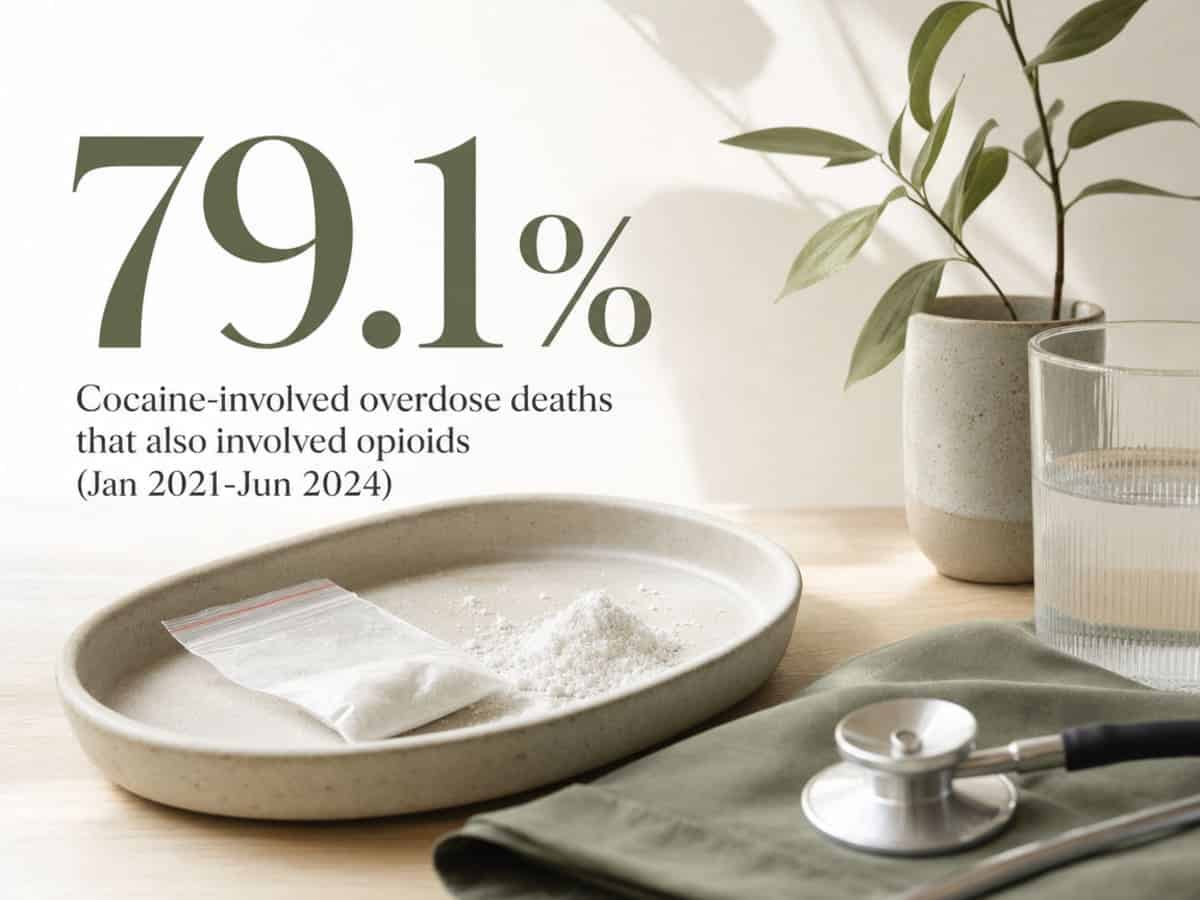
- Because 79.1% of cocaine-involved overdose deaths from 2021 through mid-2024 also involved opioids, a serious program provides overdose education and naloxone at discharge 5, 8.
- Use a clear phone script covering therapy structure, individualization, co-occurring care, naloxone, levels of care, licensure, and aftercare to separate real clinical programs from marketing.
- Verify a Montana facility is licensed by DPHHS as a substance use disorder facility, since recovery residences provide housing and peer support but not clinical treatment 14, 15.
- Elk Ridge Recovery offers a JCAHO-accredited continuum matching Montana’s ASAM-licensed levels, but confirm specifics like contingency management and naloxone through a direct call 7, 14.
- Expect the first two weeks to move from medical stabilization and motivational work into CBT-focused skill building, family sessions, and a written relapse-prevention plan 10, 13.
Why the therapy inside the building matters more than the drive time
If you’re searching “cocaine addiction rehab near me” at an hour when most people are asleep, you’re already doing something hard. That search alone is a real step, even if nobody around you sees it yet.
Here’s the part most rehab websites don’t tell you up front: with cocaine, the building doesn’t heal you. The therapy inside it does. There is no FDA-approved medication that specifically treats cocaine use disorder, so the strength of a program lives or dies on the quality of its behavioral care 9. That single fact should change how you shop.
Most “top rehabs near me” lists rank programs by scenery, amenities, or how fast someone answers the phone. Those things matter a little. They do not decide whether you or your person actually stops using.
What decides that is whether the program delivers structured, evidence-based behavioral therapy — mainly cognitive behavioral therapy (CBT), motivational interviewing (MI), and contingency management — inside an individualized plan that also handles medical risk, mental health, and the very real danger of fentanyl-contaminated cocaine 10, 11. “Near me” is a starting filter. Clinical fit is the actual decision.
You don’t need to become an expert on any of this. You just need a lens sharp enough to tell a real cocaine program from a general rehab that also happens to treat cocaine. This guide gives you that lens: what to look for, what to ask, and how to tell whether a facility — including Elk Ridge Recovery in Montana — is set up for the specific job of helping someone stop using cocaine and stay stopped.
Take a breath. You’re allowed to read slowly. Then keep going.
The clinical truth about cocaine treatment no brochure tells you
Here is the piece almost no admissions page will say out loud: cocaine is different from alcohol and opioids because there is no pill that treats it. The FDA has not approved a single medication for cocaine use disorder 9. That means when someone pitches you a “cutting-edge medical protocol” for cocaine, they are usually describing detox support, sleep and mood medications, or care for a co-occurring condition — not a cure for the cocaine itself.
The actual treatment is behavioral. Therapy is not the soft part of the program. It is the program.
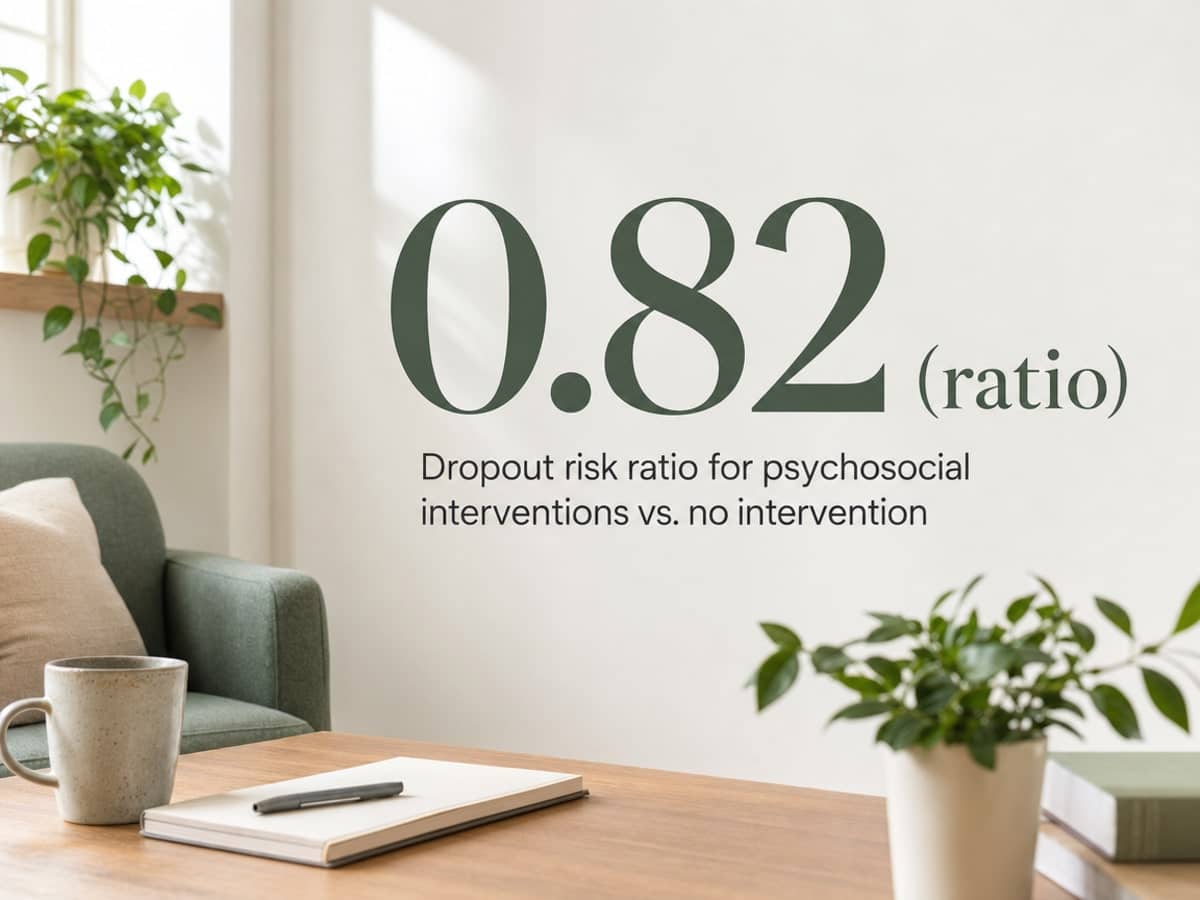
That reframes what you should be looking for. Peer-reviewed reviews describe psychosocial treatment as the standard of care for cocaine use disorder, with contingency management, CBT, and motivational interviewing carrying the most support 11, 12. A 2024 Cochrane review of 30 studies and 4,078 participants with stimulant use disorder found that people who received psychosocial care were meaningfully less likely to drop out than people who received no intervention — a dropout risk ratio of 0.82 1. That number is narrower than it sounds: it describes staying in treatment, not staying clean forever. But staying in treatment is the doorway everything else walks through.
So when you compare two “cocaine addiction rehab near me” options, you are not really comparing buildings. You are comparing how seriously each one takes the therapy hours, who delivers them, and how the plan flexes when the person in front of them changes 10. That is the standard the rest of this guide will hold every program to — including Elk Ridge Recovery.
The three therapies that should anchor any cocaine program
When you call a rehab and ask what they do for cocaine, listen for three specific names: contingency management, cognitive behavioral therapy, and motivational interviewing. These are the therapies with the most evidence behind them for stimulant use disorder 11, 12. If none of those come up, or if the person on the phone only talks about detox and “counseling,” you have your answer about how seriously that program takes cocaine specifically.
You don’t need to grade a program’s clinicians. You just need to hear that these three approaches are named, that someone can explain how they’re used, and that they get blended into a plan built around the person walking in the door.
Contingency management: the most studied and most skipped
Contingency management, or CM, is the therapy with the strongest evidence for cocaine — and the one you’re least likely to see advertised. It sounds almost too simple. You get a small, tangible reward — a voucher, a prize draw, a gift card — each time a urine test confirms you haven’t used 10. The reward is fast, in-person, and tied to a clearly defined behavior.
That’s not a gimmick. The 2024 Cochrane review of psychosocial care for stimulant use disorder found CM was the most studied and most promising approach among all the behavioral options 1. NIDA describes it as especially useful for helping someone get their first stretch of abstinence and stay engaged long enough for the rest of treatment to work 9.
So why do so few programs offer it? Cost, logistics, and old assumptions that “paying people” to stop using is somehow controversial. SAMHSA’s 2025 advisory pushed back on that directly and gave publicly funded programs a framework for delivering CM the right way, including rapid point-of-care testing and immediate reinforcement after a verified drug-free result 3.
When you call, ask plainly: Do you offer contingency management for cocaine? What behavior is rewarded, and how is it verified? A program that can answer that in one sentence is doing the work.
CBT: coping skills, triggers, and honest evidence
Cognitive behavioral therapy is the workhorse of most rehab programs, and for good reason. CBT teaches you how to spot the situations, feelings, and thoughts that lead to use, then gives you specific skills to handle them differently 10. It’s where you learn what your triggers actually are — not the generic ones on a worksheet, but yours. The Friday paycheck. The friend who texts at 11 p.m. The first sip of anything.
Here’s the honest part, though. A 2025 systematic review of standalone CBT for cocaine specifically didn’t find a statistically significant effect compared with minimal treatment (odds ratio 1.26, 95% CI 0.42–3.72) 4. That doesn’t mean CBT is useless. It means CBT delivered alone, in isolation, and studied against varied comparators didn’t clear the statistical bar.
In real programs, CBT is almost never delivered alone. It’s part of a multimodal plan alongside CM, MI, medical care, and group work — and in that context, peer-reviewed clinical guidance still identifies CBT as one of the two approaches with the greatest empirical support for cocaine use disorder 12.
What you want to hear from a rehab is that CBT is structured (a curriculum, not a vibe), delivered by trained clinicians, and connected to relapse-prevention practice you’ll actually use in week six, not just week one.
Motivational interviewing: where you start when you’re not sure
Motivational interviewing is the therapy you don’t realize is happening while it’s happening. It’s a way of talking with a clinician that pulls out your own reasons for change instead of arguing you into them 13. If part of you wants to quit and part of you doesn’t — which is normal, not a flaw — MI is designed for exactly that split.
The 2023 Cochrane review of MI, covering 91 studies and 22,776 participants, found a small-to-moderate benefit compared with no intervention, and smaller or uncertain gains when MI was added on top of another active treatment 2. Translation: MI is most powerful early, when someone is ambivalent or freshly arrived, and less of a game-changer once solid CBT and CM are already in motion.
SAMHSA’s TIP 35 spells out how a good clinician actually uses this: lean on MI when motivation is shaky, then move into a CBT-focused relapse-prevention component as readiness grows, and alternate between the two as needed 13. That flexibility is what an “individualized treatment plan” is supposed to mean.
Before you call any admissions line, it helps to picture how these three fit together.
The fentanyl problem hiding inside cocaine
There’s a safety piece to choosing a cocaine rehab that most “near me” articles skip entirely, and it’s the piece that can save a life before therapy even starts. Cocaine sold today is not always just cocaine. It can be cut with fentanyl, sometimes on purpose and sometimes because the same equipment touched both. That contamination is why cocaine has quietly become an overdose drug.
The CDC’s most recent analysis of stimulant-involved overdose deaths tells the story in one line: among cocaine-involved overdose deaths from January 2021 through June 2024, 79.1% also involved opioids 5. That is not a fringe risk. That is the majority of fatal cocaine overdoses in the U.S. right now.
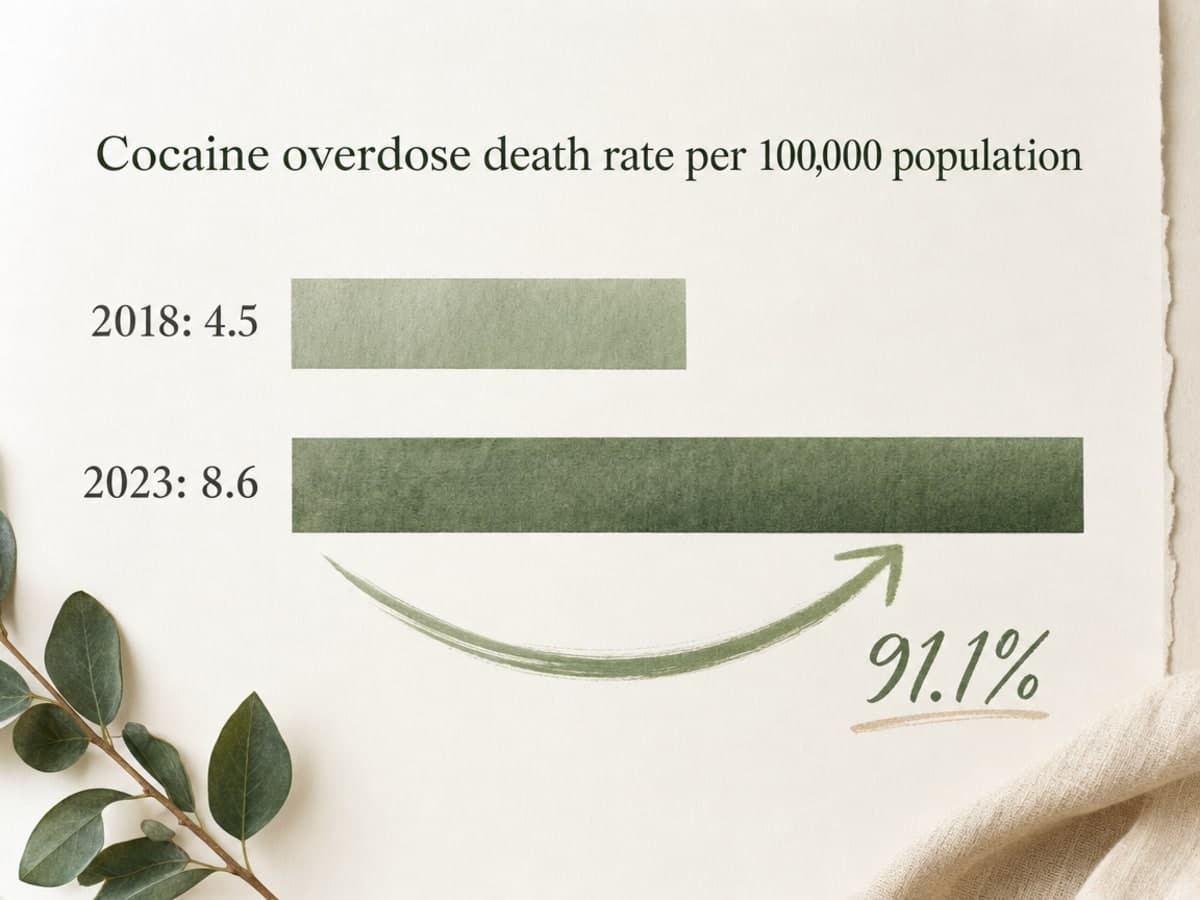
The trend behind that number is worth seeing plainly. The U.S. cocaine overdose death rate rose from 4.5 per 100,000 in 2018 to 8.6 per 100,000 in 2023 5. That’s roughly double in five years, driven largely by the opioid crossover.
Here’s what that means for the program you pick. A rehab that treats cocaine like a 1990s problem — behavioral counseling only, no overdose education, no naloxone conversation — is missing the modern threat. A serious cocaine program will screen for opioid co-use, teach you and your family how to recognize an overdose, and make sure naloxone is in the house before discharge.
Montana makes that last part easier than most states. The 2025 statewide naloxone standing order lets a program hand you nasal naloxone with instructions to give one spray at the first signs of opioid overdose, call 911, and repeat every two to three minutes until help arrives 8. Naloxone won’t reverse cocaine toxicity on its own, but if the cocaine had fentanyl in it, that spray is the difference between a scary night and a funeral.
When you call any rehab, ask two questions. Do you provide overdose education for cocaine clients and their families? Will we leave with naloxone and a plan for how to use it? If the answer is a pause, keep dialing.
The script: what to actually ask an admissions line
Calling a rehab is hard. Your voice might shake. You might not know what to say when they pick up. That’s okay. You don’t need a speech. You need a short list of questions that cut through the marketing and tell you whether this program actually treats cocaine.
Keep this near the phone. Read from it if you have to. Any admissions counselor worth trusting will slow down and answer plainly.
- Do you offer contingency management for cocaine, and how do you verify the target behavior? You want to hear about rapid, in-person point-of-care urine testing with immediate reinforcement after a verified drug-free result 3. A vague “we do incentives” is not the same answer.
- How is CBT delivered here — is there a written curriculum, and who runs the groups? Structured CBT taught by trained clinicians is what the evidence base assumes 10, 12. A rotating cast of unlicensed staff reading from a binder is not.
- How do you use motivational interviewing early in treatment, and how does the plan shift as someone becomes more ready to change? The right answer sounds like SAMHSA’s guidance: MI when ambivalence is high, then move into CBT-focused relapse prevention, and alternate as needed 13.
- How is my treatment plan actually individualized? Push past the buzzword. Ask what a multidimensional assessment looks like on day one and how the plan gets revised week to week.
- What do you do about co-occurring depression, anxiety, ADHD, or trauma? If cocaine has been the coping tool for something underneath, that something needs its own treatment.
- Do you provide overdose education and send clients home with naloxone? Given that 79.1% of cocaine-involved overdose deaths from January 2021 through June 2024 also involved opioids, this is not optional 5.
- What levels of care do you offer, and how do you step someone down without dropping them? You want to hear a real continuum — detox, residential, PHP, IOP, outpatient, aftercare — not a single-lane program.
- Are you licensed by the state for the services you’re describing, and are you accredited? In Montana, licensure aligns with ASAM levels 14. Ask for the specifics.
- What does discharge look like, and who calls me in week two after I go home? Aftercare is where most relapses happen. A serious program has a plan before you walk out.
If a counselor gets defensive at any of these, that’s information too. You are allowed to hang up and call the next one.
How to verify a Montana facility is what it claims to be
Once a program passes the therapy test, there’s a paperwork test. Montana has clear rules about what a substance use disorder facility can call itself and what services it’s licensed to deliver. A quick check here protects you from paying residential prices for something that isn’t actually clinical care.
Licensed clinical facility vs. recovery residence
These two sound similar and are not the same thing. A licensed substance use disorder facility is regulated by the state and has to meet specific clinical standards for the level of care it offers 14. A recovery residence — sometimes marketed as sober living — is a housing environment with peer support, and Montana rules are explicit that recovery residences do not provide clinical services and are excluded from department licensure 15.
Both can play a role. A recovery residence after treatment can be a steady bridge home. But a recovery residence marketed as if it were treatment is a problem, especially for cocaine, where behavioral therapy is the treatment 11. If nobody on staff is a licensed clinician, if there’s no written treatment plan, and if “therapy” means an evening group led by a house manager, you are looking at housing, not care.
Ask directly: Are you licensed by Montana DPHHS as a substance use disorder facility, and for which levels of care? A real clinical program will name the license without hesitation.
ASAM levels of care and what Medicaid may cover
Montana licenses facilities according to ASAM criteria, the national framework that sorts addiction treatment by intensity 14. That’s a useful piece of shorthand when you’re comparing programs. The state’s Medicaid provider manual lists the covered levels: ASAM 1.0 outpatient, 2.1 intensive outpatient, 2.5 partial hospitalization, 3.1 residential, 3.2 withdrawal management, 3.3 and 3.5 high-intensity residential, and 3.7 medically monitored intensive inpatient 7. When an admissions counselor tells you what they offer, you can match it to that list.
Coverage matters too, and Montana has done something helpful here. The HEART 1115 Medicaid waiver expanded substance use disorder coverage, including at residential facilities with more than 16 beds — an important shift, because federal Medicaid rules used to exclude those larger settings. The state’s HEART report documented 1,849 members receiving expanded services in state fiscal year 2025 6. Practically, that means Montana Medicaid may cover the level of care your assessment recommends, at facilities that used to be off-limits.
What it doesn’t mean: automatic yes. Eligibility, medical necessity, network status, and prior authorization still apply 6. When you call a Montana rehab, ask three things. Do you accept Montana Medicaid? For which ASAM levels? And can your admissions team verify my benefits and prior authorization before I arrive? A program that handles all three in one conversation is one that has done this before.
Where Elk Ridge Recovery fits on this checklist
Now hold the checklist up to a real program. Elk Ridge Recovery is a JCAHO-accredited treatment center in Montana that describes a full continuum of care: physician-led medical detox, residential inpatient, partial hospitalization, intensive outpatient, standard outpatient, and aftercare. That continuum matches the ASAM levels Montana licenses and Medicaid reimburses, from 3.7 medically monitored inpatient down through 1.0 outpatient 7, 14.
The facility also names the pieces a serious cocaine program should have alongside behavioral therapy: dual diagnosis care for co-occurring depression, anxiety, trauma, or ADHD; medication-assisted treatment when opioids or alcohol are also in the picture; family therapy; case management; and a formal aftercare and alumni program for the weeks after discharge. Those are the structural bones the research keeps pointing to 10, 11.
What Elk Ridge Recovery says about therapy — individual, group, and family sessions with relapse prevention built in — lines up with how SAMHSA describes alternating motivational work with CBT-focused skill building as readiness shifts 13. What the research doesn’t answer for you is how any specific clinician delivers CBT or motivational interviewing in your case, or whether contingency management is offered for stimulant clients in the exact form SAMHSA outlines 3. That’s a phone call, not a website review.
Use the nine-question script from earlier. Ask about CM specifically. Ask about naloxone at discharge. Ask about Montana Medicaid or your insurance. Then decide. Speak with Elk Ridge Recovery about cocaine treatment if the answers hold up — and keep calling if they don’t.
What the first two weeks can look like
If you’re picturing what happens after you say yes, here’s a realistic sketch. It won’t match every program exactly, but it gives you something to hold onto.
Days one to three are mostly medical and quiet. A physician-led team checks your vitals, screens for opioid co-use, and manages sleep, appetite, and mood while cocaine clears. You’ll do a multidimensional assessment that shapes your individualized plan across ASAM levels 7. Expect exhaustion. That’s normal.
Days four to seven is when the therapy actually starts. A clinician will likely lean on motivational interviewing here, because ambivalence is loudest in the first week 13. You’ll begin group work, meet a primary therapist, and — if the program is serious about cocaine — hear about contingency management with a clear description of the target behavior and how it’s verified 3.
Week two shifts toward CBT-focused skill building: identifying your specific triggers, practicing responses, and starting a relapse-prevention plan you’ll actually use at home 10. Family sessions often begin here. Overdose education and a naloxone plan should be part of the conversation before any step-down 8.
You won’t feel fixed in fourteen days. You’ll feel steadier. That’s the point.
Ready to talk about your next step?
Connect directly with a team member who understands and supports your recovery journey.
Frequently Asked Questions
Is there a medication that treats cocaine addiction?
No. The FDA has not approved any medication specifically for cocaine use disorder, which is why behavioral therapy is the backbone of treatment 9. A program may still use medication to manage sleep, mood, cravings for other substances, or a co-occurring mental health condition. If opioids or alcohol are also in the picture, medication-assisted treatment applies to those. For cocaine itself, structured behavioral care is what does the work 11.
How long does cocaine rehab usually last?
There’s no single right length. Most people move through a stepped continuum — detox, then residential or PHP, then IOP, then outpatient and aftercare — matched to ASAM levels of care 7. Residential stays often run 30 to 90 days, but the honest answer is that longer engagement in treatment tends to protect gains. A 2024 Cochrane review found psychosocial care reduced dropout compared with no intervention 1. Staying connected matters more than any fixed number.
What should I ask a rehab about contingency management before I commit?
Ask three specific things. What behavior is being reinforced — abstinence, attendance, or something else? How is it verified — rapid, in-person point-of-care urine testing done with a CLIA-waived test is what SAMHSA describes as evidence-based 3. And how quickly does the incentive follow the verified result? Immediate reinforcement after a confirmed drug-free test is what makes contingency management work 3. Vague answers about “rewards” or “tokens” without that structure are a red flag.
Does Montana Medicaid cover residential cocaine treatment?
Often, yes. The HEART 1115 waiver expanded Montana Medicaid coverage for substance use disorder care, including at residential facilities with more than 16 beds — settings federal rules used to exclude. The state reported 1,849 members receiving expanded services in fiscal year 2025 6. Covered levels align with ASAM criteria, from outpatient through medically monitored inpatient 7. Coverage still depends on eligibility, medical necessity, network status, and prior authorization. Ask the admissions team to verify benefits before you arrive.
Why do cocaine programs talk about fentanyl and naloxone?
Because cocaine sold today is often contaminated with fentanyl, and the majority of fatal cocaine overdoses now involve opioids 5. That risk doesn’t disappear the moment someone enters treatment — it matters most before admission, during any lapse, and after discharge. Montana’s 2025 statewide naloxone standing order lets programs send clients home with nasal naloxone and instructions to give one spray at signs of opioid overdose, call 911, and repeat every two to three minutes 8.
Is a sober living home the same as rehab?
No, and the difference matters. In Montana, recovery residences provide peer-supported housing but do not provide clinical services and are excluded from department licensure 15. A licensed substance use disorder facility must meet state standards for the level of clinical care it delivers 14. Sober living can be a strong bridge after treatment, but it isn’t a substitute for assessment, medical oversight, and structured behavioral therapy — which is what cocaine use disorder actually requires 11.
References
- Psychosocial interventions for stimulant use disorder. https://pubmed.ncbi.nlm.nih.gov/38357958/
- Motivational interviewing for substance use reduction. https://pmc.ncbi.nlm.nih.gov/articles/PMC10714668/
- Using SAMHSA Funds To Implement Evidence-Based Contingency Management Services. https://library.samhsa.gov/sites/default/files/contingency-management-advisory-pep24-06-001.pdf
- Efficacy of cognitive behavioral therapy for stimulant use disorder: A systematic review and meta-analysis. https://pmc.ncbi.nlm.nih.gov/articles/PMC12640898/
- Drug Overdose Deaths Involving Stimulants — United States, January 2018–June 2024. https://www.cdc.gov/mmwr/volumes/74/wr/mm7432a1.htm
- Healing and Ending Addiction Through Recovery and Treatment (HEART) Report. https://dphhs.mt.gov/assets/StatutorilyRequiredReports/MCA16-12-122HEARTReport9-1-25.pdf
- March 2025 BHDD Medicaid Services Provider Manual. https://dphhs.mt.gov/BHDD/SubstanceAbuse/March2025BHDDMedicalServicesProviderManual
- Naloxone Standing Order 2025. https://dphhs.mt.gov/assets/publichealth/EMSTS/opioids/2025NaloxoneStandingOrder.pdf
- Cocaine – National Institute on Drug Abuse (NIDA) – NIH. https://nida.nih.gov/research-topics/cocaine
- How is cocaine addiction treated?. https://nida.nih.gov/publications/research-reports/cocaine/what-treatments-are-effective-cocaine-abusers
- The treatment of cocaine use disorder. https://pmc.ncbi.nlm.nih.gov/articles/PMC6795516/
- Cocaine Use Disorder (CUD): Current Clinical Perspectives. https://pmc.ncbi.nlm.nih.gov/articles/PMC9451050/
- Enhancing Motivation for Change in Substance Use Disorder Treatment. https://library.samhsa.gov/sites/default/files/tip-35-pep19-02-01-003.pdf
- Rules for Substance use Disorder Facility. https://dphhs.mt.gov/assets/oig/Rules_for_Substance_use_Disorder_Facility.pdf
- ARM – 37.106 Subchapter 14. https://dphhs.mt.gov/assets/oig/ChemicalDependencyFacilities2025.pdf