Key Takeaways
- Heroin’s share of Montana opioid-overdose deaths dropped from 50.0% in 2020 to 2.4% in 2024 as fentanyl replaced much of the illicit supply 8.
- The days after withdrawal carry the highest overdose risk because tolerance collapses fast, which is why buprenorphine or methadone should start during detox rather than after 2, 3.
- Rural distance shapes treatment choice in Montana: office-based buprenorphine and telehealth often fit better than daily methadone dosing at a certified opioid treatment program 7.
- Montana Medicaid and the HEART Initiative cover residential care, MOUD, and peer support as one continuum, with 1,461 members using expanded HEART services in fiscal year 2025 14.
The Most Dangerous Moment Isn’t Withdrawal
You already know what heroin withdrawal feels like. Maybe you’ve been through it in a jail cell, on a friend’s couch, or alone in a bathroom with a towel over your face. That memory is probably part of why you haven’t tried to stop again.
Here’s what most people never get told: withdrawal is not the part that kills you. The days and weeks after you stop are. When you go a few days without heroin, your tolerance drops fast. The amount you used to use — the amount that felt normal on a Tuesday — can stop your breathing if you go back to it. That’s not a scare tactic. It’s the reason clinicians treat post-detox as its own medical event, not a graduation.
The CDC is direct about this: detoxification on its own, without ongoing medication for opioid use disorder, isn’t recommended, because it raises the risk of resumed use, overdose, and death 2. Rapid withdrawal without a plan for what comes next has cost people their lives, including people who did everything right on the way in 4.
So if you’re reading this in Montana, or for someone in Montana, this guide is built around that reality. Withdrawal gets you in the door. What happens over the next three months is what turns a quit attempt into a recovery you get to keep.
What Heroin Withdrawal Actually Looks Like, Hour by Hour
You know the fear before the first symptom hits. The clock-watching. The bargaining with yourself. If you’re going to walk into a detox bed in Kalispell or Billings, you deserve to know what the next week actually feels like — not a vague warning, and not a lecture.
Heroin withdrawal usually starts within hours of your last dose. According to NIDA, symptoms tend to peak around 24 to 48 hours after use stops, ease over roughly a week, and can leave a longer tail of protracted symptoms — low mood, poor sleep, cravings — that may last for months 11. That’s the map. Here’s what it looks like on the ground.
Hours 6 to 12. You start to feel it. Runny nose, yawning, tearing eyes, a restless twitch in your legs. Anxiety climbs. Sleep goes first. In a medically supervised setting, this is when your care team is taking vitals, starting comfort medications, and, when clinically appropriate, beginning buprenorphine or planning methadone induction so the worst of what’s coming never fully arrives.
Hours 24 to 48. Peak. Muscle aches deep in your back and legs. Stomach cramps, nausea, vomiting, diarrhea. Sweats and chills alternating. Blood pressure and heart rate up. You feel like you have a bad flu and a panic attack at the same time. This is the stretch people describe as the reason they’ve never tried to stop again. In detox, it’s also the stretch where you are not alone in a bathroom — you’re being monitored, hydrated, and medicated.
Days 3 to 5. The physical storm starts to break. GI symptoms ease. Sleep is still ragged. Cravings sharpen because your body is no longer distracted by acute pain. This is a fragile window, which is why leaving detox against medical advice at day four is such a common relapse story.
Around day 7. Acute withdrawal has largely subsided 11. You feel human again. You are also not done.
What comes next — flat mood, insomnia, cravings that spike out of nowhere — is what clinicians call protracted withdrawal, and it’s why detox is a door, not a finish line.
Why Tolerance Loss Is the Real Risk
Here is the part of heroin recovery that almost no one explains clearly before you’re already in it.
When you use heroin regularly, your body adapts. Your brain expects the opioid to be there. Your breathing, your pain response, your alertness — all of it gets calibrated around a dose that would knock out someone who has never used. That’s tolerance. It’s the reason you can function on an amount that would send a first-time user to the emergency room.
Take heroin away for even a few days and that calibration collapses. Fast. By the time you walk out of a detox bed, your tolerance is closer to a first-time user’s than to the person you were the week before. Your head knows that. Your habits don’t. If you use again — same dealer, same amount, same routine — the dose that felt normal on Tuesday can stop your breathing on the following Monday. That is not a metaphor. It’s how post-withdrawal overdoses actually happen, and it’s why one peer-reviewed case report documented a fatal overdose in a person who had just completed medically supervised withdrawal 4.
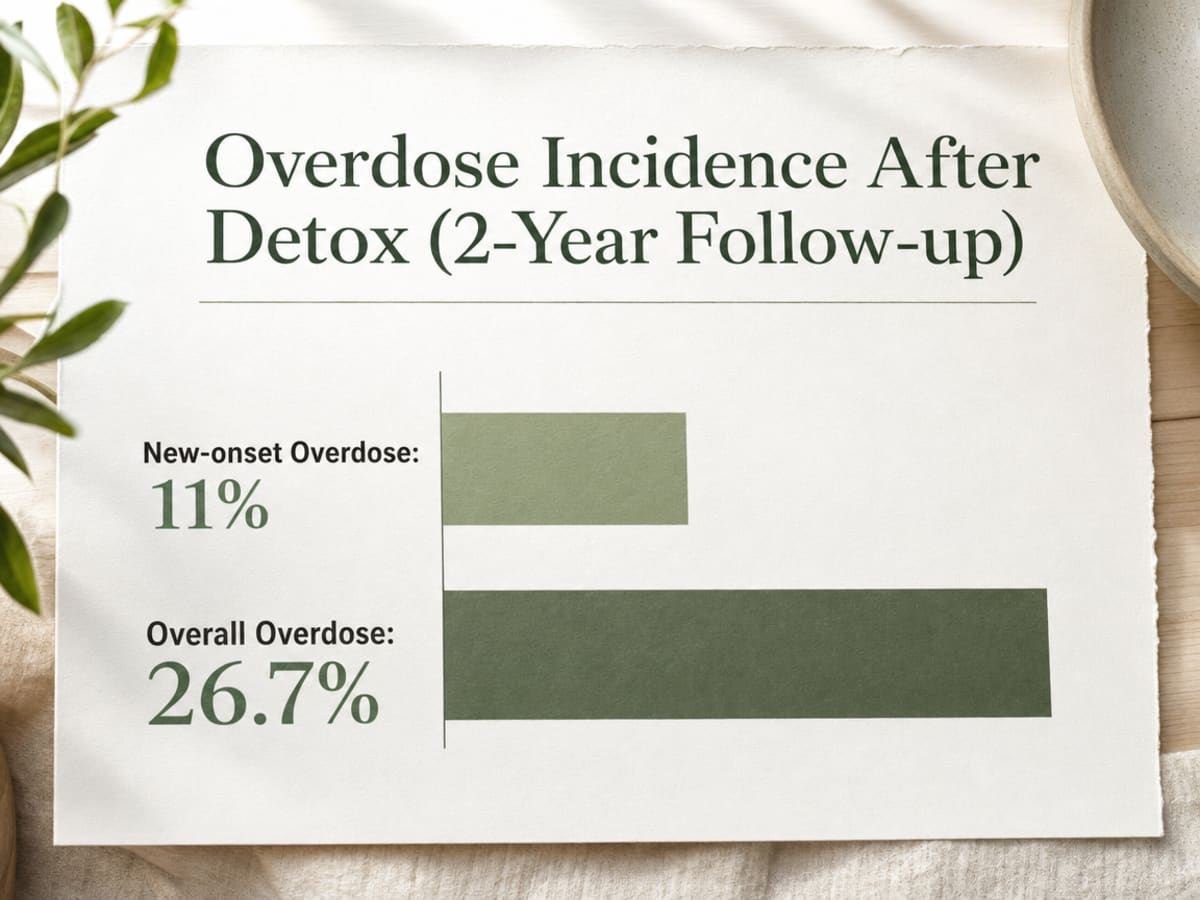
The numbers behind this are unsettling in a specific way. A prospective study followed 470 adults after detoxification in Boston. In the subgroup with opioid problems, estimated overdose incidence over the two years that followed was 11.0% for new-onset overdose and 26.7% for overdose overall 5. That study is older, it is not Montana, and the exact percentages should not be lifted onto your future. What holds across studies and clinical guidelines is the pattern: the period right after detox is when opioid overdose risk spikes, not when it disappears.
This is why the CDC and the 2024 national clinical practice guideline both say the same thing, more or less bluntly. Withdrawal management on its own is not the treatment. Medication for opioid use disorder — buprenorphine or methadone — is the treatment, and it should start during withdrawal, not months later 2, 3.
Heroin in Montana Right Now
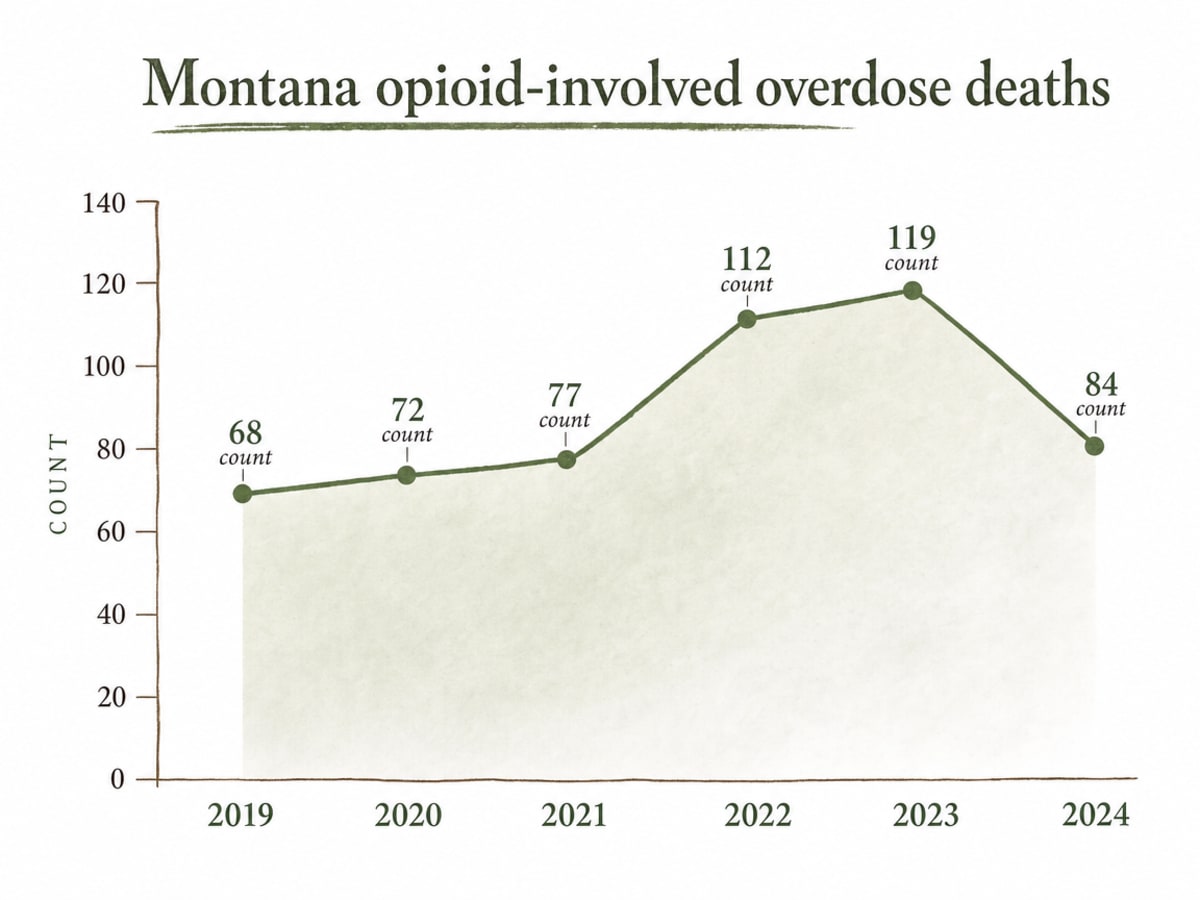
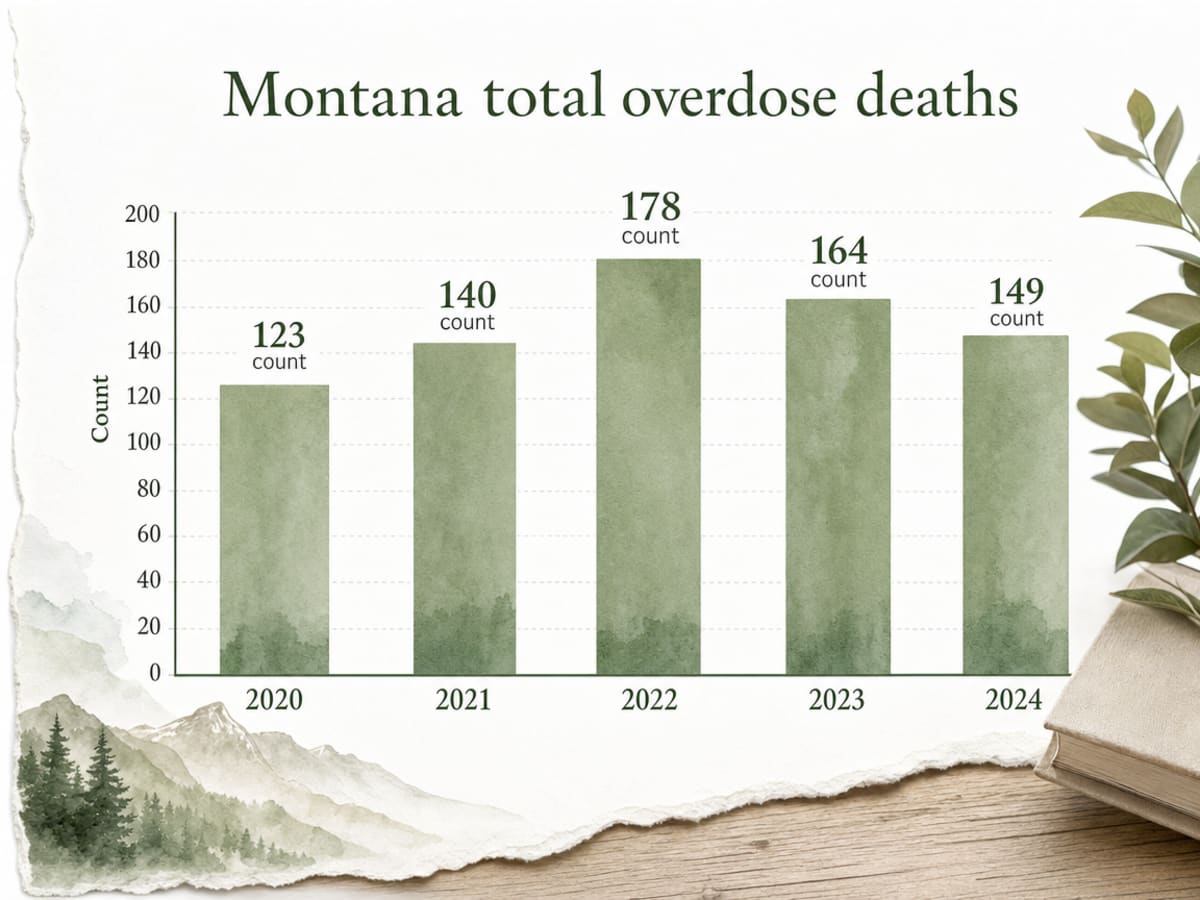
If you’re picturing Montana’s opioid problem the way it looked five years ago, the picture has changed underneath you. The state’s April 2026 surveillance report tells a hard story: heroin’s share of Montana opioid-overdose deaths fell from 50.0% in 2020 to just 2.4% in 2024 8. That is not because heroin got safer, or because fewer people are using opioids in Montana. It is because illicitly manufactured fentanyl moved into the supply and mostly replaced what heroin used to be.
What that means for you, in practical terms, is this. The powder or the pressed pill you think you’re buying may not be heroin at all, or it may be heroin cut with something far more potent. Past-year heroin use among Montana adults was estimated at 0.2% in 2023–2024 8— a small share of the population, but every one of those people is now navigating a drug supply where a single dose is a lot less predictable than it used to be. Suspected opioid-overdose EMS incidents in Montana rose to 898 in 2025, up from 771 in 2024 8. Paramedics are running more calls, not fewer.
Two things follow from this. First, your treatment plan has to assume you may have been exposed to fentanyl whether you meant to be or not — which raises the stakes on tolerance loss and makes naloxone in the home non-negotiable. Second, you are not an outlier for still using heroin in 2026. You are a person Montana’s surveillance system is still counting, and the state has been building services around that count.
What Treatment Actually Involves
Medically Supervised Withdrawal as an Entry Point, Not a Finish Line
Detox is where most people picture the work happening. That picture is upside down.
In a residential setting, medically supervised withdrawal for heroin usually runs five to seven days of acute care. A physician and nursing team monitor your vitals, treat nausea and muscle pain with comfort medications, and — this is the part that matters — start you on buprenorphine or arrange methadone induction before you leave the building. The goal is not to get you to zero opioids and hand you the door. The goal is to move you from an illicit, unpredictable supply onto a stable medication that keeps withdrawal and cravings from running your day.
Both the CDC and the 2024 national clinical practice guideline are direct on this: withdrawal management on its own is not treatment for opioid use disorder, and offering only detox raises the risk of resumed use, overdose, and death 2, 3. NIDA makes the same point in plain language — withdrawal symptoms and cravings can precipitate relapse, and medication supports both the detox process and long-term recovery 10.
What that looks like in practice: you walk in scared of the next 72 hours. You walk out with a medication regimen, a follow-up appointment, and a safer body than the one you arrived in.
Buprenorphine, Methadone, and Extended-Release Naltrexone
Three medications are FDA-approved for opioid use disorder, and all three work for heroin because they target opioid dependence itself, not the specific drug that caused it 9.
Buprenorphine (often as Suboxone, which pairs it with naloxone) is a partial opioid agonist. It occupies the same brain receptors heroin hits, but with a ceiling that makes overdose from the medication itself much less likely. You can start it in a residential setting and continue with a prescribing clinician in most Montana communities, including through office-based providers and telehealth. For a lot of people, buprenorphine is the practical choice because it doesn’t require daily travel to a clinic.
Methadone is a full opioid agonist dispensed through federally certified opioid treatment programs (OTPs) under 42 CFR Part 8 7. It’s an extremely well-studied medication for heroin use disorder and often the right call when cravings and withdrawal have been persistent, when buprenorphine hasn’t held, or when you’ve been using heavily for a long time. The tradeoff in Montana is real: OTPs are concentrated in a handful of cities, so daily dosing means daily driving until you earn take-homes.
Extended-release naltrexone (Vivitrol) is a monthly injection that blocks opioid receptors. It’s not an opioid, so it doesn’t treat withdrawal — you have to be fully detoxed before your first shot, usually 7 to 10 days out. NIDA identifies it as approved for relapse prevention after detoxification 10. It’s a reasonable option if you’re set against agonist medications, if your work schedule can’t accommodate daily dosing, or if you’ve completed a residential stay and want a monthly commitment instead of a daily one.
The 2024 guideline treats buprenorphine and methadone as first-line for opioid use disorder 3. The right answer for you is a conversation, not a default.
Behavioral Care and the Relapse Predictors Worth Naming
Medication handles the pharmacology. It doesn’t handle the Tuesday night when your old dealer’s number is still in your phone.
Behavioral care — individual therapy, group work, family sessions, peer support, relapse-prevention planning — is where the rest of the work happens. NIDA’s guidance is that combined medication and behavioral treatment is often the most effective approach for heroin use disorder 10. The 2024 clinical guideline adds an important caveat: psychosocial interventions should support medication, not gate it. You shouldn’t have to earn buprenorphine by attending a set number of groups first 3.
Some things that raise your relapse risk after detox are worth naming out loud, because they are information, not a verdict on you. A peer-reviewed study of adults after inpatient opioid detoxification identified the following as predictors of relapse 6:
- longer duration of opioid use
- injection history
- multiple prior quit attempts
- greater heroin use
- family history of substance use
If several of those describe your life, it does not mean treatment won’t work. It means a five-day detox and a handshake won’t be enough — and that a longer residential stay, medication continuation, and structured aftercare are the shape of a plan that respects what you’re actually up against.
Prior quit attempts count as data. They tell your care team where things frayed last time, so this time gets built differently.
Residential Treatment and the Rural-Access Reality
A residential stay is not just a bed. For heroin specifically, it’s a bridge across the two weeks where you’re most likely to be alone with a craving and least likely to survive acting on it.
In residential care, medically supervised withdrawal happens under a physician and nursing team, medication for opioid use disorder starts before you leave, and the days after acute withdrawal — the fragile stretch when cravings sharpen and tolerance is gone — happen inside a structure instead of in your kitchen. You eat, you sleep, you meet with a counselor, you sit in group, you get bloodwork and vitals checked. The point isn’t confinement. The point is that the ninety days after you stop using are not a solo project 2, 3.
Then there’s the Montana part of this. If you live in Libby, Lewistown, or a ranch outside Glasgow, ongoing methadone can mean an hour or more of daily driving to a certified opioid treatment program, which is why 42 CFR Part 8 access is a real logistical question, not a footnote 7. Office-based buprenorphine — through a local prescriber or telehealth — is often the difference between staying in treatment and quietly dropping out because the drive stopped being possible in February.
A well-planned residential stay uses that stretch to set your medication before you go home. If buprenorphine fits your life, you leave with a prescription and a warm handoff to a prescriber near you. If methadone is the right medication, your care team maps the closest OTP, the intake appointment, and the first two weeks of dosing so daily travel is scheduled, not improvised. Rural distance is real. It’s also solvable when the plan is built before discharge, not after.
Naloxone, Discharge Planning, and the First 90 Days Home
The day you leave residential care is not the day you’re safe. It’s the day the plan you built inside has to survive contact with your kitchen, your phone, and the people who knew you before.
Naloxone in the home is the floor, not the ceiling. The CDC is unambiguous: naloxone can rapidly reverse a heroin overdose, and it belongs within reach of anyone at risk and the people who live with them 1. Ask your care team for two doses before discharge, keep one where you sleep and one where you’d most likely use if it happened, and make sure at least one person in your life knows where they are and how to use them. This isn’t planning to relapse. It’s planning for the version of the next ninety days where a bad night doesn’t become a funeral.
The rest of discharge planning is about closing the gap between the building you’re leaving and the appointment you haven’t made yet. Before you walk out, you should know the date and time of your first medication follow-up, the name of the prescriber or OTP you’re going to, and how you’re getting there. NIDA is clear that combined medication and behavioral care is often the most effective approach for heroin use disorder 10, which means your calendar should hold both — a MOUD prescriber and a therapist or group, not one or the other.
Your tolerance is still down. Cravings will spike in places you didn’t expect. That’s not weakness surfacing. It’s the shape of the first ninety days, and the plan you leave with is what carries you through them.
Paying for Care: Montana Medicaid and the HEART Initiative
Money is the question people are most embarrassed to ask, and the one that stops the most calls. Here’s what’s actually true in Montana right now.
Montana Medicaid covers substance use disorder treatment under Title 53, Chapter 6 and the Title 37 administrative rules that shape SUD provider requirements and reimbursement 12. For medication treatment specifically, the state’s MAT manual requires 13:
- a documented diagnosis of moderate or severe opioid use disorder
- clinical appropriateness for the medication
- your agreement to start treatment
- at least one monthly in-person or telehealth check-in for continued dispensing
Heroin use disorder generally meets those criteria when the diagnostic threshold is met. In practical terms: if you qualify for Montana Medicaid, buprenorphine, methadone, and extended-release naltrexone are covered medications, not out-of-reach options.
The HEART Initiative — Healing and Ending Addiction through Recovery and Treatment — is Montana’s expansion of what Medicaid actually pays for around those medications. It funds residential treatment across ASAM levels, care coordination, peer support, medication management, and MOUD as parts of one continuum rather than isolated services. In state fiscal year 2025, 1,461 Montana Medicaid members received treatment through the expanded HEART services 14. You would not be the first person in your county to use them.
If you’re uninsured, underinsured, or unsure what you qualify for, that’s a phone call for a treatment center’s admissions team to make with you — not a barrier you have to solve alone before you dial.
When to Reach Out
There’s no version of this where the right day to call is later. If you’re using heroin now and reading this at 2 a.m., the honest signal isn’t that you’ve hit some clean rock-bottom — it’s that you’re already doing the math. The tolerance window, the fentanyl-contaminated supply Montana’s surveillance report has been tracking 8, the number of times you’ve told yourself next week — those are the reasons the call gets made this week instead.
You don’t have to be sober to reach out. You don’t have to have a plan. You don’t have to know whether buprenorphine, methadone, or extended-release naltrexone is right for you — that’s a conversation with a clinician, not a prerequisite for the phone 3. A residential admissions team in Montana can walk you through insurance, transport from Libby or Billings or Bozeman, and what the first 48 hours will actually look like. Prior quit attempts are information you bring with you, not a reason to stay home. Elk Ridge Recovery, and other Montana programs, take that call every day.
Talk to Someone Who Understands Heroin Recovery
Connect directly with a recovery expert ready to support your next step away from heroin use.
Frequently Asked Questions
How long does heroin withdrawal last in a medically supervised setting?
Acute heroin withdrawal usually begins within hours of your last dose, peaks around 24 to 48 hours in, and eases over roughly a week 11. In a residential setting, comfort medications and buprenorphine or methadone induction cut the worst of the peak. Protracted symptoms — low mood, poor sleep, cravings — can linger for months, which is why detox is a starting point, not the end of care.
Why is overdose risk higher after detox than before treatment?
Your tolerance drops fast when heroin leaves your system. A dose that felt normal last week can stop your breathing after even a few days of abstinence, which is how post-withdrawal overdoses actually happen 4. That’s why the CDC and the 2024 national clinical practice guideline say withdrawal management alone isn’t recommended, and that buprenorphine or methadone should start during detox rather than being deferred to some later date 2, 3.
Do I have to take medication like buprenorphine or methadone, or can I detox and be done?
You can technically detox without medication. Clinical evidence says you shouldn’t. NIDA notes that withdrawal symptoms and cravings can precipitate relapse, and that medication supports both detox and long-term recovery 10. The 2024 guideline treats buprenorphine and methadone as first-line, with extended-release naltrexone as an option after full detox 3. Which medication fits your life is a clinical conversation — not a prerequisite for calling.
Does Montana Medicaid cover heroin addiction treatment?
Yes. Montana Medicaid covers SUD treatment under Title 53, Chapter 6 and Title 37 administrative rules 12. The MAT manual requires a documented moderate or severe opioid use disorder, clinical appropriateness, your agreement to treatment, and monthly check-ins 13. The HEART Initiative expands residential care, peer support, and MOUD as one continuum; 1,461 Montana Medicaid members received treatment through those services in state fiscal year 2025 14.
I live in a rural part of Montana. How do I access ongoing medication treatment after residential care?
Office-based buprenorphine is usually the practical answer. It’s prescribed by local clinicians and through telehealth across Montana, so you’re not driving daily. Methadone is dispensed only through federally certified opioid treatment programs under 42 CFR Part 8 7, which are concentrated in a few cities. A good residential team maps your prescriber, first appointment, and transportation before discharge — so distance is scheduled, not improvised.
I’ve tried to quit heroin before and relapsed. Does that mean treatment won’t work for me?
No. Prior quit attempts are information, not a verdict. A peer-reviewed study identified longer duration of use, injection history, multiple prior detoxifications, greater heroin use, and family history as relapse predictors 6— factors that shape the plan, not people who can’t recover. If several describe you, it means a longer residential stay, medication continuation, and structured aftercare fit better than a five-day detox and a handshake.
References
- Heroin | Overdose Prevention. https://www.cdc.gov/overdose-prevention/about/heroin.html
- Opioid Use Disorder: Treating | Overdose Prevention | CDC. https://www.cdc.gov/overdose-prevention/hcp/clinical-care/opioid-use-disorder-treating.html
- Management of opioid use disorder: 2024 update to the national clinical practice guideline. https://pmc.ncbi.nlm.nih.gov/articles/PMC11573384/
- A case of opioid overdose and subsequent death following medically supervised withdrawal: a case report. https://pmc.ncbi.nlm.nih.gov/articles/PMC5786466/
- Overdose after detoxification: a prospective study. https://pubmed.ncbi.nlm.nih.gov/17280803/
- Predictors of Relapse after Inpatient Opioid Detoxification during 1 Year Follow-Up. https://pmc.ncbi.nlm.nih.gov/articles/PMC5046044/
- Federal Guidelines for Opioid Treatment Programs. https://library.samhsa.gov/sites/default/files/federal-guidelines-opioid-treatment-pep24-02-011.pdf
- Summary of Opioid Use in Montana. https://dphhs.mt.gov/assets/publichealth/EMSTS/Data/Opioid_Drug_Use_Summary.pdf
- TIP 63: Medications for Opioid Use Disorder. https://library.samhsa.gov/sites/default/files/pep21-02-01-003.pdf
- What are the treatments for heroin use disorder?. https://nida.nih.gov/publications/research-reports/heroin/what-are-treatments-heroin-use-disorder
- Heroin. https://nida.nih.gov/sites/default/files/828-heroin.pdf
- Substance Use Disorders – Medicaid Provider – Montana.gov. https://medicaidprovider.mt.gov/32
- 550 Medication Assisted Treatment (MAT). https://dphhs.mt.gov/assets/BHDD/MedicaidManual/550MAT.pdf
- Healing and Ending Addiction through Recovery and Treatment (HEART) Update. https://dphhs.mt.gov/assets/heartinitiative/June2025/HEARTUpdateJune2025.pdf