Key Takeaways
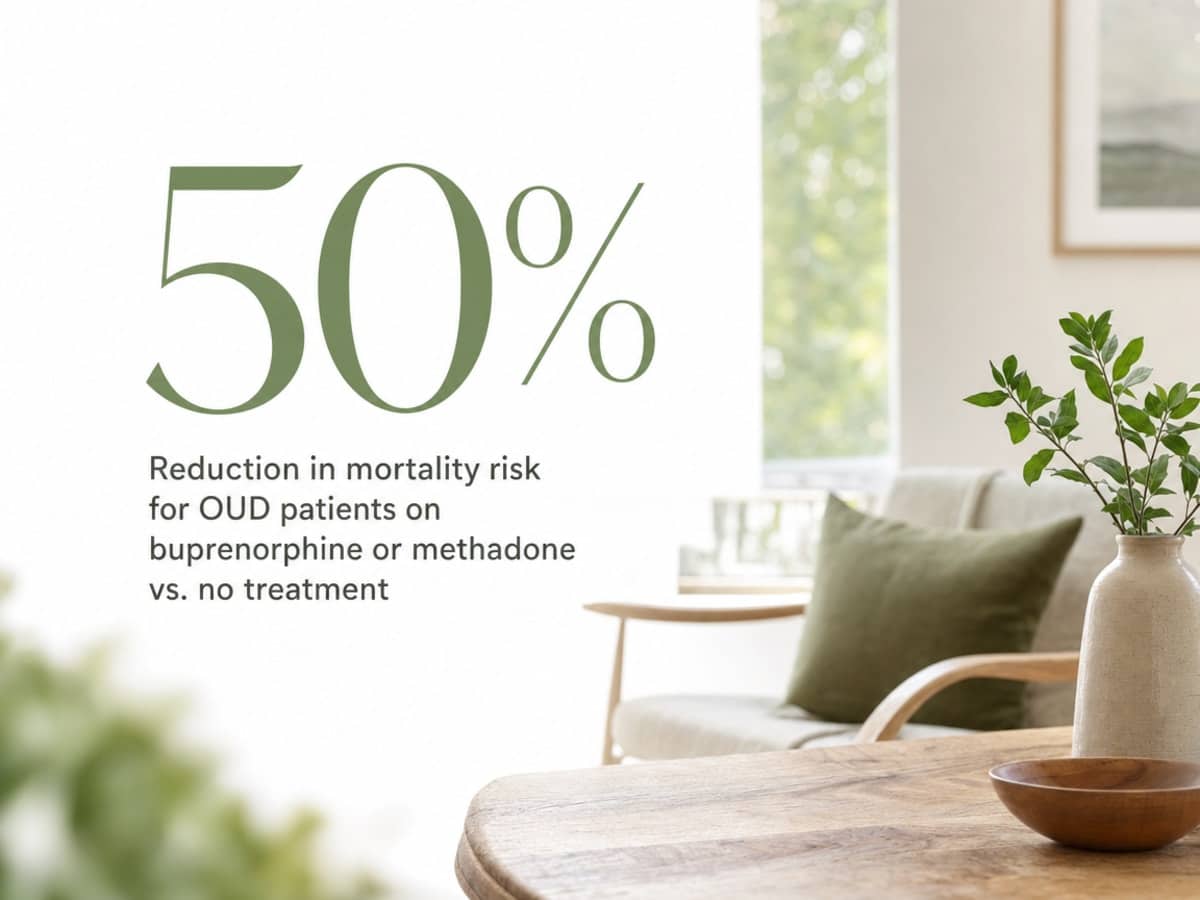
- Opioid use disorder is a treatable medical condition, and medications like buprenorphine and methadone cut mortality risk roughly in half compared to going without 7.
- Montana recorded 84 opioid-involved overdose deaths in 2024, a 25% drop from 2023, showing that expanded medication access and post-overdose linkage are moving the curve 9.
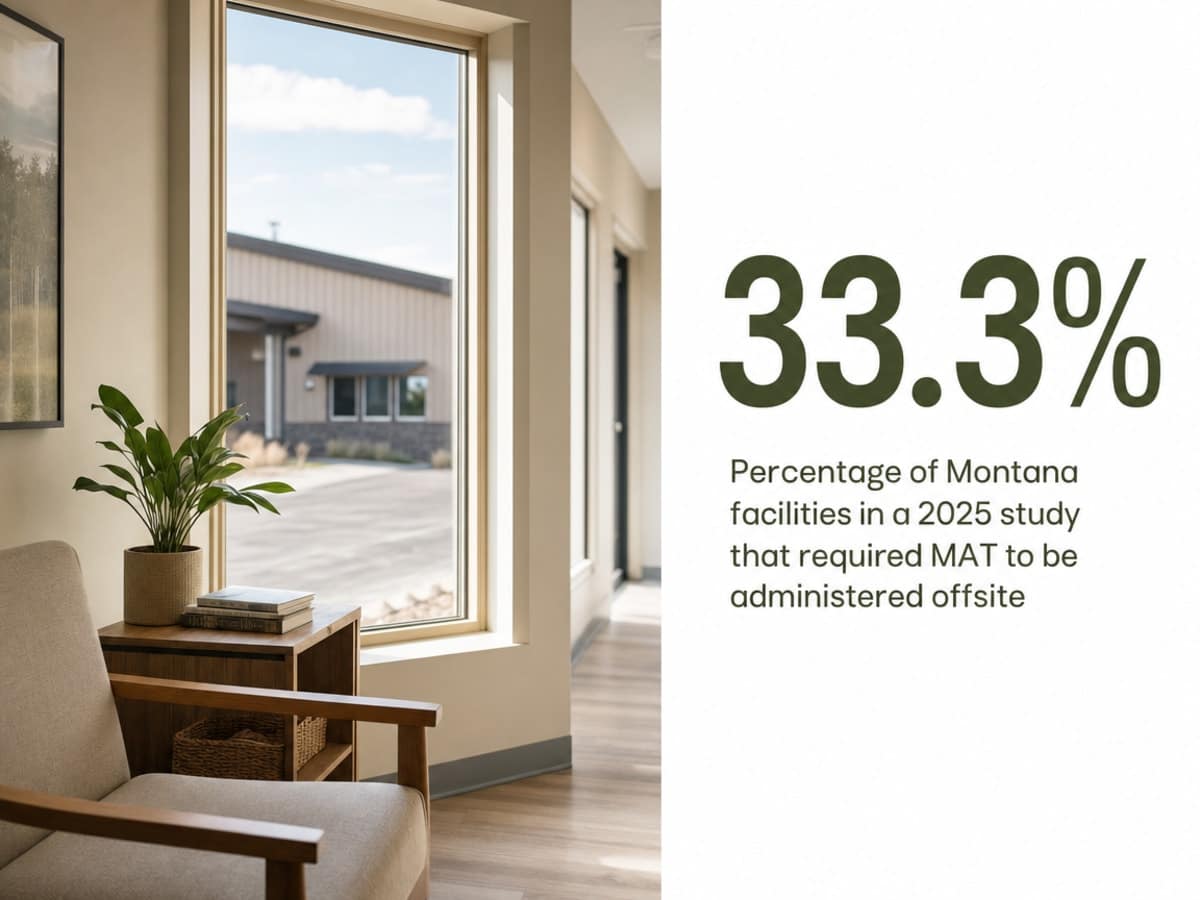
- Distance and workforce gaps mean it matters whether a Montana program offers medication on-site; a 2025 study found 5 of 15 facilities required MAT to be given elsewhere 6.
- Call one Montana treatment center and ask what levels of care they run in-house, which medications they administer on-site, what insurance they accept, and what aftercare looks like.
If you’re reading this at 2 a.m.
If you’re reading this at 2 a.m., phone in one hand and the other hand shaking a little, you are already doing something brave. Maybe it’s you. Maybe it’s your kid, your partner, your best friend from high school who you thought had it under control. Either way, you’re here, and that counts.
You don’t have to have the right words yet. You don’t have to know what a PHP is, or whether Suboxone is different from methadone, or how you’d pay for any of this. That’s what this page is for.
Opioid addiction is a medical condition, not a character flaw, and it responds to treatment 12. Real treatment in Montana usually means a mix of medication, counseling, case management, and someone helping you plan what happens next. It is not one meeting and a pamphlet.
Take a breath. Keep reading. We’ll walk through what care actually looks like, what to ask, and where to start.
What opioid addiction treatment actually looks like
It’s medical care, not willpower
Here’s something worth saying out loud: if you’ve tried to quit before and it didn’t stick, that’s not a sign you’re weak. It’s a sign that opioid use disorder is a chronic medical condition, and the brain changes it causes don’t respond to grit alone 12.
You wouldn’t be told to “just try harder” if you had diabetes or a heart condition. Opioid addiction works the same way. It’s a health problem, and it has treatments that work 1.
What that means, practically, is that good treatment starts with a medical assessment, not a lecture. A clinician looks at what you’re using, how much, how long, your physical health, your mental health, and what’s happened in past attempts. From there, you and the care team build a plan together 5.
You are not starting from zero. You are starting from someone who has already survived a lot. That’s a foundation, not a failure.
Why medication is part of real treatment
Let’s talk about the piece people argue about most, and shouldn’t: medication.
For opioid use disorder, medication is the standard of care. That’s not one clinic’s opinion. The CDC, the National Institute on Drug Abuse, and SAMHSA all say the same thing: medication is the first-line treatment, and it works best when paired with counseling 1, 12, 3.
There’s more. A federal study of people who survived a nonfatal overdose found that those who got on methadone afterward had 58% lower odds of dying from a later overdose. For buprenorphine, the number was 52% lower. Even a behavioral-health assessment after the overdose was linked to 75% lower odds 13. Getting connected to care fast, and staying connected, is what changes the story.
You might have heard someone say medication is “just replacing one drug with another.” That framing hurts people. Methadone and buprenorphine don’t produce the chaos, the cravings, or the overdose risk that street opioids do. They steady your body so your brain can rest and your life can start to come back. If a program you’re considering doesn’t offer medication, or discourages it, that’s worth asking hard questions about 2.
The three medications, in plain language
There are three FDA-approved medications for opioid use disorder. You don’t have to memorize them. You just need to know they exist so you can ask about them 1.
- Buprenorphine
- (you’ll hear brand names like Suboxone) is a partial opioid. It settles cravings and withdrawal without the high, and it has a built-in ceiling that makes overdose much less likely. It’s taken as a daily film or tablet, or as a monthly injection. Many people start it during detox and stay on it for months or years 3.
- Methadone
- is a full opioid taken once a day, dispensed through federally regulated opioid treatment programs. It has the longest track record and works well for people with heavier or longer use histories. The daily dosing structure is a lot for some people and a helpful anchor for others 10.
- Naltrexone
- (often the monthly Vivitrol injection) is different. It’s not an opioid at all. It blocks opioids from working, so if you use, you won’t feel it. Because of how it works, you need to be fully off opioids for a stretch before starting, which is why it’s usually begun after detox 2.
There’s no single right answer. The best medication is the one that fits your body, your history, your schedule, and what you’re willing to try. A good program will actually talk this through with you.
Counseling, case management, and the people around the medicine
Medication does a lot. It doesn’t do everything. The other half of real treatment is the humans around you.
Counseling gives you a place to figure out what’s underneath the using. Individual therapy, group therapy, family sessions, trauma work, dual-diagnosis care for anxiety or depression that came along for the ride. Montana’s licensing rules actually require an individualized treatment plan and an interdisciplinary team, which means a licensed counselor or mental-health professional should be part of your care, not an afterthought 5.
Case management is the person who helps you deal with the life stuff that keeps derailing recovery. Insurance. Housing. Court dates. A ride to your Tuesday appointment. Getting your ID back. It sounds small until you’re trying to do it alone at week two 10.
Peer recovery coaches are people who’ve been where you are and stayed. They’re not clinicians. They’re proof.
The reason all of this matters together: transitions between settings, like leaving detox for outpatient, are when people fall through the cracks and overdose risk climbs. Care navigators, case managers, and peer coaches are the glue that keeps you from disappearing between appointments 8. When you’re comparing programs, ask who those people are and how often you’ll see them.
The levels of care you’ll hear about
Detox, residential, PHP, IOP, outpatient, aftercare
Treatment isn’t one thing. It’s a stack of options that meet you at different intensities, and you move between them as you get steadier. Montana’s licensing rules recognize these levels of care and require a facility to build an individualized treatment plan for each person, not a one-size template 5.
Here’s what the words mean.
- Medical detox
- is the first few days, when your body is coming off opioids and you need physicians and nurses watching over you. Withdrawal feels awful. That’s why we don’t ask you to do it alone. Medication can be started here to soften the crash and set you up for what comes next 3.
- Residential inpatient
- means you live at the facility, usually for a few weeks. It’s structured. Meals, therapy, sleep, groups, all in one place. Good for when home isn’t safe or steady enough yet.
- Partial hospitalization (PHP)
- is a step down. You spend most of the day in treatment and go home or to sober housing at night.
- Intensive outpatient (IOP)
- drops the hours further, usually to a few days a week, so you can work, parent, or start reentering life.
- Standard outpatient
- is weekly therapy and medication management.
- Aftercare
- is the long tail: alumni groups, recovery coaching, relapse-prevention planning, and someone to call when things get shaky at month seven.
You don’t have to figure out which level you need. A good assessment does that with you 5.
Why transitions between levels are the risky part
Here’s a piece most people don’t hear until it’s too late: the danger points aren’t just the beginning. They’re the moves between levels.
Leaving detox for residential. Leaving residential for PHP. Finishing IOP and dropping to weekly outpatient. Every handoff is a chance for someone to lose the thread, miss the intake call, run out of medication, and disappear back into the using they came in to escape. AHRQ’s guidance for opioid treatment programs is direct about this: transitions between settings can disrupt care and raise the risk of resumed use, overdose, and death 8.
That’s why the same source names care navigators, case managers, and peer recovery coaches as the people who keep you tethered when the level of care changes 8. When you’re comparing programs, this is the thing to ask about. Not just “what do you offer?” but “who walks with me between the pieces?”
What’s happening in Montana right now
You’re probably scared to look at the numbers. That’s fair. Let’s look anyway, because the story they tell is not what you might expect.
Montana recorded 84 opioid-involved overdose deaths in 2024. That’s a 25% drop from the 119 deaths in 2023, and it followed a steep climb through the fentanyl years: 72 deaths in 2020, 77 in 2021, 112 in 2022, then 119 in 2023 before the 2024 decline 9. Opioids still accounted for 56.4% of the 149 unintentional or undetermined overdose deaths the state counted last year 9.
Eighty-four is not a small number. Behind each one is a family that’s still learning how to say the name out loud. But the direction of the line matters. After four years of rising, the curve bent down. That doesn’t happen by accident. It happens because more people got connected to medication, more overdoses got reversed with naloxone, more emergency rooms started handing patients off to treatment instead of just discharging them, and more Montanans made the call you might be about to make.
Here’s what the trend is not telling you: that the danger is over, or that any one person’s outcome is guaranteed. Surveillance data is a map of what already happened. It can’t promise anything about you. What it can do is push back against the voice in your head that says treatment doesn’t work here, or that Montana is too rural, too spread out, too far behind. People are getting help. It’s reaching them. It can reach you.
The Montana access problem, honestly
Distance, workforce, and the hub-and-spoke gap
Here’s the part nobody wants to say out loud when you’re already exhausted: getting good opioid treatment in Montana is harder than it should be. Not because the care doesn’t exist. Because the state is enormous, the counselors are stretched thin, and the roads between you and the nearest clinic are long.
A peer-reviewed case study of Montana’s hub-and-spoke MOUD rollout, based on interviews with 65 staff across 10 organizations, found that the effort had limited success in expanding access. Several hub sites couldn’t form the partnerships they needed with spoke clinics, which left holes in medication availability across rural and frontier counties. Workforce shortages and the national rural-urban gap in buprenorphine providers made it worse 11.
What this means for you: if you live two hours from the nearest program, that distance is real, and it’s not your fault. It’s a system problem, and the system is still catching up.
The workaround isn’t to give up. It’s to find a program that keeps as much of your care under one roof as possible, so a single missed drive doesn’t unravel everything you’ve built.
Why ‘do you give the medication here?’ matters
This sounds like a small logistical question. It isn’t. It’s one of the most important things you can ask.
In a state where the next town is often an hour away, that’s not a small ask. It’s a daily obstacle that can quietly push people out of treatment.
So when you’re calling a Montana program, ask it directly: Do you give the medication here, on-site, or do I have to go somewhere else for it? The answer tells you a lot about whether the program is built for how Montana actually works.
Questions to ask any Montana treatment center
You don’t need to be a medical expert to pick a good program. You just need a short list of questions, and permission to keep asking until the answers make sense. Here’s what to bring to that first phone call.
What levels of care do you offer under one roof? Ask whether they run detox, residential, PHP, IOP, outpatient, and aftercare themselves, or whether they’ll hand you off to another provider partway through. Every handoff is a place where treatment can break down 8.
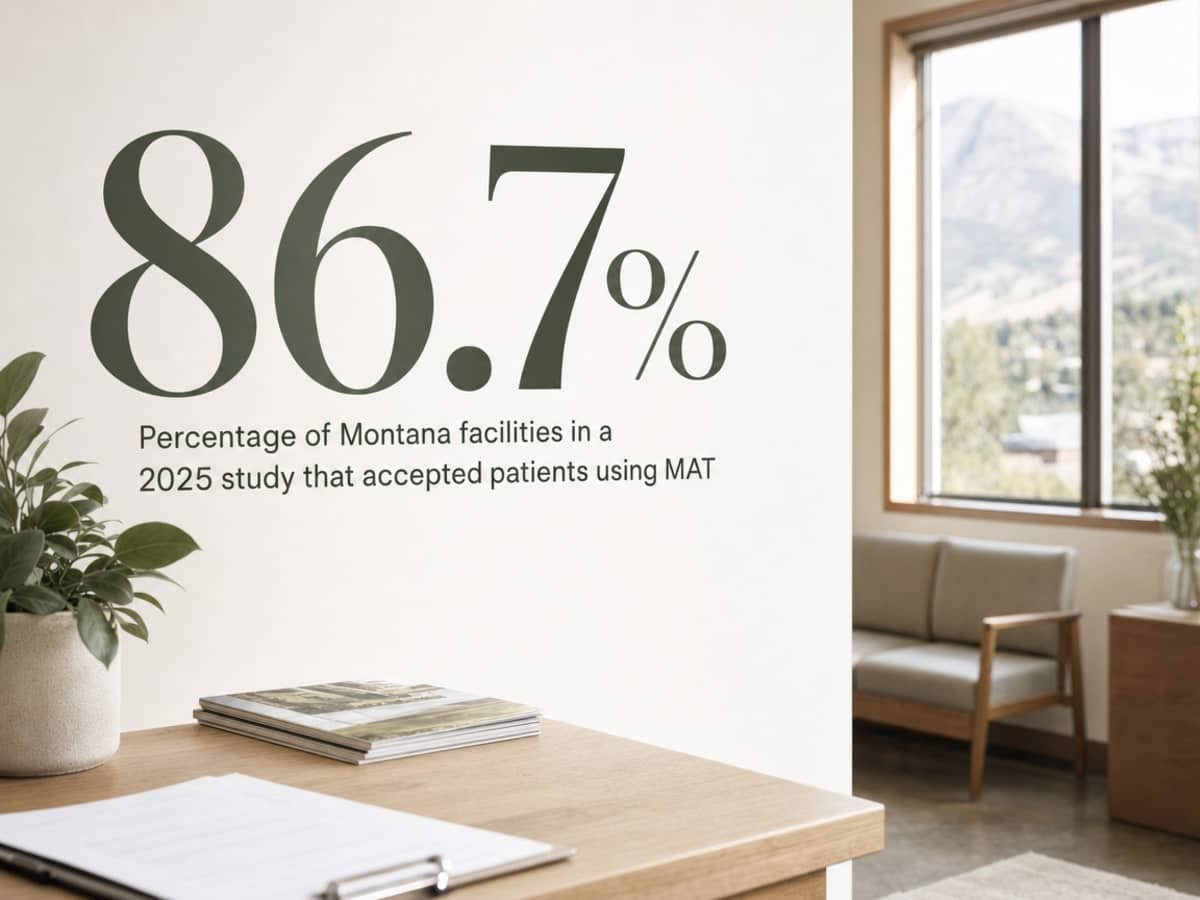
Do you offer all three FDA-approved medications, and do you give them here? The three are buprenorphine, methadone, and naltrexone 1. A 2025 University of Montana study of 15 facilities found that 13 accepted patients on MAT, but 5 required the medication to be administered offsite 6. That’s a daily drive you’d be signing up for. Ask directly.
Who builds my treatment plan, and can I see it? Montana rules require an individualized plan and an interdisciplinary team, including a licensed counselor or mental-health professional 5. If a program can’t describe who does this or how often it’s updated, keep calling.
What happens between levels? Ask who your case manager is, whether you’ll have a peer recovery coach, and what the plan is the day you step down from residential to PHP or from PHP to IOP 8.
Do you treat mental health alongside addiction? Anxiety, depression, PTSD, and trauma are often part of the picture. Dual-diagnosis care shouldn’t be a separate errand.
What does aftercare actually look like? Alumni groups, recovery coaching, relapse-prevention planning, someone to call at month seven. If the answer is vague, that’s your answer.
What do you take for insurance, and what if I don’t have any? A real program will walk you through this instead of making you feel like a burden for asking.
Write the answers down. Compare two or three places. You are allowed to be picky about who helps save your life.
How Elk Ridge Recovery fits as one Montana option
Elk Ridge Recovery is one Montana option worth knowing about, especially if the fragmentation problem is what’s scaring you off. It’s a Montana-based center that keeps the full continuum under one roof: physician-led medical detox, residential inpatient, partial hospitalization, intensive outpatient, standard outpatient, and aftercare. Medication-assisted treatment is part of the clinical program, not a referral you have to drive to somewhere else 1.
The team also offers dual-diagnosis care for the anxiety, depression, or trauma that so often travels with opioid use, plus case management, family therapy, peer support, and alumni programming for the long tail after residential ends 8. Staffing follows Montana’s requirement for an interdisciplinary team and an individualized treatment plan built with you, not handed to you 5.
None of this makes Elk Ridge the only answer. It makes it one place where the pieces already talk to each other, so you don’t have to be the case manager for your own recovery. You can ask Elk Ridge Recovery about opioid treatment options, what medications they offer on-site, what your insurance covers, and what aftercare looks like six months from now. Asking costs nothing.
If someone you love just survived an overdose
First, breathe. They’re still here. That is not a small thing.
Now, the window that just opened is short. A federal study found that people who got on methadone after a nonfatal overdose had 58% lower odds of dying from a later overdose, and those who got a behavioral-health assessment had 75% lower odds 13. The days after an overdose are when medication and connection matter most.
If they’re still in the ER, ask the hospital to start medication before discharge and to set up a warm handoff to a treatment program, not just a printed list. Ask for naloxone to take home, and make sure someone in the house knows how to use it 1. If they’re already home, call a treatment center today, not next week, and say the overdose happened. It changes how fast they’ll see you.
You did not fail them. You are here. Keep going.
A small next step that counts
You don’t have to solve this tonight. You just have to do one small thing.
Pick up the phone tomorrow, or right now, and call one Montana treatment center. Ask what their intake looks like. Ask what medications they offer on-site. Ask what your insurance covers. Write down the answers. That’s it. That’s the whole task.
You can ask Elk Ridge Recovery about opioid treatment options, or you can call somewhere else on your list first. Either way, you moved. And moving, when everything in your body wants to stay still, is the hardest part.
Reading this page is already a step. That counts.
Talk with a Montana Recovery Specialist Now
Connect directly for support and answers about opioid addiction treatment options in Montana.
Frequently Asked Questions
What medications are used to treat opioid addiction?
Three medications are FDA-approved for opioid use disorder: buprenorphine, methadone, and naltrexone 1. Buprenorphine and methadone ease cravings and withdrawal so your body can steady out. Naltrexone blocks opioids from working after you’re fully off them. A good program will talk through which one fits your history and goals 2.
Do I have to go through withdrawal alone before starting treatment?
No. Medical detox exists so you don’t have to. Physicians and nurses monitor you, and medications like buprenorphine can be started during detox to soften the crash 3. White-knuckling it at home isn’t required, and it isn’t safer. Call a program and ask what their detox process looks like before you try to tough it out.
What levels of care should a Montana treatment center offer?
Look for a full continuum: medical detox, residential inpatient, partial hospitalization, intensive outpatient, standard outpatient, and aftercare. Montana licensing rules recognize these ASAM-aligned levels and require an individualized plan built by an interdisciplinary team 5. Programs that keep more of the continuum in-house reduce the risky handoffs where people fall out of treatment 8.
Why does it matter if a facility gives the medication on-site or off-site?
Because a daily drive to a separate clinic is a lot to ask, especially in Montana. A 2025 University of Montana study of 15 facilities found that 13 accepted patients on MAT, but 5 required the medication to be administered offsite 6. On-site dosing means one program, one team, one place. Ask directly on the first call.
What should I do if someone I love just survived an overdose?
Act now, not next week. Ask the hospital to start medication before discharge and to arrange a warm handoff to a treatment program, not just a printed list 1. Get naloxone to keep at home and make sure someone knows how to use it. Post-overdose linkage to medication and behavioral-health care meaningfully lowers the odds of a later fatal overdose 13.
How do I ask Elk Ridge Recovery about opioid treatment options?
Call and say, plainly, that you’re looking into opioid treatment. Ask what medications they offer on-site, which levels of care they run themselves, what your insurance covers, and what aftercare looks like six months out. You don’t need a script. You just need to start the conversation. Asking Elk Ridge Recovery about opioid treatment options costs nothing.
References
- Opioid Use Disorder: Treating | Overdose Prevention | CDC. https://www.cdc.gov/overdose-prevention/hcp/clinical-care/opioid-use-disorder-treating.html
- Treatment of Opioid Use Disorder | Overdose Prevention. https://www.cdc.gov/overdose-prevention/treatment/opioid-use-disorder.html
- TIP 63: Medications for Opioid Use Disorder. https://library.samhsa.gov/product/tip-63-medications-opioid-use-disorder/pep21-02-01-002
- Rules for Substance use Disorder Facility. https://dphhs.mt.gov/assets/oig/Rules_for_Substance_use_Disorder_Facility.pdf
- ARM – 37.106 Subchapter 14. https://dphhs.mt.gov/assets/oig/ChemicalDependencyFacilities2025.pdf
- Medication-Assisted Treatment for Opioid Use Disorder in Montana: Barriers and Best Practices. https://scholarworks.umt.edu/gsrc/2025/327/3/
- Management of opioid use disorder: 2024 update to the national clinical practice guideline. https://pmc.ncbi.nlm.nih.gov/articles/PMC11573384/
- Care Coordination and Patient Referral Sources. https://integrationacademy.ahrq.gov/products/playbooks/moud-playbook/coordinate-care/care-coordination-and-patient-referral-sources
- Summary of Opioid Use in Montana. https://dphhs.mt.gov/assets/publichealth/EMSTS/Data/Opioid_Drug_Use_Summary.pdf
- Federal Guidelines for Opioid Treatment Programs. https://library.samhsa.gov/sites/default/files/federal-guidelines-opioid-treatment-pep24-02-011.pdf
- Barriers for Implementing the Hub and Spoke Model to Expand Medication for Opioid Use Disorder: A Case Study of Montana. https://pmc.ncbi.nlm.nih.gov/articles/PMC8411614/
- Opioids | National Institute on Drug Abuse (NIDA). https://nida.nih.gov/research-topics/opioids
- Federal study examines care following nonfatal overdose among Medicare beneficiaries, identifies effective interventions and gaps in care. https://nida.nih.gov/news-events/news-releases/2024/06/federal-study-examines-care-following-nonfatal-overdose-among-medicare-beneficiaries-identifies-effective-interventions-and-gaps-in-care