Key Takeaways
- A rehab price quote is a starting point, not a verdict — coverage, level of care, and the questions you ask can dramatically shift what you actually pay.
- Verify benefits by level of care (detox, residential, PHP, IOP, outpatient) rather than asking about ‘rehab’ broadly, since coverage narrows as intensity increases 4.
- Medicaid, VA benefits, sliding-scale community health centers, hospital financial assistance policies, and single-case agreements each open doors that stay closed until someone applies 3, 10.
- Denials are not final: you generally have 180 days to appeal internally and roughly four more months to request external review, but missing that window closes the option 12.
The price tag isn’t the final answer
You searched this question because someone quoted you a number, or you looked one up, and your stomach dropped. That reaction is normal. It doesn’t mean treatment is out of reach.
Here’s what most people don’t realize when they see a rehab cost estimate: that number is the starting point of a conversation, not the end of one. The same week of care can be priced five different ways depending on your insurance, your income, the level of care you actually need, and which questions you ask. A recent study found that only about half of insured people surveyed knew whether their plan covered substance use disorder treatment, and nearly 40% said they simply did not know 7. If you’re one of them, you’re not behind — you’re where most people are before they pick up the phone.
This guide walks you through the calls worth making before you decide you can’t afford care. Your insurer. Medicaid. The VA, if you served. A treatment center’s admissions team. A hospital financial counselor. Each one can change the number you were quoted. None of them can help until you ask.
Making the call is the hard part. The rest is just questions.
Start with the call you’ve been avoiding: your insurer
If you have any insurance card in your wallet — through a job, a spouse, a parent, the Marketplace, Medicaid, or Medicare — that card is the first call. Not because insurance always says yes. Because you can’t plan around a maybe.
Here’s the reassuring part: a 2025 study of enrollees after the Mental Health Parity and Addiction Equity Act found that only about half knew whether their insurance covered substance use disorder treatment, and nearly 40% said they simply did not know 7. So if you’ve been putting off this call because you feel like you should already have the answer — you’re in the majority. The people who get into care aren’t the ones who guessed right. They’re the ones who called and asked.
Flip your card over and dial the member services number. Then read this script, or something close to it:
- “I’m calling to verify my behavioral health benefits for substance use disorder treatment.”
- “What levels of care are covered under my plan — medical detox, residential, partial hospitalization, intensive outpatient, and standard outpatient?”
- “What is my deductible, and how much of it have I met this year?”
- “What is my copay or coinsurance for each level of care, in-network and out-of-network?”
- “What is my out-of-pocket maximum, and how much have I hit?”
- “Does this plan require prior authorization or medical-necessity review for any of these services?”
- “Can you send me the list of in-network substance use disorder providers in Montana” — or your state — “and email a summary of what you just told me?”
Write down the representative’s name, the date, and a reference number for the call. If a treatment center later gets a different answer, that record matters.
One more question worth asking, thanks to the 2024 final parity rules: “Are any of my treatment limitations — prior authorization, step therapy, provider-admission standards — subject to the new mental health parity requirements?” 11You may not get a perfect answer. That’s okay. You’re building a paper trail, and you’re telling the plan you know these protections exist.
You do not have to understand every word of the response. You just have to write it down and read it back to the next person who can help you use it.
Ask about the level of care, not just ‘rehab’
“Rehab” is not a single thing on an insurance policy. It’s a stack of different services with different price tags and different coverage rules. When you ask, “Is rehab covered?” — the honest answer is almost always, “Which part?” That’s why some people get told no on the first call and yes on the second. They asked a sharper question.
Addiction treatment is usually built in tiers: medical detox, residential inpatient, partial hospitalization (PHP), intensive outpatient (IOP), and standard outpatient. A plan might cover detox and IOP fully, cover residential only after prior authorization, and not cover long-term residential at all. If you only ask about “rehab,” you may never learn that the outpatient step you actually qualify for is fully covered — or that the residential stay you were quoted for isn’t the only clinically appropriate option.
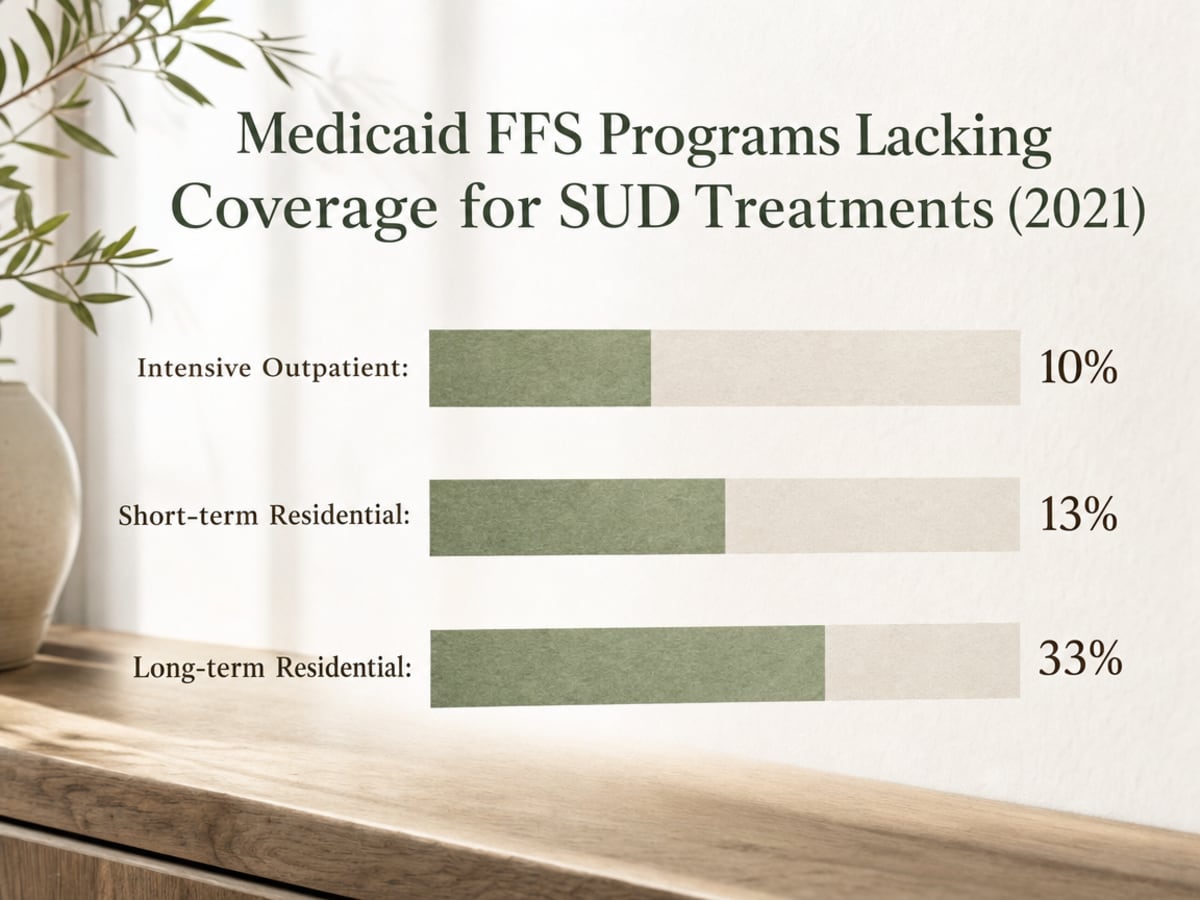
The gaps are real, and they’re worth knowing before you call. A study of Medicaid fee-for-service programs found that in 2021, 10% did not cover intensive outpatient treatment, 13% did not cover short-term residential, and 33% did not cover long-term residential care 4. That study looked only at state Medicaid fee-for-service policies through 2021, so your specific plan may look different — but the pattern holds: coverage narrows as the level of care intensifies.
When you call your insurer, or when a treatment center’s admissions team calls on your behalf, ask about each level separately:
- “Is medical detox covered? Inpatient or outpatient detox?”
- “Is residential inpatient covered? Is there a day limit?”
- “Is partial hospitalization covered? How many days or hours per week?”
- “Is intensive outpatient covered? How many weeks?”
- “Is standard outpatient therapy covered, including group and individual sessions?”
- “Is medication-assisted treatment covered — buprenorphine, naltrexone, methadone?”
Here’s the part that changes outcomes: a good clinical assessment might tell you that the level of care you assumed you needed isn’t the level your insurance covers best — or the level that fits your life. Someone who was quoted 30 days of residential may be a strong candidate for PHP with sober housing, at a fraction of the price. That’s not a downgrade. That’s a match. Ask the treatment center to explain which levels of care they think are clinically appropriate for you, and then check each one against your coverage.
In-network, out-of-network, and the single-case agreement question
Two words on your benefits summary can swing the cost of treatment by thousands of dollars: in-network and out-of-network. Same care, same clinical team, wildly different bill. Understanding the difference — and knowing there’s a third option most people never hear about — is worth ten minutes of your time before you commit to anywhere.
In-network means the treatment center has a contract with your insurance plan. The rates are pre-negotiated, your coinsurance is lower, and the paperwork usually moves faster. Out-of-network means no contract, higher cost sharing, and often a separate (larger) deductible before the plan pays anything. One peer-reviewed review of behavioral health parity found annual out-of-network cost sharing of roughly $2,882 for drug use disorders and $2,660 for alcohol use disorders, compared with about $963 for out-of-network diabetes care 5. That gap isn’t about the medicine. It’s about the network.
So when you call a treatment center, ask this early: “Are you in-network with my specific plan?” Not just “Do you take my insurance.” Plans have sub-plans, and a facility may be in-network with one product from a carrier and out-of-network with another. Have your member ID ready and let them run a verification.
You won’t always get one. But you won’t get one if you don’t ask, and every yes changes the number you were quoted.
If you’re on Medicaid (or think you might qualify)
Medicaid pays for a lot of addiction treatment in this country, and if you’re uninsured right now, there’s a real chance you qualify and don’t know it. Eligibility depends on your state, your household size, and your income — not on whether you’ve applied before or been denied for something else years ago. It’s worth a fresh look.
If you already have Medicaid, the honest news is that coverage varies by state and by the specific managed-care plan you’re enrolled in. A 2024 study of 33 states and Washington, D.C., found that most states mandated coverage of common substance use disorder services and capped enrollee cost sharing, but fewer than one-third prohibited prior authorization for each treatment service 9. Translation: your plan probably covers care, but it may make you (or a treatment center) ask permission first. That’s not a rejection. It’s a step.
When you call the member services number on your Medicaid card, use language like this:
- “Which substance use disorder services are covered under my plan — detox, residential, PHP, IOP, outpatient, and medication-assisted treatment?”
- “Which services require prior authorization, and how is that request submitted?”
- “Do I have a copay for any of these services?”
- “Can you send me a list of in-network SUD providers in my county or region?”
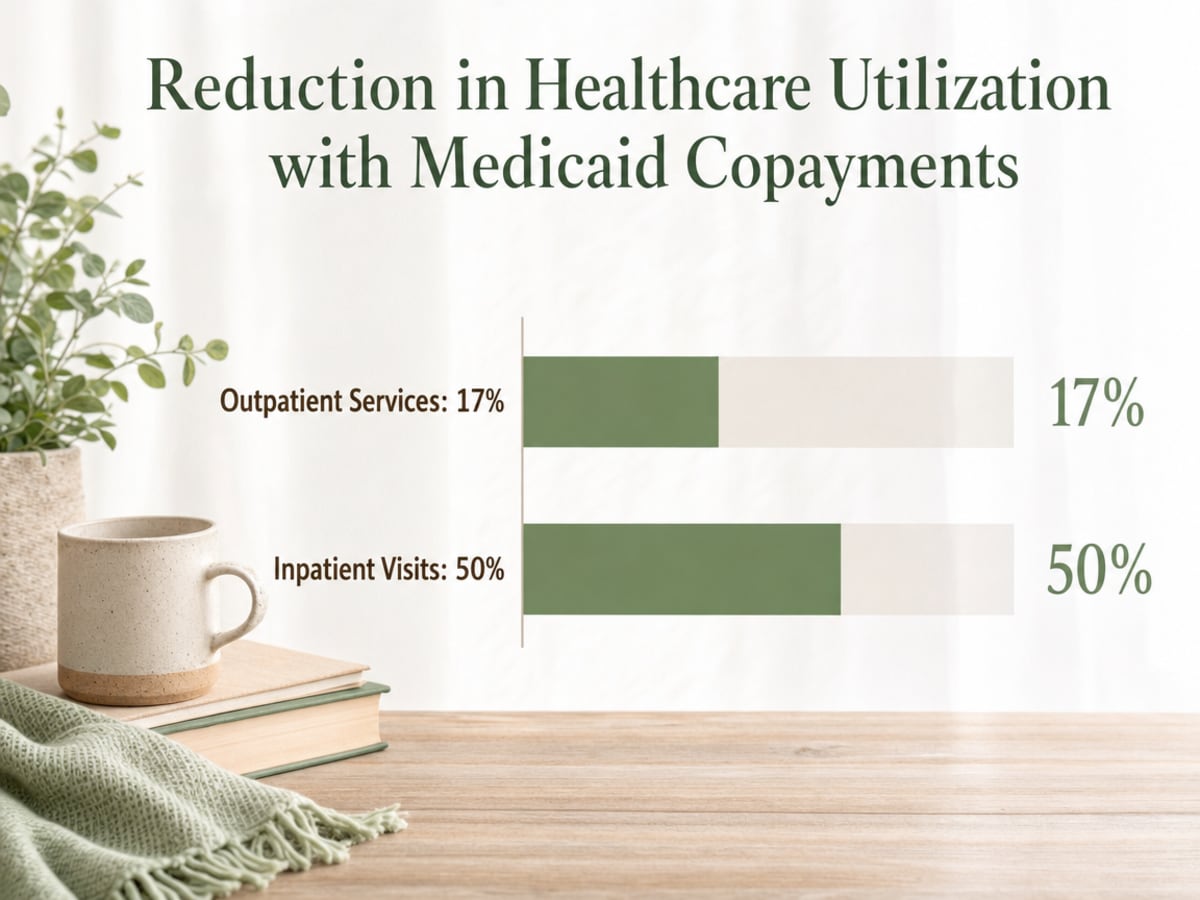
One thing worth naming out loud: even small copays can make people hesitate. A 2024 study of Arkansas Medicaid claims found that copayments were associated with a 17% reduction in initial outpatient substance use or behavioral health visits and roughly a 50% reduction in initial inpatient visits 1. That’s one state’s data, and it looked at first-visit behavior — but it tells you something important. If a $5 or $15 copay is making you pause, that hesitation is real and documented, not a character flaw. Call anyway. Ask whether a hardship waiver applies, or whether the treatment center can help you work around it.
If you’re not sure whether you qualify for Medicaid, apply. Your state Medicaid office or healthcare.gov can screen you in minutes, and eligibility rules changed with expansion in most of the states Elk Ridge Recovery serves. A yes here can change everything else on this list.
If you’re a veteran: the VA call
If you served, this is a call worth making today, even if you’ve never used VA benefits or you assume you don’t qualify. The VA health care program covers services to treat substance use problems, and eligibility rules have expanded over the past several years for combat veterans, toxic-exposure claims, and other categories that used to be excluded 8.
Two paths to start: apply for VA health care at VA.gov, or call your nearest VA medical center directly and ask for the substance use disorder or behavioral health intake line. Kalispell, Missoula, Helena, Billings, and Fort Harrison all have VA touchpoints, and community-based outpatient clinics reach further into rural Montana, Idaho, the Dakotas, and Wyoming than most people realize.
Ask specifically: “What SUD services are available through this facility? Am I eligible for community care if the wait or distance is a barrier?” A yes to community care can open the door to a non-VA treatment center paid through the VA. You served for this benefit. Use it.
Sliding scale, community health centers, and hospital financial assistance
If you don’t have insurance, or your coverage leaves a gap you can’t close, there are three doors worth knocking on before you decide treatment is off the table. None of them are guaranteed. All of them are underused.
The first is a sliding-scale fee. Federally supported health centers are required to offer full discounts to patients at or below 100% of the federal poverty guideline and partial discounts on a sliding scale from just above 100% through 200% of the guideline 3. For 2026, that guideline is $15,960 for a one-person household in the 48 contiguous states, and $33,000 for a household of four 14. If your income falls in that band, you may qualify for behavioral health services — including outpatient counseling, medication-assisted treatment, and referrals — at deeply reduced rates through a community health center near you. Private residential treatment centers aren’t bound by the same federal rules, but many still offer their own scholarship funds or income-based adjustments. You have to ask specifically: “Do you have a sliding-scale policy, a scholarship program, or a hardship discount, and how do I apply?”
The second door is a community health center or community mental health center. These aren’t a downgrade from a treatment center — they’re often the front door to one. A counselor at a community health center can screen you, help you apply for Medicaid or Marketplace coverage, start you on medication-assisted treatment, and refer you to residential or inpatient care when clinically indicated. In rural Montana, Idaho, and the Dakotas, they may be the closest behavioral health provider you have, and their case managers know the local referral pathways better than any national hotline.
The third door opens if detox lands you in a hospital. Every tax-exempt hospital in the country is required by IRS Section 501(r)(4) to maintain a written financial assistance policy covering emergency and medically necessary care. That policy has to spell out who qualifies, whether care is free or discounted, how charges are calculated, and how to apply 10. Ask the hospital’s financial counselor for the policy in writing, and ask before you’re discharged, not after the bill arrives. The counselor can also help you apply for retroactive Medicaid, which in many states can cover care delivered up to three months before your application date.
None of these doors close because you’re afraid to ask. They only close because no one applied.
What the admissions team can actually change on the price
The first number an admissions team quotes you is rarely the last number you pay. That doesn’t mean the quote is dishonest — it means most admissions counselors give you a private-pay or list-rate figure as a placeholder until they can run a real benefits check and talk through your situation. What you do in that first phone call determines whether the number drops, holds, or grows.
Here’s what a good admissions team can actually move on your behalf, if you ask:
- Run a full verification of benefits (VOB). They call your insurer, get the covered levels of care, the deductible status, the coinsurance, and any prior authorization requirements in writing. This alone often changes the quote significantly.
- Match you to the right level of care. If a clinical assessment shows PHP or IOP is appropriate instead of 30 days of residential, the price drops without cutting the clinical outcome.
- Request a single-case agreement if they’re out-of-network with your plan, especially in rural regions where in-network residential options are scarce.
- Help pursue prior authorization and medical-necessity documentation so a covered service actually gets paid instead of denied on a technicality — a real risk given that fewer than one-third of surveyed states prohibited prior authorization for each Medicaid SUD service in a 2024 survey 9.
- Offer a payment plan, scholarship, or hardship discount if the facility has one. Not every private treatment center does, but you won’t know unless you ask by name.
- Refer you honestly if they’re not the right financial fit. A good admissions team will point you toward a community health center, a state-funded program, or another facility rather than pressure you into a package you can’t sustain.
When you call — including if you call Elk Ridge Recovery — ask directly: “Can you run a verification of benefits for my plan, walk me through what my out-of-pocket would actually look like at each level of care, and tell me what payment options or financial assistance you offer?” Then listen for whether the person on the other end treats it as a real conversation or a sales script. That tells you something too.
If you’re denied: the 180-day appeal window most people miss
A denial is not the end of the conversation. It’s the start of a different one — and the clock on that conversation is longer than most people think.
Here’s what to gather before you write the appeal: the denial letter itself, the Explanation of Benefits (EOB), any bills you’ve received, your plan’s summary of benefits, and a letter of medical necessity from the treatment center or a clinician who assessed you. Ask the treatment center’s admissions or billing team to help — they write these letters all the time. If your denial involves prior authorization, step therapy, or a provider-admission standard, name the 2024 final parity rules in your appeal and ask the plan to explain how the limitation complies with them 11.
Two things to remember. First: many denials get overturned on appeal, especially when a medical-necessity letter and a clear clinical rationale are attached. Second: filing an appeal doesn’t burn a bridge with your insurer or the treatment center. It’s a normal part of how coverage gets sorted out. Missing the 180-day window, though, closes a door you can’t easily reopen.
If the denial letter is sitting on your counter unopened, open it today. Write down the date. That’s your calendar.
A quick note for Montana, Idaho, the Dakotas, and Wyoming readers
If you’re calling from a small town in the Bitterroot Valley, the Panhandle, western North Dakota, the Black Hills, or somewhere off a two-lane highway in Wyoming, the geography changes the conversation. In-network residential options may be hours away. Community mental health centers may be your closest behavioral health provider. Winter weather may factor into whether you can get to appointments. All of that is worth naming out loud when you call an insurer or a treatment center.
Two things to lean on. First, ask about telehealth and virtual outpatient — coverage expanded during the pandemic and hasn’t fully retracted, and it can bridge the miles between assessments and follow-up. Second, ask about single-case agreements more assertively than someone in a metro area might. If there is no in-network residential option within a reasonable drive, that’s a real network-adequacy argument, and it’s part of why Medicaid managed-care plans in your state retain broad discretion in the first place 9. Distance is not a reason you can’t get care. It’s a reason to ask louder.
The six calls to make this week
You don’t have to do all of this today. You do have to pick up the phone. Here’s the short list, in the order that usually moves the number fastest:
- Your insurer. Flip your card over. Verify covered levels of care, deductible status, and prior authorization rules. Get a reference number.
- Medicaid. If you’re enrolled, call member services and ask about covered SUD services and copays. If you’re not, apply through your state office or healthcare.gov — you may qualify and not know it.
- The VA. If you served, call your nearest VA medical center and ask about substance use disorder services and community care eligibility 8.
- A treatment center’s admissions team. Ask for a full verification of benefits, level-of-care options, and any payment plan, scholarship, or sliding-scale programs. Elk Ridge Recovery is one call worth making here.
- A hospital financial counselor, if detox brought you through an ER. Ask for the written financial assistance policy 10.
- Your employer’s HR or EAP line. Many plans include free confidential assessments and short-term counseling that don’t touch your deductible.
Six calls. One week. You already know the number to dial first.
Talk through real recovery options right now
Get clear answers about insurance, costs, and support without judgment or pressure.
Frequently Asked Questions
How do I find out if my insurance actually covers rehab?
Flip your insurance card over and call the member services number. Ask specifically about each level of care — medical detox, residential, PHP, IOP, and outpatient — plus your deductible, coinsurance, and any prior authorization rules. Write down the representative’s name and a reference number. If that feels like a lot, know that only about half of insured people surveyed knew whether their plan covered SUD treatment 7. You’re not behind. You’re calling.
What if I don’t have insurance and can’t afford to pay cash?
You have three doors to knock on before ruling care out. Apply for Medicaid — you may qualify and not know it. Call a federally supported community health center, which offers sliding-scale fees at or below 100% of the federal poverty guideline and partial discounts through 200% 3. And ask any treatment center directly about scholarships, hardship discounts, or payment plans. Elk Ridge Recovery is one worth calling. Ask what’s possible before assuming nothing is.
Does Medicaid cover residential rehab?
Sometimes, and it depends heavily on your state and your specific plan. A study of Medicaid fee-for-service programs found that in 2021, 13% did not cover short-term residential and 33% did not cover long-term residential care 4. Call your Medicaid member services line and ask about each level of care by name, whether prior authorization applies, and how the request is submitted. A treatment center’s admissions team can usually help pursue the authorization on your behalf.
What should I do if my insurance denies coverage for treatment?
Don’t file the denial letter away. You usually have 180 days from the denial notice to submit an internal appeal, and the plan generally responds within about 60 days. If that’s denied too, you can request an external review within roughly four months 12. Gather the denial letter, your Explanation of Benefits, plan documents, and a letter of medical necessity from a clinician. The treatment center’s billing team writes these regularly — ask them for help.
Can a treatment center lower the price they quoted me?
Often, yes. The first quote is usually a placeholder before a full verification of benefits runs. A good admissions team can match you to the clinically appropriate level of care (PHP or IOP may cost far less than residential), request a single-case agreement if they’re out-of-network, pursue prior authorization, and offer payment plans or hardship discounts if the facility has them. Ask directly: “What can you actually change about this number, and how?” Then listen carefully.
I’m a veteran. How do I use VA benefits for substance use treatment?
The VA health care program covers services for substance use problems, and eligibility has expanded in recent years 8. Two paths: apply for VA health care at VA.gov, or call your nearest VA medical center — Kalispell, Missoula, Helena, Billings, and Fort Harrison all have touchpoints — and ask for the SUD or behavioral health intake line. Ask specifically about community care, which can authorize treatment at a non-VA facility when distance or wait times are barriers.
References
- Association of copayments with healthcare utilization and expenditures among Medicaid enrollees with a substance use disorder. https://pubmed.ncbi.nlm.nih.gov/38369244/
- Medicaid coverage in substance use disorder treatment after the Affordable Care Act. https://pubmed.ncbi.nlm.nih.gov/31202283/
- Chapter 7: Sliding Fee Discount Program. https://bphc.hrsa.gov/compliance/site-visits/site-visit-protocol/sliding-fee-discount-program
- Changes in Medicaid Fee-for-Service Benefit Design for Substance Use Disorder Treatment During the Opioid Crisis, 2014 to 2021. https://pubmed.ncbi.nlm.nih.gov/37566428/
- Behavioral Health Parity Efforts in the US. https://pmc.ncbi.nlm.nih.gov/articles/PMC9109701/
- Access and Cost Barriers to Mental Health Care by Insurance Status. https://pmc.ncbi.nlm.nih.gov/articles/PMC4236908/
- Changes in Access to Substance Use Disorder Treatment Following the Mental Health Parity and Addiction Equity Act. https://pubmed.ncbi.nlm.nih.gov/41024646/
- Substance Use Treatment For Veterans. https://www.va.gov/health-care/health-needs-conditions/substance-use-problems/
- Most States Allow Medicaid Managed Care Plans Discretion To Restrict Substance Use Disorder Treatment Benefits. https://pubmed.ncbi.nlm.nih.gov/38950296/
- Financial assistance policy and emergency medical care policy – Section 501(r)(4). https://www.irs.gov/charities-non-profits/financial-assistance-policy-and-emergency-medical-care-policy-section-501r4
- New Mental Health and Substance Use Disorder Parity Rules. https://www.dol.gov/agencies/ebsa/laws-and-regulations/laws/mental-health-parity/new-mhpaea-rules-what-they-mean-for-providers
- Understanding Your Mental Health and Substance Use Disorder Benefits. https://www.dol.gov/agencies/ebsa/about-ebsa/our-activities/resource-center/publications/understanding-your-mental-health-and-substance-use-disorder-benefits
- Insurance barriers to substance use disorder treatment after passage of mental health and addiction parity laws and the affordable care act: A qualitative analysis. https://pubmed.ncbi.nlm.nih.gov/36845978/
- Poverty Guidelines. https://aspe.hhs.gov/topics/poverty-economic-mobility/poverty-guidelines